E‑E‑A‑T for SaaS Companies: A 2025 Field Guide to Ship Trust, Not Just Content

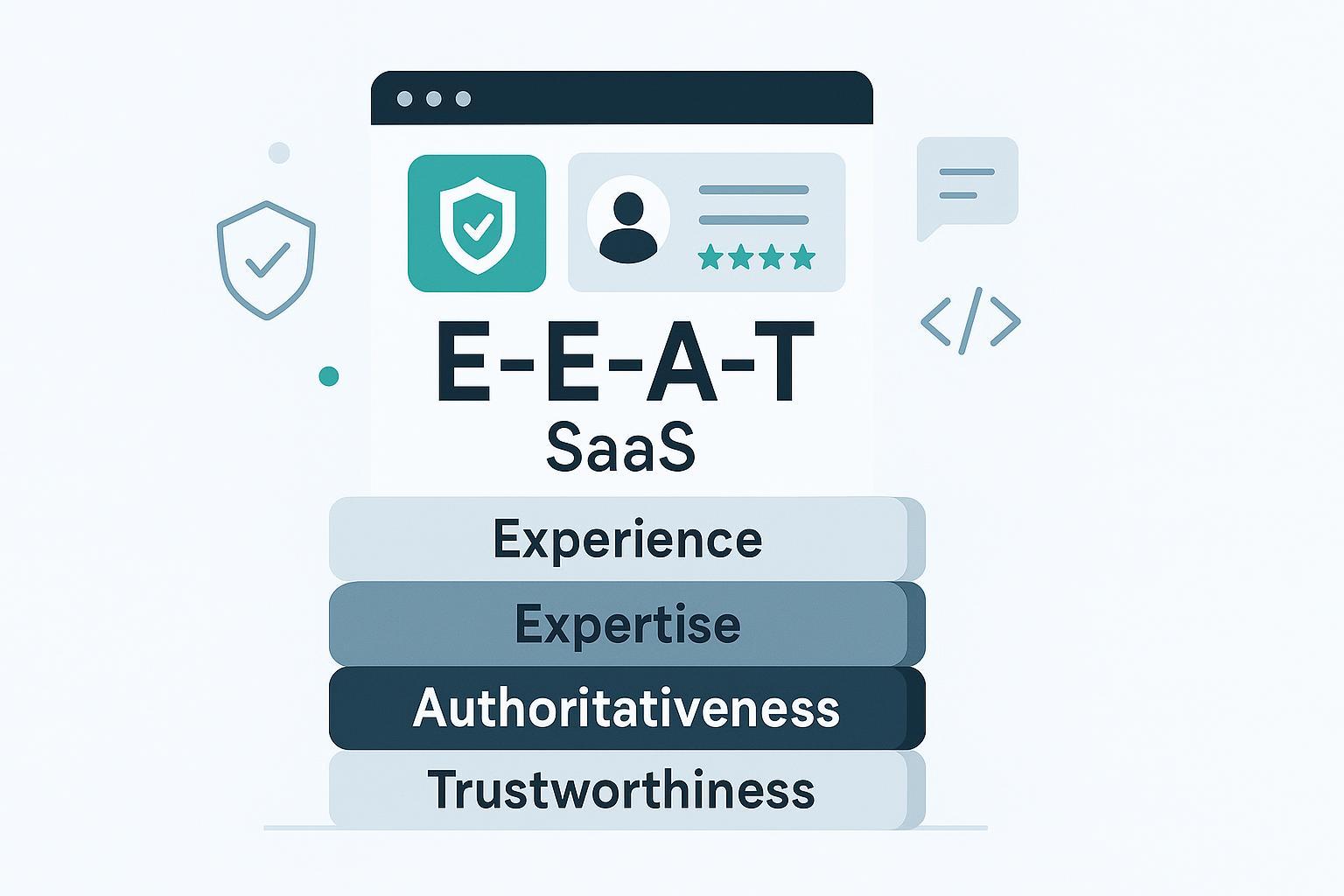
Shrinking shortlists and skeptical buying committees define SaaS in 2025. You’re not just competing on features—you’re competing on proof. That’s why E‑E‑A‑T (Experience, Expertise, Authoritativeness, Trustworthiness) has moved from SEO theory to an operating discipline for SaaS websites, blogs, docs, and product communications.
If you’re new to the term: E‑E‑A‑T is Google’s model for evaluating the quality and credibility of content and the entities behind it. Since Google’s March 2024 core update tightened the net around thin, scaled output and emphasized site‑wide quality signals, what you publish—and how you prove it—matters more than ever. Google explained the changes and newer spam policies (scaled content abuse, site reputation abuse, expired domain abuse) in its official post, which is the best reference for the rationale and scope of enforcement, as covered in the Google Developers Blog on the March 2024 core update and spam policies.
This guide shows SaaS teams how to operationalize E‑E‑A‑T across content, product, and web systems—so you ship trust, not just more pages.
What changed in 2024–2025—and why SaaS should care
- Quality is now a network of signals across your entire site. Google integrated the helpful content system into core ranking systems and evaluates page‑ and site‑level quality. That means one‑off “great posts” can’t compensate for a bloated library of thin, duplicative content.
- Scaled low‑value content (no matter who or what creates it) is explicitly called out as spam. If your blog strategy relied on volume over substance, it’s time to refactor.
- Entity clarity and structured data matter more. Make it unambiguous who your organization is and who your authors are. Google’s documentation on Organization structured data explains how to provide official names, logos, and contact details—use it and validate regularly via Search Console. See Google Search Central: Organization structured data.
In short, SaaS teams need fewer pages and stronger proofs—clear ownership, real authors, transparent policies, and up‑to‑date product truth.
The SaaS E‑E‑A‑T stack
Think of E‑E‑A‑T as four interconnected systems you can ship and maintain.
- Experience: Show hands‑on knowledge. Use first‑party screenshots, product walkthroughs, and release notes. Narrative from customer success and solutions engineering beats abstract feature lists. Include “last reviewed” stamps on fast‑changing guides.
- Expertise: Attribute content to qualified people. Give authors a headshot, role, and a one‑line credential statement (e.g., “8 years leading B2B SaaS onboarding at X”). For sensitive topics (security, pricing, compliance), add SME review steps.
- Authoritativeness: Earn and surface third‑party validation—recent peer reviews, analyst mentions, recognized certifications. Clarify your entity with structured data and consistent naming across your site and profiles.
- Trustworthiness: Centralize security/compliance in a Trust Center. Link a public status page. Keep policies (privacy, data processing, SLAs) readable. Make pricing and implementation expectations transparent.
Operational blueprint: ship E‑E‑A‑T as a workflow
E‑E‑A‑T improves when you turn quality signals into maintained assets with owners and cadences, not one‑off “SEO tasks.” Use these lightweight checklists to implement and audit.
-
Author and editorial standard
- Show full name, role, headshot, and a concise credential line; link to an on‑site profile and LinkedIn.
- Add byline and “last reviewed” dates; define a quarterly review cadence for volatile topics.
- Document your editorial policy and SME review rules for sensitive content.
-
Trust Center and technical trust
- Consolidate security/compliance: SOC 2/ISO 27001 status, DPA, subprocessor list, pen‑test summaries, and reporting channels.
- Link a live status page and incident postmortems; add uptime history.
- Publish release notes/changelog with dates and accountable owners; avoid vague “improvements.”
-
Social proof and proof of outcomes
- Maintain a program for recent peer reviews (e.g., G2) with visible “as of” dates on counts/badges and links to profiles.
- Standardize case studies with baseline metrics (activation, trial‑to‑paid, NRR/retention proxies), the intervention, and after metrics—approved by the customer.
- Avoid overclaiming; every quantitative claim needs a source or clear methodology.
Two more threads deserve permanent slots on your roadmap. First, prioritize structured data and entity hygiene: implement Organization and Person markup for company and authors, validate monthly, and keep site name, logo, and contact information consistent everywhere. Apply content‑type schema (how‑tos, FAQs, articles) only when the page truly matches the type. Second, consolidate overlapping content. Merge near‑duplicates, retire thin pages, and designate one canonical resource per intent with clear paths to related docs, demos, and customer stories.
| Function/Owner | Deliverable | Cadence |
|---|---|---|
| Content Lead | Author credential standard; editorial policy; quarterly content audit | Quarterly |
| Security/Compliance | Trust Center pages; subprocessor/DPA updates; incident postmortems | Monthly/As needed |
| Product/Engineering | Changelog and release notes with dated entries and owners | Ongoing (weekly/biweekly) |
| SEO/Analytics | Structured data validation; entity consistency checks; Search Console enhancements review | Monthly |
| Customer Marketing | Review program (e.g., G2) and case study pipeline with freshness SLAs | Monthly |
Mini case snapshots you can emulate
- Trust centers and status pages. Brands like Slack publicly document security practices, link a real‑time status page, and publish release notes with dates and scope. Study how Slack’s security hub creates a single source of truth and consider the sections you can responsibly mirror (e.g., certifications, data handling, reporting contact). Reference: Slack – Security.
- Changelogs as experience proof. Atlassian and other developer‑forward SaaS companies maintain detailed release notes that show ongoing stewardship. A crisp changelog signals living expertise: what changed, why it matters, and who’s accountable. If you don’t have one, start with monthly notes and work toward weekly cadence tied to sprints.
These artifacts aren’t “nice to have.” They’re visible, verifiable signals that your team knows the product, can support it, and owns outcomes.
Measurement that matters to SaaS
Tie E‑E‑A‑T work to metrics your leadership already tracks. You’re not optimizing for vanity SEO; you’re improving how buyers evaluate and choose your product.
- Pipeline quality and shortlist rate. Thought leadership from credible authors helps your brand get considered upstream. In the 2024 Edelman–LinkedIn study (3,484 executives), strong thought leadership increased vendor consideration and served as a trustworthy proxy for capabilities. See the Edelman–LinkedIn 2024 B2B Thought Leadership Impact Report (PDF).
- Review‑assisted evaluation. G2’s 2024 Buyer Behavior research (1,900+ software buyers) shows buyers rely heavily on review platforms and expect fast ROI—pressuring vendors to provide recent, specific proof. Read the G2 2024 Buyer Behavior Report (PDF) for methodology and findings.
- Retention and customer trust. While public medians vary by segment, executive dashboards watch NRR, revenue churn, and CAC payback. Use these as your north stars when shaping case studies and proof points, and consult the High Alpha SaaS Benchmarks hub for current benchmark context and methodology notes.
- Friction reduction and credibility cues. Decades of UX work show that unclear identity, missing trust marks, and ambiguous policies erode confidence. For a directional reference list on abandonment and perceived security, see Baymard’s index of cart‑abandonment research topics: Baymard’s cart‑abandonment list index.
Here’s the deal: if you can’t attribute your E‑E‑A‑T work to higher quality opportunities, faster evaluations, and stronger retention stories, you’re probably focused on surface‑level cosmetics.
FAQ: common SaaS E‑E‑A‑T snags
Q: Do we need to add E‑E‑A‑T badges or special labels to rank? A: No. There’s no “E‑E‑A‑T badge.” Focus on the underlying signals: credible authors, accurate and maintained content, structured data for your organization and people, and transparent proof (reviews, certifications, status, changelog).
Q: Can we publish high‑quality content at scale? A: Yes—but “scale” follows systems, not headcount. Establish your editorial policy, SME review lanes, and consolidation rules. Ban thin topic duplication. For complex topics, require first‑party demos, screenshots, or data.
Q: How much author detail is enough? A: Provide a short credential line tied to the topic, plus an on‑site profile and LinkedIn. For sensitive content (security, pricing, legal), add SME review attribution. Use Person structured data and keep profiles up to date.
Q: What if our product changes weekly—won’t “last reviewed” dates make us look outdated? A: Dates build trust when you respect them. Set realistic cadences by topic volatility, and use a changelog for incremental product updates so your pillar pages don’t become release notes.
Q: Our reviews are old. Should we hide them until we have more? A: Don’t hide; get moving. Start a freshness program with monthly outreach, in‑product prompts, and post‑implementation requests. Always show “as of” dates and link to the third‑party profile.
Your next 90 days
- Weeks 1–2: Draft your author standard and editorial policy; identify top 20 pages for audit and set “last reviewed” owners/dates. Create your E‑E‑A‑T owner map.
- Weeks 3–6: Stand up or refresh your Trust Center; link a status page; ship a minimal but consistent changelog. Add Organization and Person structured data and validate.
- Weeks 7–10: Launch a review freshness program; lock a case study template; collect two approved customer stories with baseline and after metrics.
- Weeks 11–12: Consolidate overlapping articles; retire thin pages; publish redirects and update internal links.
Think of E‑E‑A‑T as compound interest. Each credible author, fresh case study, and transparent policy adds to your reputation—and shortens the distance between research and “let’s book a demo.”