EE‑E‑A‑T for E‑Commerce Stores in 2025: A Practical, No‑Fluff Playbook

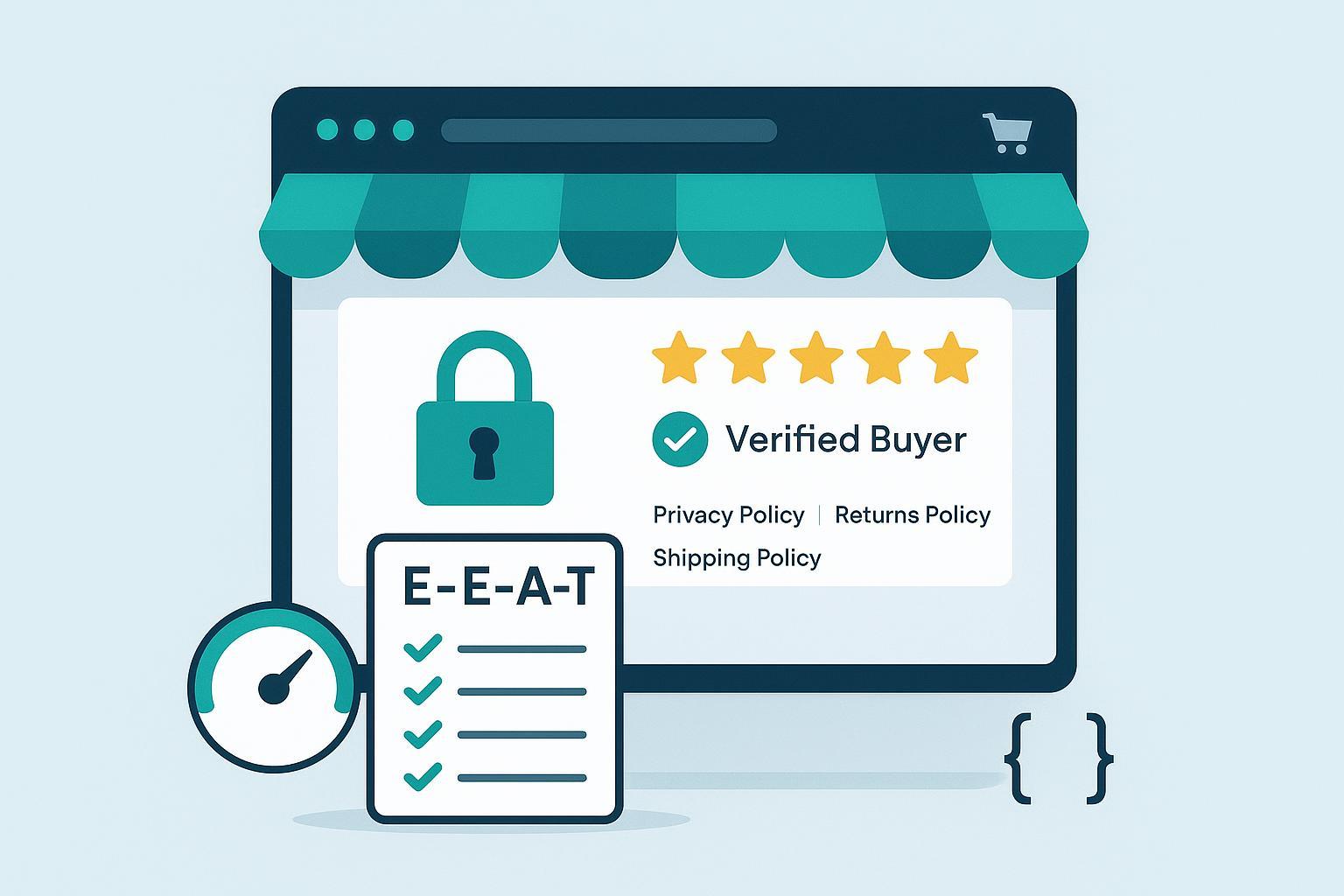
If search visibility is the door, trust is the key. In e‑commerce, EE‑E‑A‑T (Experience, Expertise, Authoritativeness, Trustworthiness) isn’t a buzzword—it's how shoppers decide to buy and how Google decides what deserves to be discovered. This playbook cuts the fluff and gives you step‑by‑step actions that align with Google’s current systems, UX evidence, and real compliance requirements.
1) Experience on PDPs and Reviews: First‑hand proof that convinces shoppers and raters
“Experience” is your tangible proof that you’ve actually used, tested, or handled the product. Think original photos or brief videos, quantified observations (measurements, durability tests), and meaningful comparisons against alternatives.
- Anchor your review and buying‑guide content in first‑hand use. Google’s Reviews System rewards content with insightful analysis, original research, and clear experience indicators. See the official Reviews System documentation (2025).
- Avoid templated, purely AI‑generated product descriptions without added insight. Google’s raters are trained to evaluate experience and trust. The Search Quality Rater Guidelines (Jan 2025) emphasize trust as central and call out signs of low‑value, spam‑like content.
- On PDPs, add “How we tested” or “What to expect” sections: include sizing in real‑world terms (e.g., “fits a 6'2" frame comfortably”), material feel, and care instructions. Make it specific.
- Feature verified‑buyer reviews and highlight usage context (“used daily for 30 days”). Clearly flag moderation and authenticity policies (no fake/incentivized reviews).
Pro tip: Add a short comparison block on high‑consideration items (“Compared with Brand X: lighter by 120g; battery lasted 18% longer in our 7‑day test”). It reads human, and it’s exactly the kind of experience signal raters look for.
2) Expertise and Authorship: Credibility you can see and verify
Show who wrote or curated each page—and why their voice matters.
- Use bylines on buying guides, blogs, and category intros. Link each byline to a concise author bio with relevant credentials (e.g., textile engineer, bike‑fit specialist). Follow Google’s people‑first content guidance for editorial rigor; see Helpful content integration into core systems (2024).
- Include an editorial note that explains how content is created and reviewed (e.g., “fact‑checked by our product QA lead; last hands‑on test Nov 2025”).
- Cite authoritative sources where claims require evidence. Prefer primary documents (standards bodies, regulators, official manufacturer specs). Avoid link stuffing—use a couple of well‑chosen references.
- Keep author pages updated with publications, talks, certifications, and industry memberships. Raters consider the creator’s reputation and the site’s reputation.
Template you can copy:
- Byline: “Written by Jamie Lee, CSM, former Shopify solutions engineer.”
- Bio: “Jamie has 8+ years optimizing checkout flows and structured data for mid‑market retailers; speaker at CommerceNext 2024.”
- Editorial note: “Hands‑on tested; methodology and update log linked.”
3) Authoritativeness at the Brand Level: Make the company an entity people trust
Authoritativeness isn’t just links—it’s a credible identity.
- Publish robust About and Leadership pages: company history, mission, photos, real names, and roles. Link to press mentions, certifications, awards, and recognized partner programs.
- Make policy transparency obvious: returns, shipping, warranty, repairs, and customer service SLAs. Prominent links in the header/footer and PDPs reduce uncertainty and abandonment (Baymard’s research shows these frictions hurt conversion).
- Avoid hosting third‑party content you don’t supervise. Google’s 2024–2025 spam policies warn about site reputation abuse when low‑quality content rides on your domain’s authority. Review the Spam policies (2025) and site reputation abuse update.
- Earn and showcase real external validation: industry awards, charity partnerships, supplier certifications, and high‑quality mentions. These are signals that raters and users recognize.
4) Trustworthiness and Technical Signals: The checkout and compliance backbone
Trust is where rankings, UX, and compliance meet. Here’s the practical backbone.
- Policies and clarity: show shipping costs, delivery windows, and returns upfront (PDP/cart), not just at checkout. Baymard’s large‑scale checkout research indicates transparency here is a major lever; see their 2024 checkout launch overview and current checkout UX benchmark.
- Privacy and consent: comply with CCPA/CPRA and GDPR as applicable. Provide a clear privacy policy, consent controls, and honor signals such as Global Privacy Control under CPRA. Use regulator resources like the California AG’s CCPA portal.
- Reviews and endorsements: align with the FTC. Disclose material connections, prohibit fake reviews, and moderate fairly. See the FTC’s endorsements, influencers, and reviews hub and the FTC consumer reviews/testimonials rule resources.
- Accessibility: meet WCAG 2.2 AA. This improves trust and expands your market; refer to the WCAG 2.2 Recommendation and the ADA web rule fact sheet (2024).
- Payments security: if you handle cardholder data, follow PCI DSS v4.0+ (tokenization, encryption, MFA, client‑side script governance). Start with the PCI SSC document library and note evolving e‑commerce page controls.
- Performance and page experience: monitor and improve Core Web Vitals—LCP < 2.5s, CLS < 0.1, INP < 200ms. See Google’s Core Web Vitals overview and INP change rationale (web.dev explainer).
- Structured data: implement JSON‑LD for Product, Offer, Review, AggregateRating, and Organization. Ensure parity with visible content and validate with Google’s Rich Results Test. Follow the e‑commerce structured data guide and structured data policies.
Practices to outcomes (directional, based on evidence and field experience):
| Practice | Expected outcome |
|---|---|
| Upfront shipping/returns clarity on PDP/cart | Lower abandonment; higher trust (supported by Baymard research) |
| Verified‑buyer reviews + clear moderation policy | Higher review credibility; better decision confidence |
| WCAG 2.2 AA accessibility + ADA awareness | Larger reachable audience; fewer legal/compliance risks |
| PCI DSS 4.0 controls on payment pages | Reduced fraud risk; stronger consumer trust |
| JSON‑LD Product/Offer/Review markup | Rich results eligibility; clearer entity understanding |
| LCP/INP/CLS within thresholds | Better UX and potential ranking/visibility benefits |
5) Audit Workflow and Maintenance Cadence
Here’s a practical sequence you can run in one week for a mid‑market store.
- Baseline check (day 1): crawl key templates (home, category, PDP, cart, checkout, review pages). Capture CWV, accessibility scores, structured data validation, and policy visibility.
- PDP experience upgrades (day 2–3): add original photos or 30–60s clips, quantified observations, and a brief comparison block on top products. Enable verified‑buyer tags.
- Authorship and editorial governance (day 3): add bylines, bio pages, editorial notes; set update cadences and fact‑check steps.
- Brand‑level authority (day 4): enrich About/Leadership; link certifications/awards/press; ensure policy pages are prominent and consistent.
- Checkout trust and compliance (day 5): verify policy clarity in cart/checkout; review privacy/consent; align with FTC guidance; assess PCI scope and controls.
- Structured data & performance (day 6): validate JSON‑LD parity; fix markup issues; optimize hero assets, preload critical resources, reduce blocking scripts.
- Governance & monitoring (day 7): set quarterly audits; configure Search Console alerts; document review moderation SOPs and accessibility QA.
Keep it rolling: schedule quarterly refreshes for policy pages and buying guides; re‑test CWV monthly; re‑validate structured data after major theme/app changes.
Mini Case Study: A mid‑market outdoor gear retailer
Starting point: PDPs had generic manufacturer copy, sparse reviews, and no author bios. Cart showed shipping fees only at step 2 of checkout.
Actions in 4 weeks:
- Added hands‑on photos and 45‑second clips; introduced “How we tested” with trail mileage and wear observations.
- Implemented verified‑buyer reviews and a published moderation policy.
- Rolled out bylines and bios (gear testers and repair techs) with editorial notes.
- Moved shipping/returns summaries to PDP and cart; linked detailed policy pages.
- Validated and corrected JSON‑LD Product/Offer/Review markup; optimized hero images for LCP.
Results (8‑week observation window):
- Organic PDP clicks up 12% (Search Console) and rich results appearing on top SKUs.
- Cart abandonment down 9% after policy surfacing (analytics cohort comparison).
- Review volume up 28% with higher perceived credibility (survey and on‑page metrics).
- INP improved from ~280ms to ~180ms on checkout after script pruning and instant field validation.
Directionally, these gains map to improved EE‑E‑A‑T signals plus better UX—exact figures will vary, but the workflow consistently drives trust and conversion.
6) Future‑Proofing: AI, accessibility, cross‑border trust, and ongoing audits
- AI content transparency: if AI assists drafting, add an editorial note clarifying human review and hands‑on validation. Don’t publish AI‑only PDP copy; it rarely passes the sniff test.
- Accessibility and inclusive content: WCAG 2.2 AA is table stakes; go beyond with alt‑text on product media, color‑contrast checks, and keyboard‑friendly filters.
- Internationalization: for cross‑border sales, localize policies (taxes, warranties, return windows), ensure payment methods and privacy notices meet regional expectations.
- Monitoring the ecosystem: Google continues to fold helpful content signals into core systems and refine policies. Track updates via Search Central documentation and schedule quarterly EE‑E‑A‑T audits.
Wrap‑up: Trust is earned page by page. Start with PDP experience, make authorship visible, strengthen brand identity, and shore up checkout/compliance. Then measure and maintain. Ready to run the audit this week? Let’s do it.