EEAT for Affiliate Websites (2025): A Practitioner’s Guide to Winning Trust and Top Rankings

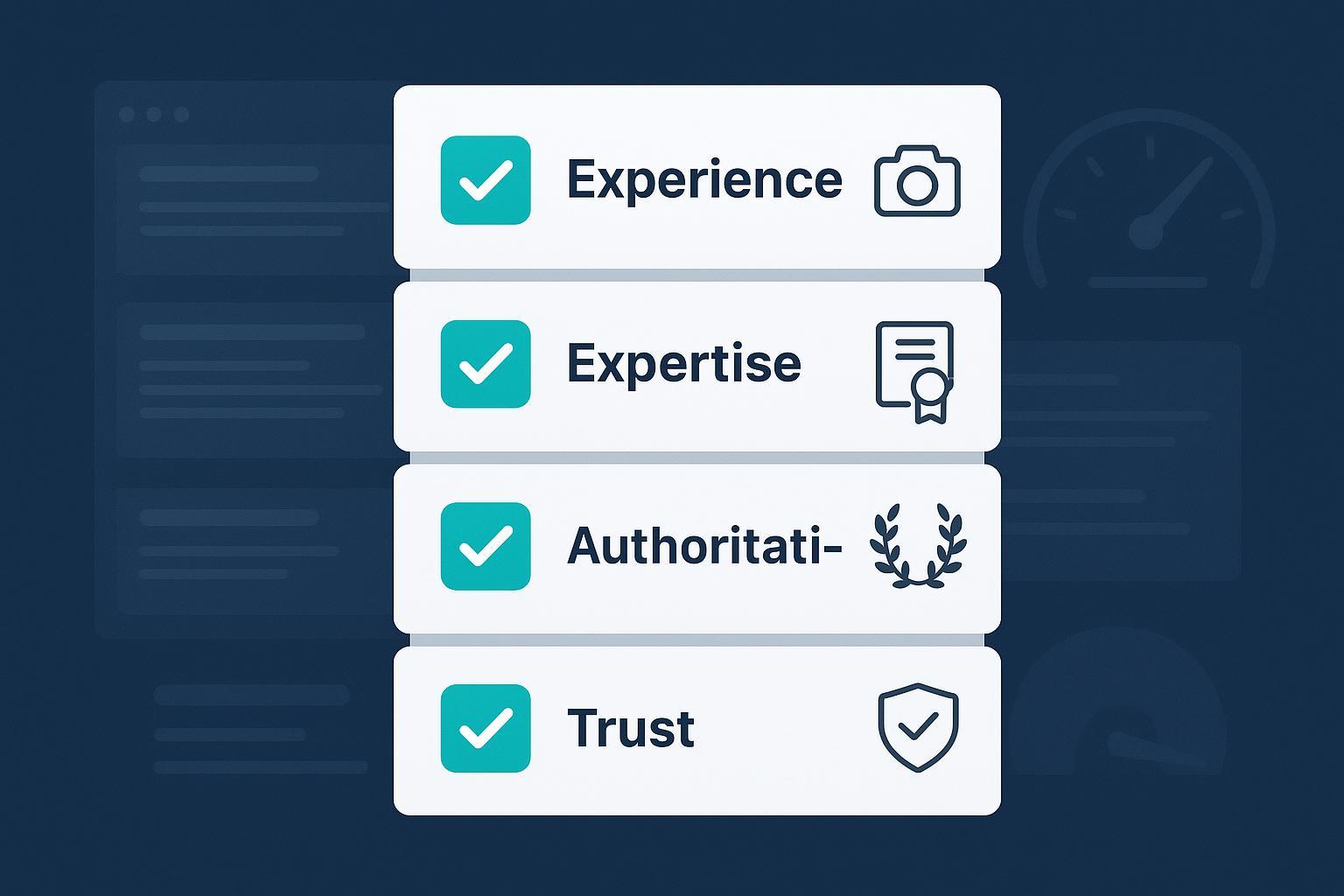
Affiliate sites are under the microscope. Rankings swing, users hesitate to click, and regulators keep tightening the rules. If you run an affiliate website, E‑E‑A‑T—Experience, Expertise, Authoritativeness, and Trustworthiness—isn’t a buzzword; it’s your operating system. Think of it like a four‑legged table: remove any leg and the whole thing wobbles.
This guide shows exactly how to operationalize E‑E‑A‑T in 2025—no fluff, just workflows, compliance steps, schema, and a 90‑day audit plan.
Show Real Experience (the “Experience” pillar)
Affiliate content that wins today doesn’t just recommend—it proves. Your review or comparison should read like a lab log: what you tested, how, and what happened.
- Document hands‑on testing: outline the environment (device, version, dates), the scenarios, and pass/fail criteria. Describe what you actually did, not what the vendor claims.
- Publish original evidence: your own photos, short clips, screenshots, and measurement sheets. Avoid stock imagery for core review assets.
- Share methodology: explain how you measured speed, battery life, comfort, or ROI; clarify constraints and outliers.
- Disclose what you didn’t test: set expectations and avoid overreach.
Users can feel the difference. A crisp photo series of your setup, a simple comparison chart, and a paragraph on test design do more for trust than a dozen affiliate buttons. According to Google’s guidance on people‑first content and quality rater concepts, demonstrable experience is a visible trust signal; see Google Search Central’s documentation on creating helpful, reliable, people-first content.
Quick experience checklist
- State the testing date(s) and environment
- Include at least 3 original media assets per review
- Publish your rating rubric and measurement method
- Note limitations and what you plan to test next
Build Author Expertise That’s Verifiable
Expertise isn’t a line under the title—it’s a package: detailed author bios, credentials, editorial oversight, and fact‑checking. For sensitive niches (finance or health), YMYL standards apply; raise the bar.
- Author bios: include credentials, relevant experience, awards, and links to professional profiles. Map authors to topics they’re qualified to cover.
- Editorial policy: publish a clear policy describing review independence, testing standards, and update cadence.
- Fact‑checking workflow: define who checks claims, what sources are acceptable, and how corrections are logged.
- Reviewer model: for YMYL, consider a “writer + subject‑matter reviewer” approach; display both names and roles on the page.
When does YMYL apply? If content can impact someone’s finances, health, safety, or civic information, treat it as YMYL and tighten compliance. Google has elaborated on E‑E‑A‑T and YMYL for SEOs; see Search Engine Land’s guide to Google E‑E‑A‑T for a practitioner‑friendly overview.
Earn Authoritativeness Beyond Your Site
Authoritativeness grows when others vouch for you. That means citing primary sources, inviting guest experts, and participating in credible communities.
- Reference canonical sources: link to official docs, standards, and primary research—avoid second‑hand summaries.
- Guest experts and interviews: bring verified specialists into your reviews or guides. Publish their bios and conflict‑of‑interest disclosures.
- Editorial independence statement: clearly state that affiliate fees do not influence ratings or recommendations.
- Thought leadership: contribute research summaries, testing frameworks, and community benchmarks. Earn mentions naturally by being useful.
Authoritativeness is earned, not bought. Industry analyses can help you calibrate; Ahrefs’ perspective explains how trust signals interplay with visibility—see Ahrefs’ E‑E‑A‑T overview and trust-building strategies.
Trustworthiness and Compliance (FTC, Privacy, Transparency)
Trust is where users decide to act. It’s also where regulators look first. Your disclosures, link attributes, privacy practices, and security controls should be boringly thorough.
- Affiliate disclosures: place clear, conspicuous disclosures near the recommendation and again in the footer. Avoid vague language.
- Link attributes: use rel="sponsored" for paid affiliate links and rel="nofollow" where appropriate; keep tracking respectful.
- Privacy and data: minimize data collection, explain cookies, and honor consent. Keep forms and CTAs transparent.
- UGC moderation: if you accept comments or user reviews, moderate for misleading claims; mark verified buyers.
- Security: HTTPS everywhere, regular updates, and clean hosting.
For legal footing, align with the FTC’s Endorsement Guides. The FTC expects clear, proximate disclosures and truthful endorsements; review FTC Endorsement Guides: What People Are Asking (official FAQ) for current expectations.
Compliance checklist (affiliate‑specific)
- Place a plain‑language disclosure at the top of reviews and near CTAs
- Use rel="sponsored" on affiliate links; maintain a link governance log
- Publish an editorial independence and ratings methodology page
- Maintain a privacy policy and consent controls; verify HTTPS and CSP
- Moderate UGC; label verified buyer reviews
UX + Core Web Vitals as Trust Signals
A slow, jumpy page erodes trust before a user reads a word. Fast, readable, and stable pages amplify E‑E‑A‑T because users can actually consume the evidence you present.
- Speed: aim for healthy Core Web Vitals—LCP under ~2.5s, CLS under 0.1, and INP indicating responsive interactions. Optimize images, lazy‑load non‑critical assets, and defer third‑party scripts.
- Mobile‑first layout: prioritize scannable headings, short paragraphs, and accessible buttons. Avoid ad clutter and heavy pop‑ups.
- Readability: consistent typography, clear rating rubrics, and comparison tables that don’t overwhelm.
- Review templates: standardize placement for test summary, pros/cons, and methodology so users can find the signals fast.
Google’s documentation explains measurement and thresholds; see Core Web Vitals guidance from Web.dev (Google).
Structured Data That Reinforces E‑E‑A‑T
Schema doesn’t create trust by itself, but it helps machines understand your trust signals. Mark up reviews, products, authors, and FAQs precisely and avoid spammy practices.
- Review markup: use Review, Rating, and ItemReviewed for genuine, self‑contained reviews. Don’t aggregate ratings you don’t own.
- Product/Offer: include brand, SKU, availability, and price; sync with canonical product details.
- Author/Person: add author names, bios, and sameAs links.
- FAQ: only mark up actual Q&As on the page; keep answers succinct.
Schema.org is the canonical reference; start with Schema.org’s Review type documentation and related Product/Offer types.
{
  "@context": "https://schema.org",
  "@type": "Review",
  "itemReviewed": {
    "@type": "Product",
    "name": "Acme Noise‑Canceling Headphones X1",
    "brand": {
      "@type": "Brand",
      "name": "Acme"
    }
  },
  "author": {
    "@type": "Person",
    "name": "Jordan Lee",
    "sameAs": [
      "https://www.linkedin.com/in/jordan‑lee‑audio",
      "https://twitter.com/jordanleeaudio"
    ]
  },
  "reviewRating": {
    "@type": "Rating",
    "ratingValue": "4.2",
    "bestRating": "5",
    "worstRating": "1"
  },
  "reviewBody": "We tested the X1 in a 65‑70 dB office environment and on a 4‑hour flight. ANC was strong at mid‑frequencies; comfort held up past 3 hours. Battery claims matched our 28.5‑hour test at 60% volume.",
  "datePublished": "2025-09-14"
}
Common pitfalls: marking up thin “listicles” as full reviews, inflating ratings, or mixing third‑party ratings into first‑party schema. Resist the temptation—machines catch inconsistencies and users lose trust.
The EEAT Audit Workflow for Affiliate Teams (90‑Day Plan)
If you had to start tomorrow, what would the first 90 days look like? Here’s a practical cadence that scales for solo publishers and multi‑author teams.
Weeks 1–3: Baseline and governance
- Inventory content by template (reviews, roundups, guides) and by niche risk (YMYL vs. non‑YMYL)
- Score each URL against E‑E‑A‑T signals: evidence, bio, citations, disclosure, schema, CWV
- Create governance docs: editorial policy, rating rubric, disclosure placement standards, link attribute policy
- Stand up an issue tracker and change log; assign owners by section
Weeks 4–8: Implementation sprints
- Add original media and methodology sections to top‑traffic reviews
- Write/upgrade author bios and link to professional profiles
- Insert clear disclosures near CTAs; add rel="sponsored" governance
- Implement Review/Product/Author schema on key pages; validate
- Improve CWV (image optimization, script defer, layout stability)
Weeks 9–12: Authority and maintenance
- Publish two expert interviews or co‑authored pieces in sensitive niches
- Add an editorial independence statement site‑wide
- Refresh out‑of‑date recommendations; document why changes occurred
- Monitor rankings, CTR, and engagement; schedule quarterly audits
Trust Signals Mapped to E‑E‑A‑T
| Trust Signal | Experience | Expertise | Authoritativeness | Trustworthiness |
|---|---|---|---|---|
| Original photos/videos | ✓ | ✓ | ||
| Testing methodology section | ✓ | ✓ | ✓ | |
| Detailed author bios | ✓ | ✓ | ✓ | |
| Canonical source citations | ✓ | ✓ | ||
| Editorial independence page | ✓ | ✓ | ||
| FTC‑compliant disclosures | ✓ | |||
| Review/Product schema | ✓ | ✓ | ||
| Core Web Vitals (fast/stable) | ✓ | |||
| Guest expert contributions | ✓ | ✓ |
Put It All Together
E‑E‑A‑T isn’t a one‑time fix; it’s how you run your affiliate operation. Start with visible experience, wrap it in verifiable expertise, earn authority in your niche, and protect trust with disciplined compliance and UX. Then keep the loop going—audit, implement, measure, refresh.
If you want a single next step: pick your top five money pages and run the Weeks 1–3 checklist today. You’ll likely uncover quick wins that improve both user confidence and search performance.
Additional learning for context and calibration: Google’s people‑first content guidance, the FTC’s endorsement FAQ, and practical industry perspectives from Ahrefs and Search Engine Land linked above.