Drop Culture 2.0: From Hype to Measured, Community‑Led Commerce

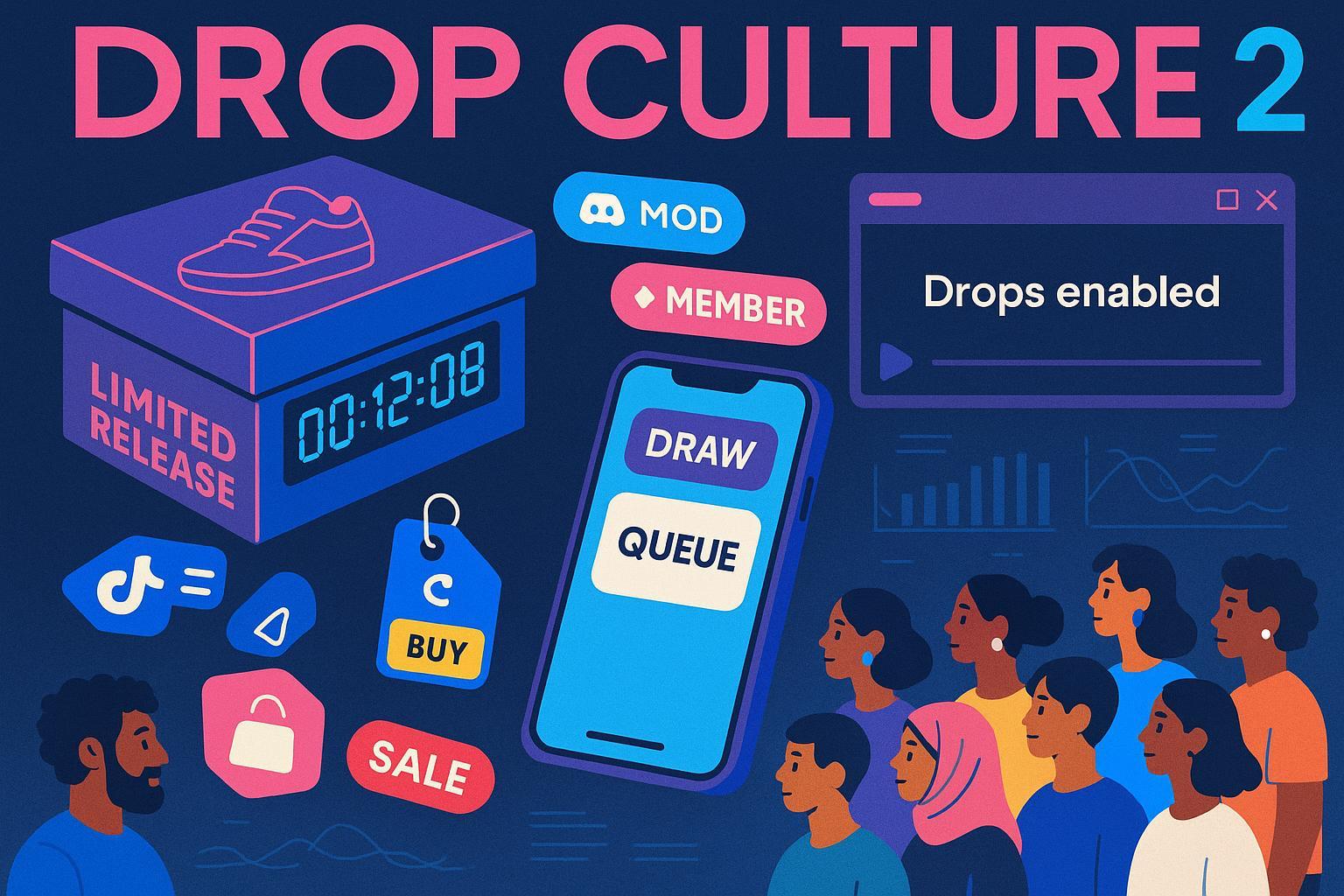
What used to be a Friday line outside a downtown sneaker shop is now a synchronized, data‑driven spectacle that plays out across apps, streams, and micro‑communities. Drop Culture 2.0 is the modern, community‑powered model of limited releases: it blends purposeful scarcity, platform-native tools, and measurement to drive not only sell‑outs, but loyalty and long‑term value.
Definition (short): Drop Culture 2.0 is the evolved practice of launching limited, time- or quantity‑bound releases using social platforms, community gating, and analytics to orchestrate demand and measure outcomes.
Expanded: Where early drops centered on single-channel hype, today’s model layers mechanics like random draws, virtual queues, role‑gated communities, live shopping, and—optionally—digital ownership or provenance. It spans fashion, DTC ecommerce, music, gaming, and creator economies, with an emphasis on fairness, participation, and closed‑loop analytics.
How We Got Here: From Lines to Linked Platforms
- Randomized access normalized fairness in high-demand releases. A widely recognized example is Nike’s SNKRS “Draw,” a random selection that happens after the entry window closes, described in the official explainer Inside SNKRS: SNKRS 101 (Nike, updated 2023).
- Live and social commerce brought the storefront into the feed. In the U.S., TikTok introduced in‑app product tagging, a Shop tab, creator affiliate tools, and checkout, as outlined in Introducing TikTok Shop in the US (TikTok Newsroom, 2023).
- Shopify and the Shop app turned drops into programmable events with fast checkout and notifications; see Launchpad app overview (Shopify Help Center) and the original app announcement Introducing Shop (Shopify, 2020; maintained).
- Communities moved from comments to structured roles and allowlists. Discord enables role‑gated access and verification via Linked Roles, documented in Linked Roles for Admins (Discord Support) and channel permissions in Setting Up Permissions FAQ (Discord Support).
- In gaming, “watch‑to‑earn” mechanics let live audiences claim time‑limited items through Twitch Drops overview (Twitch Developer Docs), aligning attention with access.
The Core Mechanics of Drop Culture 2.0
Think of a modern drop as a concert: tickets (inventory) are limited, the venue (platforms) has entry rules, and fans organize in communities long before showtime.
- Scarcity with fairness: Manage demand via random draws or virtual waiting rooms rather than pure speed. SNKRS draws illustrate random selection at scale per SNKRS 101 (Nike, 2023), and virtual waiting rooms with randomized order are documented in Online ticket queues and fairness (Queue‑it, 2021–2025).
- Community orchestration: Use Discord roles and allowlists to stage access (e.g., VIPs, contributors), supported by Linked Roles for access gating (Discord Support).
- Channel-native conversion: Meet demand where it forms—TikTok for teasers and LIVE shopping with in‑app checkout per TikTok Shop US announcement (2023), Shopify/Shop for fast checkout and automated releases per Launchpad overview (Shopify Help).
- Optional digital twins and access: For provenance or membership perks, storefronts can verify token ownership (NFTs) to unlock products or experiences, as described in Token‑gated commerce on Shopify (Shopify Blog, 2024–2025) and the Shopify tokengated commerce program page. Luxury brands increasingly explore digital product passports for authentication and lifecycle data, per Aura Consortium solutions (Digital Product Passport & NFTs).
The Platform Stack at a Glance
- Nike‑style draws and raffles: Random selection reduces speed advantages and bot racing; reference SNKRS 101 (Nike).
- TikTok Shop and LIVE: Product tagging, creator affiliates, and in‑app checkout enable “see, want, buy” in one flow—see TikTok Shop US launch (2023).
- Shopify + Shop app: Scheduled launches, access gating patterns, and analytics are covered in Launchpad (Shopify Help) and Reports & analytics overview (Shopify Help).
- Discord: Role‑based channels and verification for allowlists and early access; see Permissions FAQ (Discord Support).
- Twitch: Time‑bound, watch‑to‑earn Drops for game items; overview in Twitch Drops (Developer Docs) and setup steps in the Drops campaign guide.
Playbooks by Vertical
- Streetwear/Fashion
- Tease with creator content and countdowns; open entries for a timed draw instead of first‑come, first‑served to mitigate bot/race dynamics as popularized by SNKRS draw mechanics (Nike, 2023).
- Offer verified members early access via Discord roles; instructions for verification flows are in Linked Roles (Discord Support).
- Consider digital receipts or product passports for provenance and post‑purchase benefits, guided by Aura’s digital product passport solutions.
- DTC Ecommerce
- Use Shopify to preconfigure the event: schedule publishing, throttle inventory, and automate pricing or theme changes through Launchpad (Shopify Help Center).
- Build your opt‑in base and “notify me” signals through email/SMS and Shop app followers, then analyze sales and conversion in Shopify reports & analytics.
- If membership tiers matter, token‑gate a limited window or product access per Shopify’s token‑gated commerce explainer.
- Music and Creators
- Combine pre‑saves or content premieres with role‑gated Discord listening parties; see access gating with Discord permissions and roles.
- Bundle limited merch or digital collectibles with early supporters through Shopify; token‑gated perks are described in Shopify tokengated commerce.
- Use TikTok LIVE to turn premiere moments into timed purchase windows, aligned with the features in TikTok Shop US launch (2023).
- Gaming
- Run time‑limited in‑game item campaigns with Twitch Drops (Developer Docs), rewarding watch time and community participation.
- For fairness at scale on your webstore (e.g., collectors’ editions), employ virtual waiting rooms and bot mitigation; Queue‑it outlines the mechanics in online ticket queues and fairness.
Measurement: What to Track (Beyond “Sold Out in 60 Seconds”)
- Demand signals: waitlist/notify‑me opt‑ins, wishlist adds, Discord active members, TikTok saves/shares. For ecommerce, monitor core funnel KPIs in Shopify’s reports & analytics overview.
- Conversion and throughput: drop‑day conversion rate, queue abandonment, cart‑to‑checkout, payment success, sell‑through velocity.
- Equity and loyalty: repeat purchase rates for drop cohorts, community retention, earned media reach and sentiment.
- Fairness and risk: orders flagged as automated, refund/chargeback rates, resale ratios, uptime. For mitigation approaches, see Cloudflare Bot Management overview (2021–2025) and Queue‑it bot detection & protection.
Build a post‑drop review: stitch together platform analytics (Shopify, TikTok Shop, Twitch), community metrics (Discord), and site protection telemetry. Use the insights to adjust allocation rules, access windows, and content briefs for the next cycle.
Fairness, Anti‑Bot, and Operational Risk
When demand exceeds supply, fairness becomes your brand.
- Queueing and randomization: Virtual waiting rooms can randomize order and neutralize refresh/race advantages, as explained in Queue‑it’s fairness primer (2021–2025).
- Bot mitigation stack: Apply layered defenses (behavioral analysis, device fingerprinting, and rate controls). See Cloudflare Bot Management and Cloudflare Rate Limiting.
- Human verification with minimal friction: Modern, CAPTCHA‑free challenges like Cloudflare Turnstile (2023–2025) can help distinguish humans without hurting conversion.
- Platform‑native protections: Some platforms reduce race conditions via randomized draws (see SNKRS 101, Nike) or entitlement‑based reward claims (see Twitch Drops technical guide).
- Transparency and ethics: If you use artificial scarcity, be clear about production limits and restock policy. In luxury, digital passports can communicate authenticity and lifecycle info per Aura digital product passports.
What Drop Culture 2.0 Is Not
- Not just “limited edition” slapped on a product without a plan. The 2.0 model is orchestrated across community, channels, and measurement.
- Not pure first‑come, first‑served. Fairness mechanisms like draws and randomized queues are core tactics documented by platforms such as Nike’s SNKRS draw and by virtual waiting room providers like Queue‑it.
- Not necessarily “crypto‑first.” Token gating and digital passports are optional layers for authentication, membership, or provenance per Shopify token‑gated commerce and Aura Consortium solutions.
FAQs
-
How is Drop Culture 2.0 different from traditional drops? Traditional drops focused on single‑channel hype and speed. 2.0 layers randomized access, community gating, live/social commerce, and closed‑loop analytics (e.g., SNKRS‑style draws per Nike’s SNKRS 101, 2023; LIVE shopping via TikTok Shop US, 2023).
-
Do I need NFTs or Web3 to run a modern drop? No. Many successful drops rely solely on draws, queues, and community roles. Digital tokens can add authentication or membership when relevant, as described in Shopify token‑gated commerce (2024–2025) and Aura digital product passports.
-
What are best practices to prevent bots and scalpers? Combine randomized access (draws/virtual queues) with layered bot defenses (behavioral detection, device/browser integrity, rate limiting). See Queue‑it’s fairness and bot mitigation resources and Cloudflare Bot Management.
-
Which KPIs matter beyond sell‑out speed? Track demand (opt‑ins, wishlists), conversion (CVR, queue abandonment), equity (repeat purchase, LTV proxies), and fairness/risk (bot flags, chargebacks). Ecommerce platforms provide baseline reporting, e.g., Shopify reports & analytics overview.
-
How do I use TikTok and Discord effectively for drops? On TikTok, pair short‑form teasers with LIVE shopping and in‑app checkout features described in TikTok Shop’s US launch (2023). On Discord, set up role‑gated channels and verification to stage access windows; see Discord permissions & Linked Roles docs.
-
Are raffles fairer than queues? They solve different problems: raffles/draws remove speed advantage entirely, while randomized virtual queues smooth demand and reduce server strain. Both are documented by platform and vendor resources (e.g., SNKRS draw, Nike; Queue‑it online ticket queues).
2025 Outlook
- Commerce in the feed: Expect more platform‑native checkout and LIVE events as social platforms deepen commerce features, a trajectory captured in TikTok Shop’s 2023 US rollout.
- Fairness tech hardens: Widespread adoption of layered bot defenses and low‑friction human checks like Cloudflare Turnstile (2023–2025), plus queue/raffle hybrids documented by Queue‑it.
- Provenance becomes practical: Luxury and collectible categories expand digital receipts and product passports beyond speculation, as shown by Aura’s digital product passport solutions.
Bottom line: Drop Culture 2.0 isn’t just about selling out—it’s about designing fair access, mobilizing communities, and proving impact with data. Brands that master the orchestration loop—from signals to access to post‑mortem—will turn one‑off hype into compounding loyalty.