Digital Product Passports: What They Are and How They Work

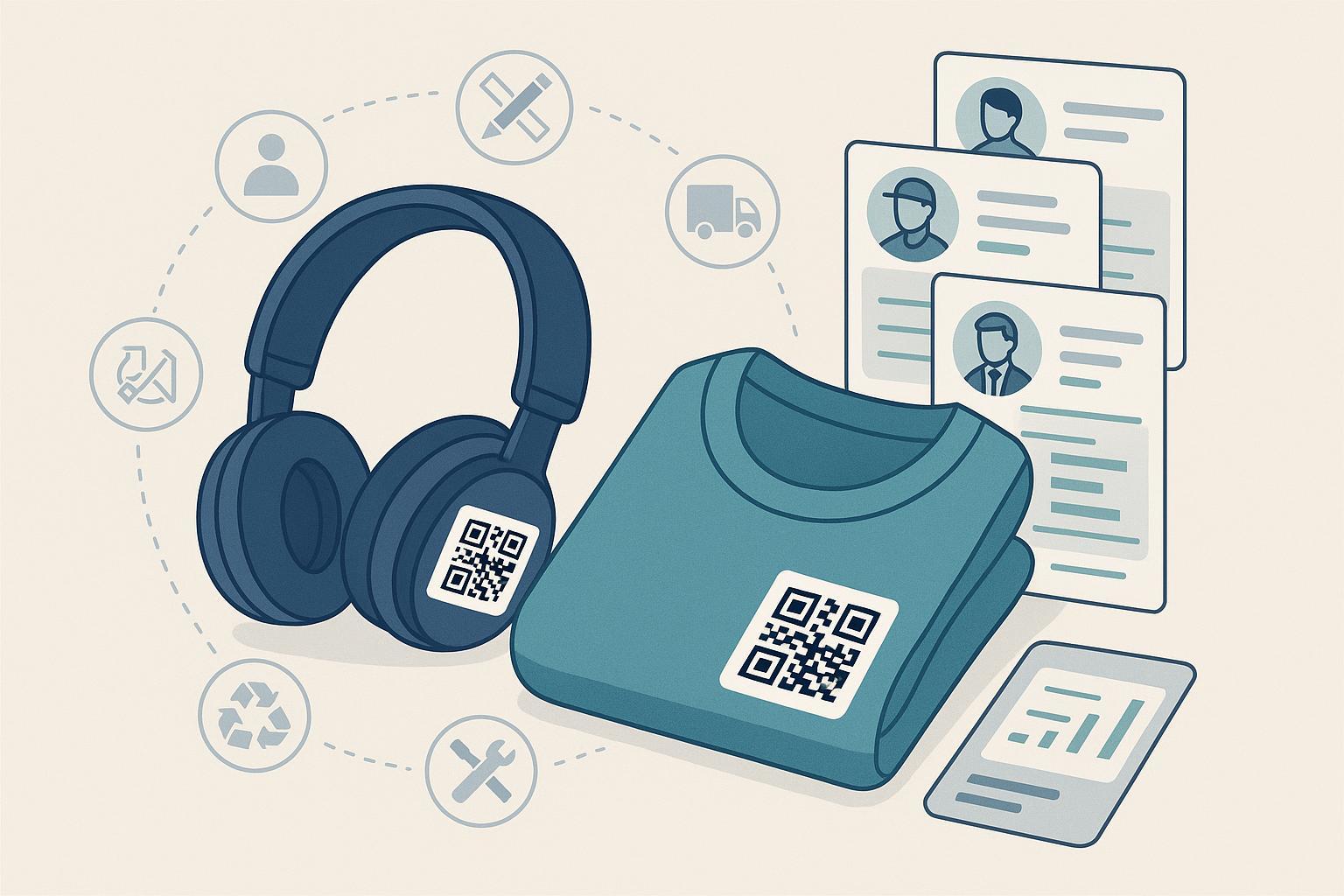
Digital Product Passports (DPPs) are becoming the “digital identity cards” of physical products in the European Union. In simple terms, a DPP is a standardized, electronic record attached to a product that discloses verified information about what it’s made of, how it performs, and how to handle it across repair, reuse, and end‑of‑life. The concept sits at the heart of the EU’s Ecodesign for Sustainable Products Regulation (ESPR), which is rolling out sector by sector via product‑specific rules. For orientation, see the European Commission’s framing of DPPs within the ESPR framework in its official overview.
Key takeaways
- A DPP is an interoperable, role‑based product record mandated under the EU’s ESPR to improve transparency and circularity.
- The first legally mandated case is the Digital Battery Passport, applicable from February 18, 2027, for specified battery categories in the Batteries Regulation.
- Exact data fields and timelines will be defined in delegated acts for each product group; plan for tiered access and open, non‑proprietary standards.
A plain‑English definition
A Digital Product Passport (DPP) is a standardized, digital file linked to an individual product via a scannable identifier (e.g., QR/RFID). It contains authoritative information about materials and composition, substances of concern, durability and repair, environmental performance, and compliance documentation so that manufacturers, importers, repairers, recyclers, consumers, and authorities can make better decisions throughout the product’s life. The European Commission positions DPPs as a core instrument under ESPR, with details set through product‑group delegated acts in EU law (see the Commission’s Ecodesign for Sustainable Products Regulation overview).
Think of it like a car’s service history—except it’s standardized, digital, and designed for every relevant product group, from textiles to electronics. Unlike a marketing label, access to a DPP can be role‑based: consumers may see high‑level sustainability and repair information, while authorities or authorized professionals can view detailed technical or compliance data. This access model is described in the Commission’s latest DPP FAQs (2024 iteration).
- What it is: a legally grounded, interoperable data record tied to a product’s unique identifier under ESPR.
- What it is not: a voluntary marketing badge or a generic datasheet; DPPs are regulated, with content and access defined in law and related standards.
Authoritative references: see the Commission’s ESPR overview and the Commission’s DPP FAQs for governance, access control, and standardisation directions.
Why DPPs matter (by role)
- Manufacturers, importers, distributors: DPPs will become a baseline requirement for EU market access as delegated acts take effect. They support smoother conformity checks and customs/market surveillance. The Commission’s 2024 explainer highlights ESPR’s intent to make sustainable products the norm.
- Service/repair/refurbishment networks: Access to verified parts lists, repair guidance, and diagnostics can reduce turnaround time and costs, enabling circular services.
- Recyclers and waste operators: Composition and substances‑of‑concern data help sort and recover materials more efficiently.
- Consumers and public buyers: Clear, comparable information on durability, repairability, and environmental performance supports better purchasing and maintenance decisions.
For official framing of these aims, see the Commission’s high‑level ESPR news explainer published on July 19, 2024.
How a DPP works (the moving parts)
- Legal governance: ESPR provides the framework; concrete requirements (what data belongs in the passport, who can see it, and when) arrive via product‑group delegated acts adopted by the EU institutions. This structure is described in the Commission’s ESPR overview.
- Role‑based access and confidentiality: The Commission states that DPPs will “open up data access on a need‑to‑know basis… based on open, non‑proprietary international standards,” with tiered visibility for different actors. See the Commission’s DPP FAQs (2024 iteration) for the role‑based access model.
- Identifiers and data carriers: Products will be linked to their DPP via standardized, scannable identifiers (e.g., QR codes, RFID/NFC). The GS1 Digital Link standard shows how GS1 identifiers (like GTIN) can resolve to online data through open, web‑addressable URIs—an approach compatible with DPP access patterns (see the GS1 Digital Link standard page).
- Interoperability and infrastructure: The Commission has initiated standardisation for “data carriers, infrastructure and data interoperability,” signalling the digital underpinnings that will allow authorities and supply‑chain systems to verify DPPs at scale. See the Commission’s DPP FAQs for this standardisation agenda.
Regulatory timeline and first movers
- Batteries first: The EU Batteries Regulation (Regulation (EU) 2023/1542) creates a Digital Battery Passport. The consolidated legal text states that the “battery passport” obligation applies from February 18, 2027, for specified battery categories. Refer to the EUR‑Lex consolidated text of Regulation (EU) 2023/1542 for the article titled “Battery passport” and its applicability date.
- Broader roll‑out: ESPR entered into force in 2024. Additional product groups—such as textiles, electronics, and construction products—will come online through delegated acts that specify DPP scope and content. Keep an eye on the European Commission’s ESPR overview page and subsequent publications in the EU’s Official Journal for binding details.
- Context analysis: For a policy timeline overview of digital battery passport implementation phases (secondary source), see the 2024 in‑depth analysis by CEPS.
As of 2025-09-10, many non‑battery product‑group delegated acts are still in development; final data fields and exact go‑live dates will appear in the Official Journal once adopted.
What’s inside a DPP (will vary by product group)
While each sector’s delegated act will define the exact fields, the Commission’s FAQs indicate that a DPP typically contains:
- Product identification (unique identifier, model, batch/lot)
- Materials and composition (including recycled content where relevant)
- Durability and repairability indicators; spare parts and service information (with role‑based access)
- Substances of concern and safety information
- Environmental performance metrics (e.g., carbon footprint where mandated)
- End‑of‑life handling and compliance documentation
For these content patterns and access principles, see the Commission’s DPP FAQs (2024 iteration).
A quick role journey (battery example)
- Consumer: Scans a QR code on an e‑bike battery. The DPP displays basic specs, durability/repair guidance, and safe handling tips before disposal.
- Repair technician: Authenticated access reveals parts catalogues, diagnostic procedures, and firmware compatibility to enable safe, efficient repairs.
- Recycler: Gains structured composition data and substances‑of‑concern flags to optimize material recovery and ensure regulatory compliance.
- Authority (customs/market surveillance): Verifies the existence, authenticity, and conformity of the DPP and checks that required fields are present for the battery category.
This tiered visibility matches the Commission’s role‑based access concept in the FAQs and relies on standardized identifiers and carriers, such as those defined in GS1 Digital Link.
Implementation: a practical checklist
Use this starter checklist to prepare for DPP requirements while delegated acts finalize details:
- Map scope and timing
- Identify which of your product lines are likely to fall under early delegated acts; monitor the Commission’s ESPR overview and Official Journal updates.
- Establish identifiers and data carriers
- Ensure products have globally unique, interoperable identifiers and plan for carriers like QR or RFID that can resolve to online data. Review the GS1 Digital Link standard for web‑resolvable identifiers.
- Design a role‑based data model
- Separate consumer‑facing fields from professional/authority‑only fields; implement access control aligned with the Commission’s role‑based access guidance in the DPP FAQs.
- Build verifiable, authoritative data pipelines
- Source composition, substances‑of‑concern, repair, and environmental data from systems of record; version and audit changes to support conformity checks.
- Plan for updates and governance
- Assign ownership for DPP data maintenance, change control, and incident response; track delegated‑act updates per product group and update labels/links accordingly.
- Test interoperability
- Validate scanning and data resolution across QR/RFID, multiple devices, and network conditions; prepare for authority and partner system checks as standardisation of “carriers/infrastructure/interoperability” progresses (see the Commission’s FAQs).
Frequently asked questions
-
Who can see what in a DPP? Access is role‑based. Consumers may see high‑level information; professional users and authorities may access detailed technical/compliance data. This principle is described in the Commission’s DPP FAQs (2024 iteration).
-
Do non‑EU manufacturers need DPPs? Yes, if you place products on the EU market, relevant DPP rules apply regardless of origin. See the Commission’s ESPR overview for scope and obligations.
-
Which standards should we watch? Expect data carriers and identifiers to follow open, non‑proprietary international standards. GS1 Digital Link is a leading example for resolvable identifiers encoded in QR/RFID/NFC. See the GS1 Digital Link standard page and the Commission’s DPP FAQs for standardisation signals.
-
How often will a DPP be updated? Updates depend on the product group’s delegated act and operational events (e.g., after major repairs or compliance changes). The Commission’s FAQs emphasize governance and traceability; monitor delegated acts in the Official Journal for specific update rules per sector.
Related concepts (quick map)
- Digital Battery Passport (DBP): A sector‑specific DPP mandated by the Batteries Regulation, applicable from February 18, 2027, for specified battery categories (see the EUR‑Lex consolidated text of Regulation (EU) 2023/1542).
- Product Environmental Footprint (PEF): An EU methodology for assessing environmental performance; selected PEF‑related metrics may appear in DPPs where required by delegated acts (see the Commission’s ESPR overview for how instruments interrelate).
- Extended Producer Responsibility (EPR): End‑of‑life obligations that DPP data can help document and report (see the Commission’s ESPR overview for broader policy context).
Bottom line
DPPs are moving from concept to compliance reality in the EU. Starting with batteries in 2027 and expanding via product‑group rules under ESPR, companies should prepare for role‑based data sharing, interoperable identifiers and carriers, and ongoing updates as delegated acts finalize details. For authoritative guidance and the latest official developments, rely on the European Commission’s ESPR overview and the Commission’s 2024 DPP FAQs—and verify sector‑specific obligations in the EU’s Official Journal as they are adopted.
References for deeper reading (authoritative anchors)
- Explore how DPPs fit within ESPR in the European Commission’s Ecodesign for Sustainable Products Regulation overview.
- Review governance, access, and standardisation in the Commission’s DPP FAQs (2024 iteration).
- Confirm battery‑passport applicability in the EUR‑Lex consolidated text of Regulation (EU) 2023/1542.
- See GS1’s Digital Link standard for resolvable identifiers in QR/RFID/NFC.
- For policy context on battery‑passport phases, consult CEPS’s 2024 in‑depth analysis (secondary source).
Inline reference anchors used above:
- “Ecodesign for Sustainable Products Regulation overview” — European Commission
- “DPP FAQs (2024 iteration)” — European Commission, DG Environment
- “EUR‑Lex consolidated text of Regulation (EU) 2023/1542” — Official EU law
- “GS1 Digital Link standard page” — Standards body, GS1
- “2024 in‑depth analysis by CEPS” — Policy research (context)