Creative Variance Budgeting: Redefining Agile Resource Allocation in Content Marketing and SaaS

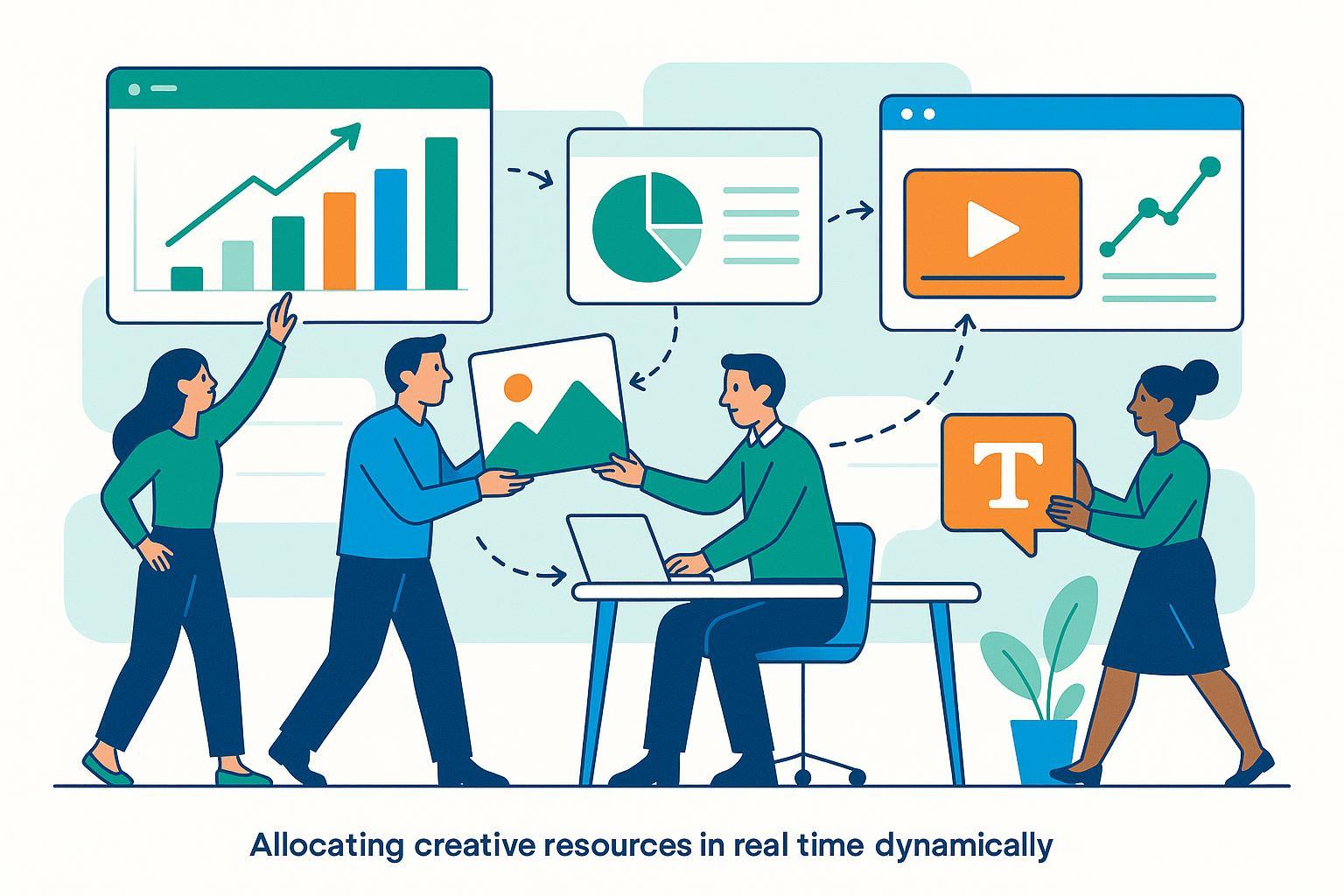
If you’ve ever felt the frustration of seeing a marketing campaign soar—only to be held back by static budgets—or watched an underperformer drain resources without a strategy for timely course correction, you’re not alone. Enter Creative Variance Budgeting: a modern, adaptive approach that empowers marketing and SaaS teams to shift creative resources swiftly, maximizing both ROI and innovation. Let’s dive into what this concept really means, how it’s different from traditional budgeting, and how you can bring it to life in your organization.
What Is Creative Variance Budgeting?
Creative Variance Budgeting refers to a real-time, data-driven method of allocating marketing and creative budgets. It’s an evolution from classic variance analysis: rather than simply measuring the gap between planned and actual spending, teams use these insights to actively reallocate funds, amplify winning campaigns, and rapidly test new ideas. The result? A budgeting process that thrives on flexibility, creativity, and a feedback loop of continuous improvement.
In other words, while traditional budgeting asks “Did we stick to the plan?”, creative variance budgeting asks “How can we adapt the plan to what’s working right now?” This mindset shift lies at the heart of modern growth marketing—and increasingly, SaaS operations—in 2025.
The Power of Analogy: Budgeting as a Jazz Ensemble (or a Road Trip)
Think of traditional budgeting as performing a classical piece, sticking strictly to the sheet music—predictable, controlled, but sometimes lacking in creative freedom. Creative variance budgeting, on the other hand, is like leading a jazz ensemble: the team improvises based on the cues of the moment and audience response, shifting resources (musicians, solos, rhythms) to optimize the outcome in real time.
Alternatively, imagine your budget as a GPS route. If traffic or construction pops up, a flexible system lets you reroute instantly, choosing the best path to your goal. Creative variance budgeting gives you the tools—and the permission—to navigate unexpected market twists, reallocating fuel (dollars) where it’ll move you fastest.
Comparative Table: Traditional vs. Flexible vs. Creative Variance Budgeting
| Traditional Budgeting | Flexible Budgeting | Creative Variance Budgeting | |
|---|---|---|---|
| Definition | Fixed, annual, historic plans | Activity or output-linked allocations | Adaptive, real-time reallocation for creative performance |
| Use Case | Stable, predictable environments | Moderately dynamic markets | Highly dynamic, experimental environments (SaaS, content marketing) |
| Main Benefit | Simplicity, control | Responsiveness to change | Agility, creativity, rapid ROI maximization |
| Limitation | Rigid, outpaced by change | More complex to manage | Requires analytics, expertise, collaboration |
| Application Example (2025) | 7–10% of revenue, fixed | % flexed by campaign metrics | Rapid monthly/quarterly shifts in spend by channel, campaign performance |
As shown above, creative variance budgeting sits at the frontier of budget management—not just tracking deviations (variance), but treating them as opportunities for innovation and continuous optimization, especially in marketing and SaaS.
How Does It Work? Practical Frameworks & Stepwise Guidance
Modern teams rely on eight essential steps—confirmed by leading marketers and SaaS leaders in 2025—to implement creative variance budgeting successfully:
- Continuous Rolling Forecasts: Instead of yearly budget lock-in, update projections monthly or quarterly, reflecting current market and campaign realities.
- KPI-Driven Models: Tie budget adjustments to key metrics (CAC, LTV, engagement rates), ensuring spend aligns with what truly moves the needle.
- Real-Time Data Integration: Leverage dashboards or AI-powered analytics to monitor campaign results live; be ready to adjust immediately.
- Scenario Modeling & Simulation: Pre-test possible reallocation effects ("What if we moved 25% of spend to TikTok?") before acting.
- Budget Guardrails: Establish thresholds—how much you can reallocate at a time—to avoid reckless swings and maintain discipline.
- Performance-Based Reallocation: Move funds from underperforming to outperforming channels or creative assets as new data emerges.
- Cross-Functional Collaboration: Involve finance, marketing, product, and analytics teams to ensure buy-in and smooth execution.
- Iterate and Evolve: Use each reallocation as a learning moment, refining your process based on outcomes and new insights.
You’ll find expanded breakdowns of these steps and their tech enablers in resources like Finance Alliance’s Variance Analysis Cycle and the Improvado Marketing Budget Guide (2025).
Real-World Case Studies: Bringing Creative Variance Budgeting to Life
- Adobe SaaS Monetization: Used AI to predict churn and adjust offers, shifting budget in real time to maximize subscription lifetime value—demonstrating the power of creative, analytics-led reallocation (Digital Defynd: Financial Analytics Case Studies, 2025).
- Powered By Search (SaaS Content Syndication): Leveraged live performance tracking to iteratively shift content and channel budgets, cutting cost-per-qualified-lead by 38% (DemandView: Lowering CAC for SaaS, 2024).
- Meta/Oculus Marketing: Used real-time telemetry and activity-based costing for business unit budget reallocation, driving creative prioritization (Whitehat SEO: The State of Marketing Employment & AI Transformation in 2025).
Industry benchmarks show SaaS and marketing teams trending toward 7.7–12% of revenue for agile marketing budgets—with high performers monthly or quarterly shifting funds between channels, formats, and creative tacticsHubSpot 2025 Marketing Budget Data.
Scenario-Based Narrative: How Would You Respond?
Imagine you run marketing at a SaaS startup:
- Your paid social campaign delivers a surprising spike in engagement and leads—organic blog content, meanwhile, underwhelms.
- Rather than waiting for the quarter to end, you use real-time analytics to pull 15% of blog spend into paid social, amplifying what’s working.
- What would you do if performance shifted again next month? Creative variance budgeting empowers you to update, test, and pivot—without fear or friction.
Pause and think: Are there creative spend opportunities in your team that stagnant budgeting would miss? What triggers would you set for reallocating budget?
Tools & Technology: Enabling Creative Variance Budgeting
Industry-leading platforms supporting real-time creative variance budgeting include:
- Albert AI: Automated, omni-channel marketing optimization, instantly shifting spend across channels (NoGood: AI Growth Marketing Tools, 2025).
- Brevo (Sendinblue): AI-powered campaign scheduling and rapid budget allocation.
- Google Analytics with AI Insights: Connects spend directly to funnel impact, surfacing actionable variance.
- Sage Cloud: Automates forecasting and budget scenario planning for marketing/SaaS teams (Sage 2024 Annual Report).
For hands-on application, industry blogs (Single Grain, Skale.so) offer downloadable checklists and templates supporting dynamic budgeting approaches—aligning with key principles of creative variance, if not named as such.
Related Concepts and Boundaries
It’s easy to confuse creative variance budgeting with similar models. Here’s how they differ:
- Zero-Based Budgeting: Build budgets from scratch for each cycle, allocating only to proven-effective channels; often used as a baseline for creativity.
- Rolling Forecasts: Monthly/quarterly updates reflect live market changes—crucial enabler for creative variance.
- Scenario Planning: Integrates "what-if" logic so creative teams can plan for multiple campaign outcomes.
More background at actiTIME: Budget Variance Analysis Simplified.
Final Thoughts: Embrace Agility, Foster Innovation
Creative variance budgeting is more than a technique—it’s a cultural shift for marketing and SaaS teams. By making budgets living, breathing instruments of creativity, you empower your team to chase opportunity, adapt fast, and maximize outcomes.
Ready to put theory into action? Begin by tracking your variance live, setting reallocation triggers, and inviting your team to improvise for better results. As the landscape shifts ever faster, creative variance budgeting can be your toolkit for thriving—not just surviving—in the innovation economy.
References for further reading: