How to Use Content to Attract Quality Leads (Not Just More Names)

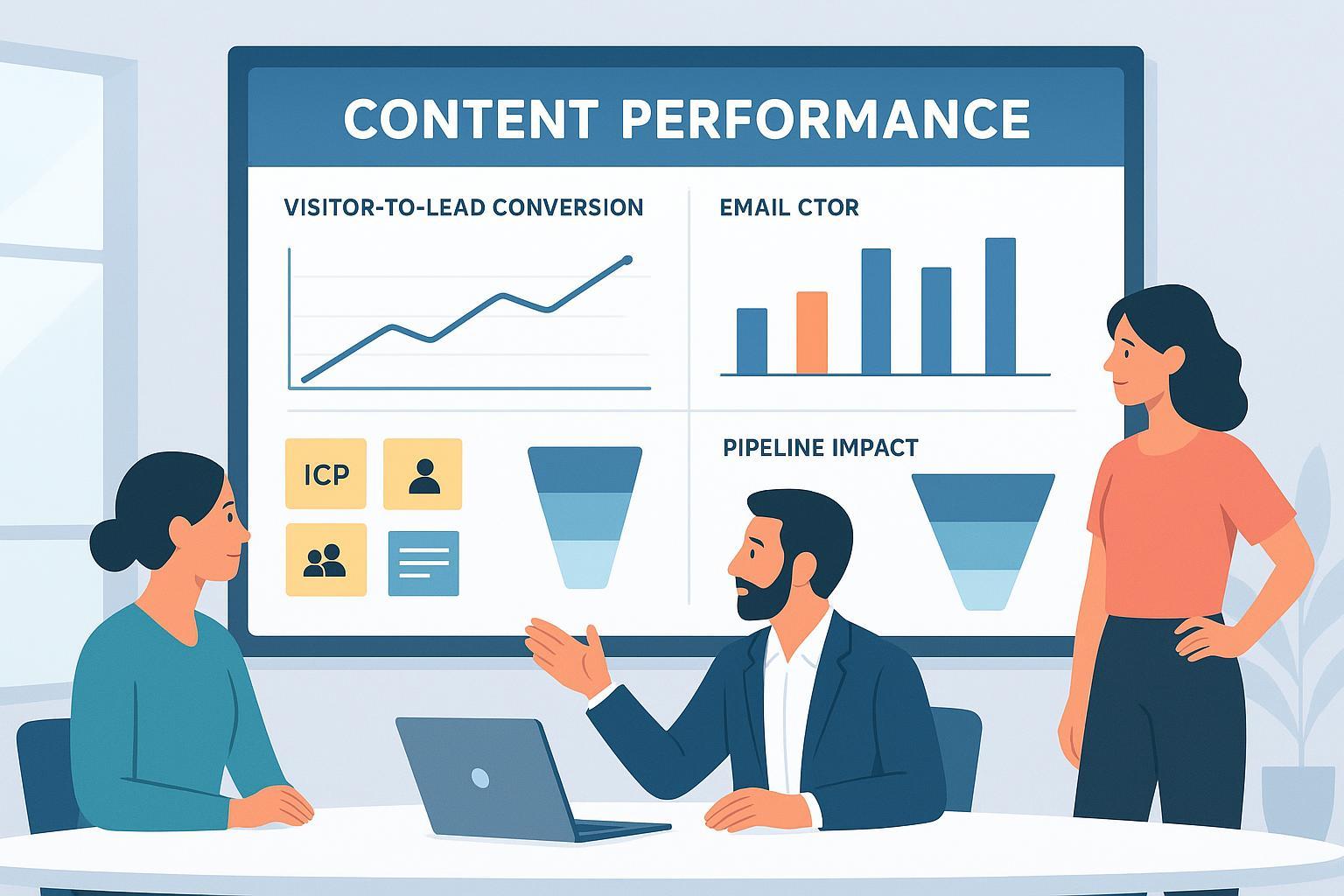
You don’t need more leads. You need leads your sales team actually wants. If your content is filling the funnel with tire-kickers, your CAC creeps up, sales cycles drag, and everyone starts questioning content’s ROI. Here’s the playbook I use with B2B teams to reverse that: engineer content around ICP fit and intent, then build distribution, capture, scoring, and nurture that reward depth, not vanity volume.
What a “quality lead” means in 2025
A quality lead is a known person or buying group member who matches your ICP and shows reliable intent signals aligned to a near-term commercial outcome. Make it measurable:
- ICP fit: firmographic/technographic match (industry, size, region, key tools) at or above a defined threshold.
- Role relevance: power or influence in the buying group (title seniority or function).
- Intent depth: behaviors tied to problem, solution, or pricing—e.g., uses your ROI calculator, downloads a buyer’s guide, attends a demo-focused webinar.
- Progression likelihood: historically, contacts with similar patterns convert from MQL→SQL at or above your benchmark.
For stage expectations, multi-year datasets suggest typical B2B ranges vary by sector and motion; use them as contextual guardrails rather than absolutes. A transparent reference is FirstPageSage’s 2025 sales funnel conversion rate benchmarks, which segments conversion by stage and industry.
Map your ICP and the buying jobs
Start with three lenses you can actually operationalize: define the urgent outcomes your best-fit accounts are chasing (and the roadblocks), identify two to four personas with distinct jobs-to-be-done and objections, and outline the paths they take—the content, channels, and triggers that move them from curiosity to consensus. Document this in one page per segment, then align content and capture to the journey.
Content-to-journey map you can use today
| Funnel Stage | Formats that work | Primary goal | Success metrics |
|---|---|---|---|
| Awareness | Ungated explainers, short videos, thought leadership, trend snapshots | Earn attention and trust | Engaged sessions, brand search lift, content consumption depth |
| Consideration | Comparison guides, ROI tools/calculators, webinars, white papers | Capture qualified demand | Lead capture rate by asset, lead score, content-assisted SQLs |
| Decision | Case studies by segment, demos/trials, implementation guides, pricing tools | Create buying confidence | Demo-booked rate, opportunity rate, win rate, sales velocity |
Balance short and deep formats. Buyers say they love concise content, but still use in-depth assets to make decisions: 80% prefer short-form and 67% use it in decisions, while 78% still rely on white papers, per the Demand Gen Report 2024 Content Preferences study.
The 7-step workflow to attract quality leads
1) Offer strategy: pick problems worth solving
Lead magnets determine lead quality more than forms do. Put bluntly, fluffy checklists produce fluffy leads. Favor offers that solve a costly, timely problem, demand meaningful engagement (a calculator, assessment, workshop, or live Q&A), and speak only to your ICP while politely excluding the wrong audience with copy and examples. Tie each offer to a single business question. If it can’t influence a pipeline decision, shelve it.
2) Create assets that signal intent
Depth communicates seriousness. Think a buyer’s comparison workbook with criteria checklists, a segmented webinar series (role- or industry-specific) with live Q&A, or a pricing readiness guide. Thought leadership isn’t fluff if it has a point of view and evidence—decision-makers say they trust strong thought leadership more than generic marketing materials, and 29% even tie specific sales leads to it according to the Edelman–LinkedIn B2B Thought Leadership Impact Report (2024). As guardrails, aim for a minimum viable asset like a 6–10 page guide or a 30–40 minute webinar that teaches a repeatable method; version it for segments by changing the problem framing, data points, and case examples; and add interaction—calculators, worksheets, and quizzes double as first-party data capture.
3) Distribution and amplification (owned, earned, paid)
Organic plus paid beats either alone. Pair SEO articles and social video with a lightweight paid engine to reach ICPs faster. Expect paid CPL pressures: Google Search Ads’ average CPL reached about $70.11 in 2025 (YoY up) per WordStream’s 2025 Google Ads benchmarks—yet another reason to align offers with high intent and avoid spray-and-pray. For a balanced mix, activate owned channels (website hub pages, newsletter, community/Slack, product education), tap earned reach (partners, analysts, events, guest posts), and layer paid (search for high-intent queries, LinkedIn for precise roles, carefully filtered syndication, and retargeting that mirrors nurture themes).
4) Landing pages and conversion
Clarity converts. Keep one promise, one CTA, one form. Top-quartile B2B landing pages commonly achieve 5%+ CVR with the right traffic and reduced friction. Use social proof near the fold, skim-first formatting, and progressive profiling.
Form design tips:
- Ask only what you’ll use in the next 30 days.
- Use dynamic fields (industry, team size) plus a single open-ended qualifier for sales.
- Test CTA copy that reinforces value (“Get the ROI model”).
5) Lead capture and scoring
Blend explicit and implicit signals. Explicit data covers role, company size, and industry; implicit signals include asset depth, high-intent pages, repeat visits, time on pricing, and calculator completion. Set a scoring threshold for MQL that reflects your historical MQL→SQL rate; if sales acceptance is poor, your threshold is too low or your offer is misaligned. Use decay so a one-off click doesn’t over-inflate scores, and route high-intent behaviors (pricing tool, demo engagement) to sales with alerts.
6) Nurture architecture (email, retargeting, sales assists)
Build a 3–5 message lesson sequence that recaps your lead magnet and advances one idea per send. Branch by role and behavior; pair each email with coordinated retargeting (LinkedIn/search) that mirrors the lesson. Given privacy shifts (e.g., Apple MPP), treat open rate as directional at best and judge performance on clicks and downstream impact. Your baseline reference should be your ESP’s live benchmarks; see Mailchimp’s email marketing benchmarks page and aim for healthy CTOR while keeping unsubscribes low. For sales assists, alert SDRs when signals spike (pricing views, calculator completion) and provide a one-paragraph hypothesis with two or three questions for a helpful follow-up.
7) Measure and optimize
Dashboard by stage: visitor→lead CVR, cost per lead, MQL rate, MQL→SQL, SQL→opportunity, win rate, pipeline per channel, CAC payback, and sales velocity. For content, track asset-specific capture rate, assisted SQLs, demo-booked rate, and revenue influence. Weekly, QA your data, review top/bottom landing pages, test copy, and suppress unengaged segments. Monthly, refresh audience filters, rotate offers, re-score thresholds with sales feedback, and reallocate budget to the top quartile offers and channels.
ABM and content syndication: protect quality at the source
ABM concentrates effort on named accounts. Build micro-sites or one-pagers that reflect each account’s initiatives and proof. Orchestrate LinkedIn, search, email, events, and sales touchpoints to the same value narrative. For content syndication, quality varies widely; mandate ICP filters, topic alignment, explicit opt-in, and data transparency. Expect substantial variance in inquiry→MQL; programs often range from 15% to 50% in practitioner reports, per Pipeline360’s 2024 State of B2B Pipeline Growth eBook. Create SLAs for lead freshness, de-duplication, and invalid lead replacement.
Privacy-first data capture you can stand behind
With third-party signals fading, design content that earns zero- and first-party data. Use interactive tools, assessments, and community signups that people want, and pair them with clear consent language. Implement server-side tagging and keep your data minimization policy tight. The goal is simple: capture only what improves the buyer experience or sales conversation within a defined timeframe.
A 30-day action plan to lift lead quality
- Week 1: Define ICP “must-have” filters and audit your last 90 days of offers, landing pages, and nurture against them. Kill anything that attracts the wrong audience.
- Week 2: Ship one high-intent offer (calculator, comparison workbook, or demo-readiness guide). Write a 3-email lesson sequence and matching retargeting creatives.
- Week 3: Rebuild the landing page: one promise, one CTA, progressive profiling, and proof above the fold. Set scoring thresholds and sales alerts for pricing/calculator behaviors.
- Week 4: Launch, then review stage metrics and sales feedback. Double budget on the top quartile channel/offer pair; pause the bottom quartile. Document what you’ll test next.
Final thought
Quality leads come from two things: offers that matter and signals you can trust. Build both into your content system and you’ll feel it fast—in cleaner pipelines, shorter cycles, and deals your reps actually want to chase.