Content Templates for SEO Success (2025)

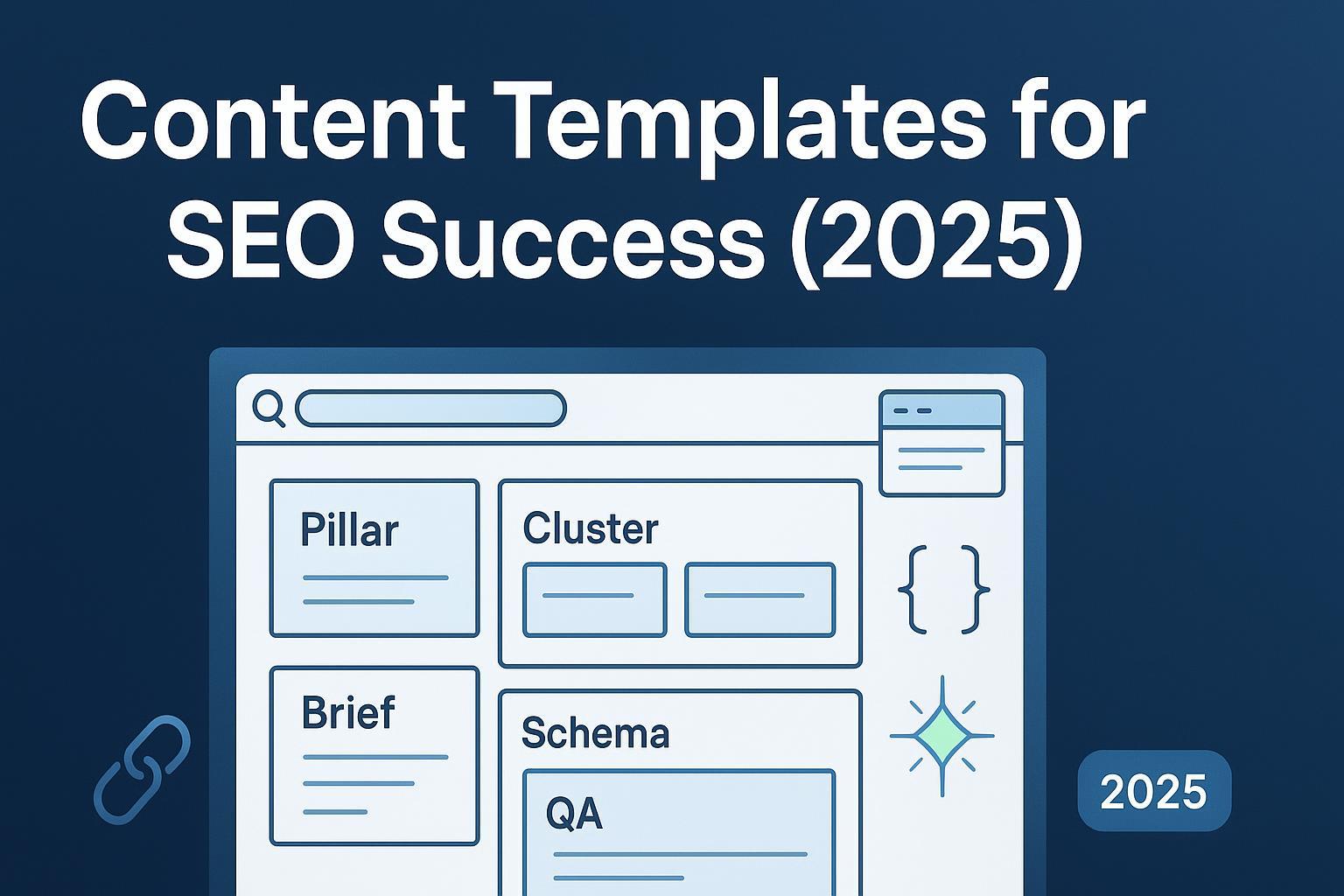
If you lead content and SEO, you don’t need more theory—you need repeatable docs your team can copy, fill, and ship. This 2025 collection packages the field‑level templates I rely on to plan clusters, brief writers, structure pages for SERP features, and keep quality high as you scale.
A quick note on why these templates work right now: Google’s guidance in 2025 centers on helpfulness, distinct value, and surfacing the most important information clearly. That’s the north star for every template here. See Google’s perspective in SGE/AI-era search in the concise overview, “Succeeding in AI Search” from 2025.
Methodology in one paragraph: I prioritized templates by 1) fit with 2025 SERP realities, 2) effort to implement, 3) evidence recency/quality, 4) scalability, and 5) measurement alignment. You’ll find scenario‑specific guidance, constraints, and one lightweight code example to speed implementation.
Strategy architecture templates
Pillar–cluster hub template
What it achieves: a navigable architecture that groups related topics, clarifies internal linking, and makes it easier for both users and crawlers to discover depth on a theme.
When to use: launching or reorganizing a content program; rescuing orphan pages; planning a new market category.
Core fields to include: pillar topic; 8–20 cluster subtopics grouped by intent; URL naming and breadcrumb plan; contextual anchors for hub → spoke and spoke ↔ spoke; entity list and synonyms; measurement notes (index coverage, impressions, rankings by cluster).
Trade‑offs: forced links or generic anchors dilute relevance; over‑broad clusters become thin. Keep anchors descriptive and links context‑fit.
How to measure: cluster‑level impressions/rankings, crawl stats, internal link coverage, and user paths from hub to conversion pages.
Why it aligns with 2025 guidance: clear structure and meaningful internal links help discovery and understanding; that’s straight from Google’s fundamentals.
Programmatic SEO page template (parameterized pages)
What it achieves: consistent, intent‑aligned pages at scale—without falling into thin content—by combining variables with unique data blocks and editorial sections.
When to use: location pages, product feature variants, comparisons at scale, directory/category expansions.
Core fields to include: variables (entity, attribute, filter); unique data (stats, ratings, inventory, schedules, screenshots); sections (overview, key details, FAQs, comparisons, related items, citations); schema (Product/FAQ/LocalBusiness/ItemList as applicable); internal links to the hub and siblings; primary and secondary CTAs.
Risks and mitigations: index bloat and duplication—consolidate near‑duplicates, add canonicals, grow in measured cohorts, and require at least one unique data block per page.
Evidence worth noting: the Fiveable program saw traffic grow 497% in 6 months while scaling to 83.8K pages, with more Featured Snippets, per the AIOSEO write‑up. Treat this as a case study, not a universal guarantee.
How to measure: template cohort indexing, crawl budget changes, CTR by facet, snippet/AI Overview presence, conversions per 100 pages.
Page‑level SEO frameworks
On‑page SEO content brief template
What it achieves: aligns writers with intent, SERP realities, and internal linking—so your draft lands closer to “publish‑ready.”
Include: target topic and intent bullets; SERP notes (page types, features, competing URLs); outline with H2/H3s that match intent and entities; keywords/entities (primary, secondary, related); internal link targets and precise anchors; external sources to cite; schema recommendation (Article, plus FAQ/HowTo when relevant with eligibility notes); expected range for length; measurement plan (rankings, CTR, AI Overview visibility, conversions).
Why this structure: the elements map closely to what top practitioners emphasize. For a practical overview of on‑page components and briefs, see Backlinko’s updated guide.
How‑to/tutorial template (featured answers & PAAs)
What it achieves: concise, stepwise instructions that are easy for people to follow and for search systems to excerpt.
Use this shape: a 40–60‑word lead answer; numbered steps with verbs; required tools/materials; estimated time; visuals for key steps; an H3 section answering 3–5 related questions (the PAA set).
Eligibility note: Google can extract short answers for featured snippets; explicit Q&A sections also tend to align with People Also Ask behavior. Markup isn’t a silver bullet here—clarity and structure come first.
Reference: Google’s featured snippet overview explains how answerable content is identified.
Comparison “X vs Y” template (decision‑stage)
What it achieves: transparent trade‑offs with tested notes so readers can decide quickly.
Structure to use: a brief TL;DR verdict plus “best for whom”; a consistent side‑by‑side table (pricing, integrations, support, limits); screenshots and measured drawbacks; FAQs and close alternatives. Add disclosures where any material connection exists.
Why it matters in 2025: Google’s reviews system calls for original research and experience from knowledgeable authors—thin spec summaries won’t cut it.
Listicle template (freshness & scannability)
What it achieves: crisp lists that people can scan, that AI can parse, and that you can keep current without rewriting everything.
Structure to use: one H2/H3 per item; a repeatable mini‑pattern (what/why, best use, core elements, example, citation); a visible “last updated” note and small change log. Consider internal anchors for long pieces.
Editorial tips: use varied sentence lengths, resist over‑bulleting, and group items by scenario to avoid reader fatigue.
Glossary/definition template
What it achieves: captures definitional queries and strengthens internal semantic linking across your pillar.
Include: the term; a concise definition; a short “in practice” example; related terms and category; cross‑links to your pillar and sibling entries; optional DefinedTerm/Article schema; steward and review date.
Use cases: onboarding for new markets; entity reinforcement for topic clusters; quick‑reference assets for sales/CS.
Review/tested experience template (with disclosures)
What it achieves: experience‑rich reviews that meet user expectations and align with search systems designed to reward depth over fluff.
Include: scope and use case; test setup and criteria; screenshots/video; pros/cons and alternatives; clear disclosures (affiliate/sponsored); Review and/or Product schema when appropriate with parity to visible data; author bio.
Guardrails: avoid sweeping claims; separate opinion from measurement; keep substantiation files for any quoted outcomes.
Product/category page template (ecommerce/SaaS)
What it achieves: clarity for buyers, cleaner eligibility for rich presentations, and better internal navigation.
Include: product name, images, specific description, specs/identifiers, price and availability, reviews/ratings; for category pages, strong filters, comparison units, featured items, and FAQs. Use Product with Offer/AggregateRating, ItemList for categories, and FAQPage only where it genuinely helps users (and with realistic expectations about eligibility).
Validation: ensure markup matches visible content; monitor in Search Console and fix parity mismatches quickly.
Enhancement layers
Schema markup template pack (what’s supported in 2025)
Goal: improve machine understanding and potential eligibility for rich presentations where they still apply. Don’t treat schema as a ranking cheat code; keep parity with visible content.
Two big 2025 notes: Google simplified supported structured data types this year; several legacy result types were removed. FAQ rich results remain restricted to a narrow set of authoritative sites; HowTo rich results aren’t surfaced, though the structure can still aid understanding.
| Schema type | 2025 eligibility note |
|---|---|
| Article | Supported; include headline, author, dates, image, publisher |
| FAQPage | Rich results restricted; semantic value only for most sites |
| Product/Review | Supported with required properties and data parity |
| BreadcrumbList | Supported; reflect real hierarchy |
| HowTo | No Google rich result; keep structure for clarity/AI |
Implementation tip: validate JSON‑LD, keep properties in sync with the page, and log changes alongside content updates.
Reference: see Google’s 2025 announcement on simplifying search results for deprecations and current support.
Internal linking pattern template
Goal: create predictable patterns that boost discoverability and topical clarity without spamming users.
Patterns to standardize: hub → spoke links high on the page; 1–2 spoke ↔ spoke links where context naturally overlaps; descriptive anchors (1–5 words) that match the target’s promise; periodic audits for orphan pages and anchor overuse. Prioritize links that help the reader take the next sensible step.
Multi‑format repurposing template (text → video/image)
Goal: extend coverage across SERP features and improve accessibility.
Video essentials: publish to a crawlable watch page; add transcript/captions; provide a high‑quality thumbnail; use VideoObject markup (name, description, thumbnailUrl, uploadDate; duration recommended); include video in a sitemap.
Image essentials: descriptive filenames, alt text that adds context, and captions where helpful; use responsive images and watch performance budgets.
Reference: Google’s Video SEO best practices explain indexing criteria and markup expectations.
Ops & scale
Editorial QA and on‑page checklist template
Purpose: reduce errors, enforce credibility signals, and protect performance.
Make sure every publish includes: a clear author byline/credentials; trustworthy citations; unique title tag and compelling meta description; single H1 and logical H2/H3s; descriptive internal anchors; image alt text; schema parity; accessibility checks (contrast, keyboard focus, semantic HTML); performance targets (healthy LCP/CLS/INP, compressed assets, caching); analytics instrumentation (GA4 events), Search Console coverage, and a brief change note.
Why it matters now: Google’s 2025 guidance highlights putting the most important info front and center and demonstrating effort and originality. QA is how you operationalize that.
Change‑log and content refresh template (AI Overviews era)
Purpose: keep assets current and protect compounding traffic.
Triggers to refresh: a ≥15% traffic slide, rank drop of 3+ positions, loss of a featured/snippet/AI Overview presence, stats older than 12–18 months, or a notable product/market shift.
Actions to log: date, reason, sections updated, facts re‑verified, internal links refined, schema validated, before/after metrics, reviewer sign‑off. After publishing, request re‑indexing when appropriate and watch for stabilization before making further changes.
A tiny example: Article JSON‑LD (validate before launch)
{
  "@context": "https://schema.org",
  "@type": "Article",
  "headline": "Content Templates for SEO Success (2025)",
  "author": {
    "@type": "Person",
    "name": "Your Author Name"
  },
  "datePublished": "2025-11-23",
  "dateModified": "2025-11-23",
  "image": [
    "https://statics.mylandingpages.co/static/aaae3vsq73zbeznr/image/f6db41034a1f4bdd8ddc350d0ce7713e.jpg"
  ],
  "publisher": {
    "@type": "Organization",
    "name": "Your Brand"
  },
  "mainEntityOfPage": {
    "@type": "WebPage",
    "@id": "https://your-domain.com/blog/content-templates-seo-2025"
  }
}
Validate in your preferred tool and keep values in sync with the visible page.
References cited in this guide
- Google’s perspective on creating distinct value in AI‑era results: see the 2025 post, “Succeeding in AI Search.”
- Programmatic growth example: AIOSEO’s Fiveable case study (traffic up 497% with 83.8K pages; methodology outlined).
- On‑page components and briefs: Backlinko’s updated on‑page guide (2025 refresh).
- How featured answers are extracted: Google’s featured snippets overview.
- What the reviews system expects: Google’s documentation for reviews.
- Structured data support changes in 2025: Google’s “simplifying search results” announcement.
- Video indexing and markup expectations: Google’s Video SEO best practices.
Google’s “Succeeding in AI Search (2025)”
AIOSEO Fiveable programmatic SEO case study (2025)
Backlinko: On‑Page SEO — The Definitive Guide (2025 update)
Google: Featured snippets overview
Google: Simplifying the search results page (structured data changes, 2025)
Google: Video SEO best practices
How to deploy from here: pick one segment to implement each quarter—architecture, page frameworks, enhancements, then ops. Clone the templates into your docs suite, adapt fields to your stack, and instrument measurement on day one. If you stick to the patterns and keep your change logs tight, you’ll publish faster with fewer rollbacks and more durable visibility in 2025.