Co‑Marketing Pods: Definition, Structure, Examples, and a 90‑Day Launch Plan

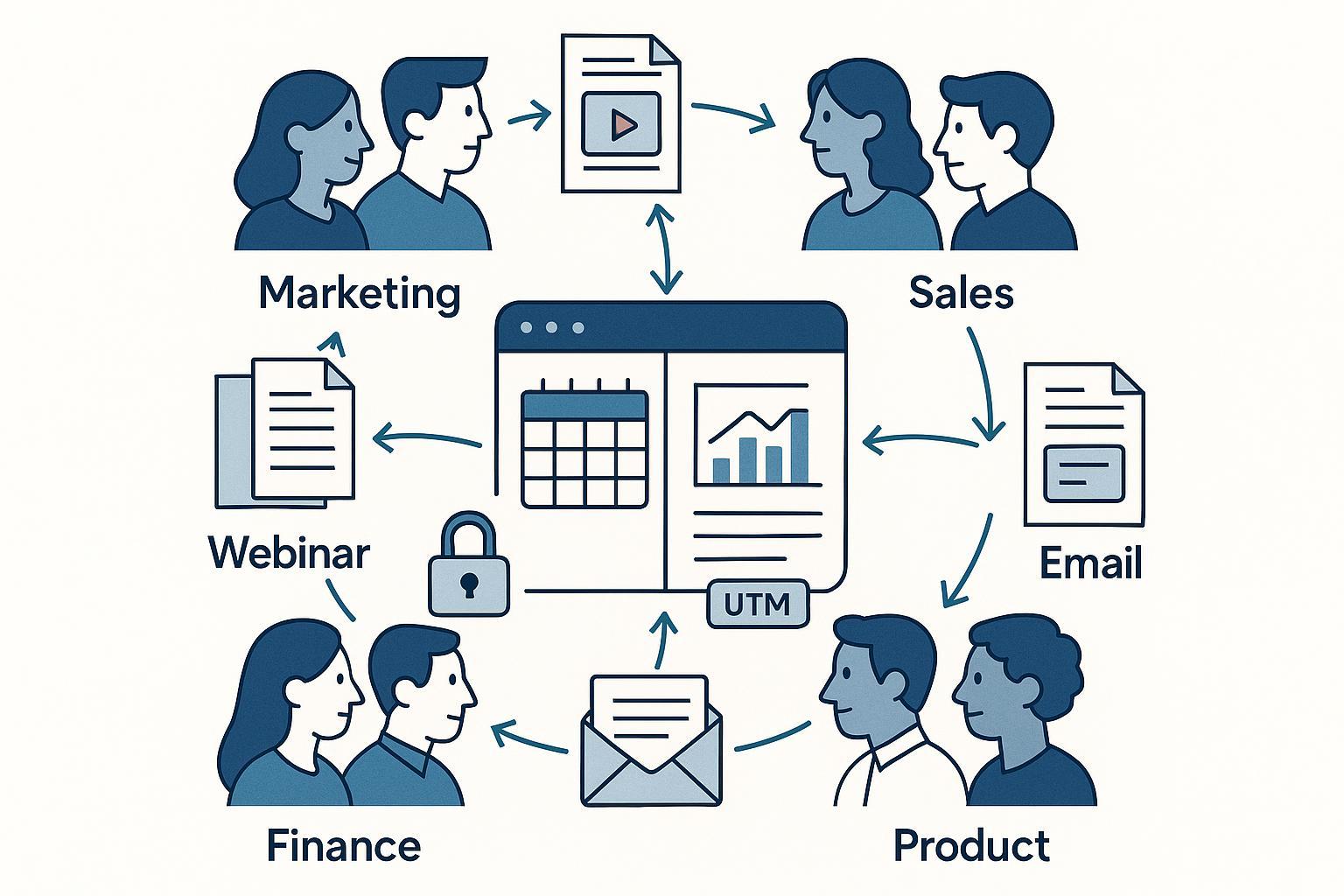
If you’ve ever wished you could multiply your reach without multiplying your budget, co‑marketing pods might be the most efficient structure you haven’t formalized yet. Below is a clear definition, how pods differ from other “pods,” and a practical blueprint to launch and measure one in 90 days.
What is a Co‑Marketing Pod?
A co‑marketing pod is a small coalition of 3–6 complementary, non‑competing companies that plan and run a recurring calendar of joint content and campaigns. Each member commits resources and distribution to reach a shared audience, under explicit rules for attribution, lead handling, and brand governance.
- What it is not:
- Not an internal marketing pod (an in‑house cross‑functional squad). For a sense of internal pods in practice, see the Dropbox content team discussion in the Animalz interview with Kate Pluth, which highlights agile, intra‑company workflows (Animalz interview with Dropbox’s Kate Pluth (2023)).
- Not a GTM pod (internal launch team across product/marketing/sales).
- Not a social “engagement pod” (informal like‑for‑like boosting groups, often discouraged by platforms).
As a structural cousin, partner‑marketing vendors have described “partner pods” where multiple non‑competing partners collaborate continuously on co‑branded demand generation. See ZINFI’s framing of ongoing, structured partner co‑marketing to scale demand while sharing costs (ZINFI co‑marketing overview (2025)).
Co‑marketing also differs from co‑branding: co‑branding fuses brands or products, whereas co‑marketing centers on joint campaigns and distribution to each partner’s audience—a distinction echoed in HubSpot’s branding resources (HubSpot branding overview, 2024).
Why Pods Have Surged
- Efficiency: Shared production and distribution lower cost per lead and expand reach.
- Credibility: Borrowed brand trust shortens education cycles in complex B2B categories.
- Repeatability: A pod is a program, not a one‑off campaign—calendared, templatized, and reviewed quarterly.
Who Should Be in Your Pod (Partner Selection Criteria)
Aim for tight overlap in ideal customer profile (ICP) without product conflict:
- ICP and problem overlap: Same buyers, adjacent use cases.
- Complementarity: “Better together” stories with clear value chain fit.
- Brand safety: Values, tone, and quality standards align.
- Operational readiness: Content, promotion, and analytics capacity to contribute.
- Legal/compliance maturity: Willingness to run consent‑aware lead capture and sign data agreements.
Operating Model: Roles, Cadence, and Asset Mix
Keep the pod small and govern it like a team sport.
-
Core roles
- Pod Coordinator: Scheduling, agenda, risk management, and enforcing the charter.
- Content Lead(s): Outline, draft, editorial QA, and voice harmonization.
- Promotion Lead(s): Launch plan, channels, budgets, and UTM conventions.
- Analytics/Operations Lead: Dashboarding, MQL/SQL definitions, attribution setup, and QBRs.
-
Cadence
- Weekly/bi‑weekly 30‑minute working session.
- Monthly milestone review (asset readiness, promo plan, risks).
- Quarterly Business Review (QBR) for pipeline impact, scale/sunset decisions.
-
Asset mix (2025‑friendly)
- Co‑hosted webinar mini‑series (3 parts with a narrative arc).
- Co‑research survey and an annual benchmark report.
- Gated templates/toolkits and checklists.
- Newsletter swaps and podcast guest swaps.
- Customer roundtables; short‑form video and carousel snippets.
For governance patterns, enterprise PRM programs illustrate how pre‑approved co‑branded assets, campaign workflows, and shared analytics support partner motions—useful models you can adapt for pods (see the Salesforce PRM software page (2024)).
Lead Sharing, Consent, and Compliance (Read This Before You Launch)
Pods frequently involve joint landing pages or pooled registration lists. That makes privacy law table stakes.
-
Joint controllership (EU/UK): If partners jointly determine purposes and means for processing leads (e.g., pooled webinar registrations), you are generally joint controllers and must transparently set out “who does what,” including responses to data subject rights—per Article 26 guidance from the European Data Protection Board (EDPB joint controllership guidance, 2023–2024). EDPB has emphasized enforcement around deficient Article 26 arrangements in 2024 decisions (EDPB Article 26 decision news, 2024).
-
Email rules vary by region:
- UK/EU electronic mail to individuals typically requires prior consent under PECR; where PECR requires consent, that is the appropriate GDPR basis. See the UK ICO’s detailed guidance on direct marketing via electronic mail and valid consent standards (ICO electronic mail marketing guidance, 2024 and ICO valid consent guidance, 2024).
- United States: Opt‑in is not required by CAN‑SPAM, but messages must meet strict identification and unsubscribe requirements, per the FTC’s guide (FTC CAN‑SPAM compliance guide, 2024).
- Canada: CASL generally requires express or qualified implied consent and mandates an unsubscribe mechanism; penalties can be significant, per the CRTC’s guidance and FAQs (CRTC CASL guide, 2024; CRTC CASL FAQs, 2024).
-
California privacy (CCPA/CPRA): If exchanging leads constitutes a “sale” (for value) or “sharing” (for cross‑context behavioral advertising), you must provide appropriate notices and opt‑outs, including a “Do Not Sell or Share My Personal Information” link, per the California Privacy Protection Agency’s consolidated statute and regulations (CPPA CCPA/CPRA statute, 2024; CPPA regulations, 2024).
-
Practical checklist
- Put a joint controller (or processing) arrangement in writing covering transparency, DSR handling, security, retention, and breach notice.
- On forms, name all controllers that will email contacts; capture consent where required and store proofs.
- Adjust privacy notices to reflect joint campaigns and any “sale/share” disclosures under CPRA.
- Maintain regional send lists (EU/UK vs US vs CA) to apply the right email rules.
Distribution Playbook (Make the Most of Each Asset)
- Email: Coordinated launches to each partner’s house list with staggered sends.
- Social: Provide copy/creative kits for LinkedIn, X, and community posts. Rotate “hero” narratives among partners.
- Marketplaces and communities: Syndicate to partner directories and relevant industry communities.
- Paid boosts: Limited retargeting or lead gen when justified by CPL targets.
- Sales enablement: Provide a one‑pager, talk tracks, and snippets for SDR/AE follow‑ups.
Measurement and Attribution
Agree on a simple but consistent model upfront.
-
UTM standards: Use consistent utm_source (partner name), utm_medium (email/social/webinar), utm_campaign (pod‑qX‑theme), and utm_content (asset variant). GA4 maps these to traffic source dimensions; Google’s guidance details how campaigns and UTMs are recognized and reported (GA4 campaign and UTM guidance, 2024).
-
Primary KPIs
- Co‑sourced MQLs/SQLs and partner‑sourced meetings
- Influenced pipeline/revenue and CPL by asset
- List growth, event registration/attendance, and content engagement
-
Health indicators
- Contribution balance score (content + promo + ops)
- On‑time delivery rate and promotion compliance
- Audience match quality (ICP fit) and partner NPS
-
Review cadence
- Monthly: dashboard review and adjustments.
- Quarterly: QBR to decide scale, rotate roles, or sunset members.
Case‑Style Examples (Composite)
- RevOps Stack Pod (4 SaaS vendors): A three‑part webinar series on pipeline visibility, an annual benchmark report from a 500‑respondent survey, four reciprocal blog posts, and coordinated LinkedIn/email promotion. Leads are routed round‑robin among qualified sellers with consent captured at registration.
- Security for Startups Pod (3 vendors + a VC): A practical field guide PDF, a panel webinar with founder Q&A, listings in partner marketplaces, and a bundled free‑tools landing page. SDRs use shared talk tracks to book consultations.
These patterns mirror how mature partner programs structure repeatable co‑marketing motions and asset approvals (compare with Salesforce PRM program patterns, 2024) and how partner‑pod concepts emphasize continuous collaboration (ZINFI co‑marketing overview, 2025).
Common Pitfalls (and How to Avoid Them)
- Misaligned goals: Start with a joint brief that sets SMART goals and success signals.
- Unequal contribution: Use a contribution scorecard and rotate responsibilities quarterly.
- Brand mismatch: Vet with a brand safety checklist and sample content review.
- Orchestration overhead: Keep the pod to 3–6 members and templatize workflows.
- Lead quality disputes: Align on ICP and MQL/SQL definitions; instrument UTMs and routing rules.
A Simple 90‑Day Launch Plan
- Days 1–15: Identify 3–5 target partners; run a 30‑minute fit check (ICP overlap, complementarity, capacity, compliance readiness). Draft the one‑page pod charter (purpose, audience, ICP, roles, cadence, asset plan, KPIs, dispute/exit terms).
- Days 16–30: Finalize the charter and a light joint controller/processing arrangement. Agree on UTM conventions, definitions (MQL/SQL), and reporting views. Set the shared calendar and assign roles for a three‑asset sprint (e.g., webinar #1, gated toolkit, blog swap).
- Days 31–60: Produce assets. Build the landing page with transparent consent language and regional email rules in mind (UK/EU consent per ICO guidance, 2024). Prep enablement kits and promo materials.
- Days 61–75: Launch asset #1. Monitor UTMs and registrations in GA4/CRM (refer to GA4 UTM mapping guidance, 2024). Triage issues.
- Days 76–90: Launch assets #2 and #3. Run a mini‑QBR: report KPIs, contribution balance, and pipeline outcomes. Decide to scale the cadence, add a guest partner, or adjust the mix.
Pod Charter Template (One Page)
- Purpose and ICP: Who we serve and the problem we solve together.
- Members and roles: Coordinator, Content, Promotion, Analytics/Operations.
- Cadence and calendar: Weekly/bi‑weekly working session; quarterly review.
- Asset plan: Formats for the next 90 days.
- Distribution and enablement: Channel commitments and sales follow‑up norms.
- Data and compliance: Consent capture, joint controller/processing arrangement, regional email rules (PECR/CAN‑SPAM/CASL), and CPRA notices.
- Attribution and reporting: UTM conventions, KPI definitions, dashboards.
- Contribution and escalation: Scorecard, rotation plan, dispute resolution, exit/scale criteria.
FAQs
- How many companies should be in a pod? Typically 3–6 to balance reach and coordination.
- How do we share leads fairly and legally? Use round‑robin or ICP‑based routing and put a joint controller (or processor) arrangement in place. Ensure consent covers joint marketing where required (see the EDPB Article 26 guidance, 2023–2024).
- What assets work best in 2025? Webinar series + co‑research report + gated toolkit is a durable trio, complemented by swaps (newsletters/podcasts) and social snippets.
- How soon to see pipeline impact? Many pods see qualified meetings inside one quarter when partners promote aggressively and sales follow‑ups are enabled—review monthly, decide on scale at QBR.
- What’s the difference between co‑marketing and co‑branding? Co‑branding integrates brands/products, while co‑marketing is about joint campaigns and distribution to each audience (see the HubSpot branding overview, 2024).
Closing Thought
Think of a co‑marketing pod like a musicians’ ensemble: each instrument has a defined part, rehearsal is on the calendar, and the performance repeats until it fills the house. With clear roles, consent‑aware data handling, and consistent UTMs, pods turn one‑off collaborations into a compounding growth motion.