How to Improve Brand SERP and GEO Together: A 3‑Phase Playbook for 2025

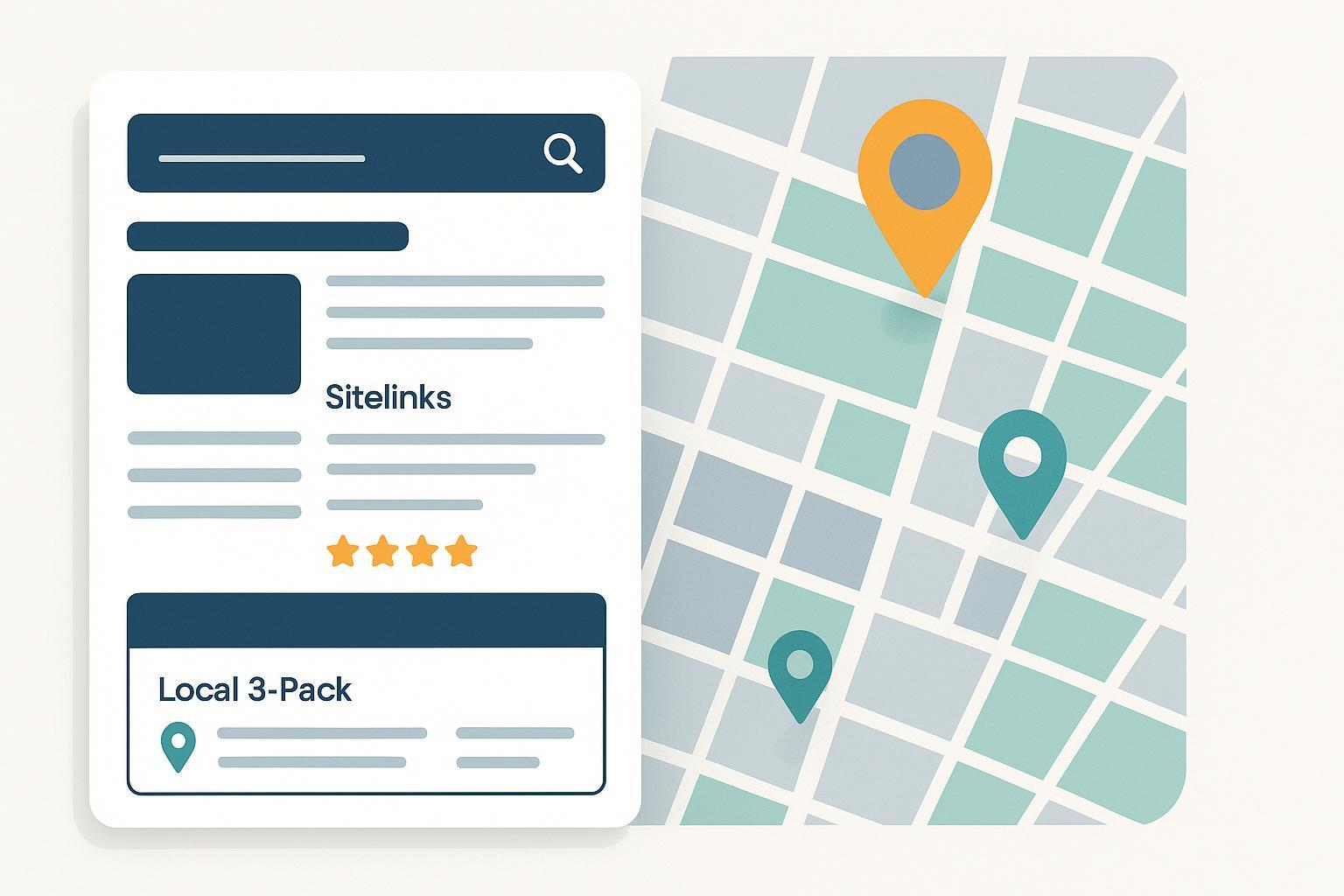
Brand reputation is no longer just what appears on the first page for your name. It’s the combined footprint across organic results, knowledge panels, review ecosystems, local packs, and—now—AI Overviews. If your entity isn’t crystal clear, your local signals are shaky, or your content doesn’t anticipate follow‑up questions, you’ll miss out on citations and clicks. Here’s a practical, senior‑level playbook to improve Brand SERP and GEO (Generative Engine Optimization) together without bloated theory.
Why Brand SERP and GEO belong together
Entity clarity fuels everything: sitelinks, knowledge panels, brand query control, and eligibility for AI citations. Google explicitly encourages Organization markup to help disambiguate and describe your entity; it can support eligibility for panels and visual elements, as documented in Google’s Organization structured data guidance. On the GEO side, Google’s latest advice for AI‑enabled search prioritizes people‑first content that demonstrates expertise and anticipates follow‑ups, which raises your chance of being cited in AI Overviews; see Google’s May 2025 guidance on succeeding in AI‑enabled Search.
Think of it this way: Brand SERP optimization defines “who you are” to machines and users; GEO ensures your content is the best possible answer, in the right context and location, when the machine starts stitching answers together.
Phase 1 — Audit and baselines (2–3 weeks)
Get a shared baseline across entity, local, content, technical, and measurement. Assign clear owners and tools so the work actually ships.
| Signal cluster | What to check | Owner | Primary tool(s) |
|---|---|---|---|
| Entity basics | Organization JSON‑LD on homepage, About page facts, logo alignment, sameAs profiles | SEO lead | Site repo/CMS, Google Rich Results Test |
| Knowledge panel | Accuracy of name, logo, description; social links; feedback needed? | Brand/PR | Google Search results + feedback form |
| Local profile | GBP categories, services/products, hours, photos; NAP consistency | Local/Operations | Google Business Profile, citation tools |
| Reviews | Volume, recency, response time, rating distribution | CX/Support | GBP dashboard, reviews platform |
| Content | Branded and near‑brand queries mapped to pages; thin or outdated coverage | Content/SEO | Keyword tools, content audit sheet |
| Technical | Core Web Vitals, mobile UX, internal links to entity pages, crawlability | Dev/SEO | Search Console, CWV tools |
| Measurement | SERP feature presence; AI citation tracking; CTR baselines by query type | Analytics | GSC + third‑party trackers |
As you capture baselines, remember that local visibility hinges on proximity, relevance, and prominence; the consensus view is summarized in Whitespark’s Local Search Ranking Factors. Your review program should emphasize steady cadence and quick, professional responses—findings from the BrightLocal Local Consumer Review Survey 2025 show consumers weigh recency and response time heavily and mostly evaluate businesses on Google. Finally, expect zero‑click realities when AI Overviews appear; multi‑month testing from Seer suggests CTR declines, with citations cushioning the drop—see Seer Interactive’s 2024–2025 AIO CTR impact study for directional context.
Phase 2 — Build and optimize (4–8 weeks)
Turn the audit into execution. Your goal is machine clarity plus human helpfulness.
Implement or refresh structured data. Add Organization on the homepage, LocalBusiness on each location page, and Person on author bios, then validate with Google’s tools.
{
  "@context": "https://schema.org",
  "@type": "Organization",
  "name": "Your Brand, Inc.",
  "url": "https://www.yourbrand.com/",
  "logo": "https://www.yourbrand.com/assets/logo.png",
  "sameAs": [
    "https://www.linkedin.com/company/yourbrand/",
    "https://www.wikidata.org/wiki/QXXXX",
    "https://x.com/yourbrand"
  ],
  "contactPoint": [{
    "@type": "ContactPoint",
    "contactType": "customer support",
    "telephone": "+1-800-555-0100"
  }]
}
Why it matters: Organization markup helps disambiguate your entity and supports eligibility for rich elements, per Google’s Organization documentation. For FAQPage, remember Google restricted rich results in 2023 to a narrow set of authoritative sites; you can still publish FAQs for clarity and potential snippets, but don’t promise dropdowns—see Google’s 2023 FAQ/How‑To change notice.
Overhaul your Google Business Profile (GBP). Reconfirm primary and secondary categories; fill services/products, attributes, and hours; upload fresh photos; enable Q&A and post updates. Align the GBP landing page with on‑page content and LocalBusiness schema. Launch or refine a review acquisition and response program with SLAs (for example, responses within 48–72 hours). Encourage authentic, policy‑compliant reviews; never incentivize.
Build content that earns both citations and conversions. Publish comprehensive pages that answer the main query and likely follow‑ups (“what,” “how,” “cost,” “near me,” “alternatives”). Use concise answer boxes, headings, and diagrams to help parsers and readers. This aligns with Google’s May 2025 AI‑enabled Search guidance. Create city/service‑area pages with unique proof (photos, testimonials, case snippets, team details) and avoid boilerplate clones. Strengthen internal linking to entity‑defining hubs: About, Contact, Locations, Careers, and authoritative guides.
Reinforce your entity with digital PR and citations. Secure mentions from authoritative, topically relevant publications and local organizations (chambers, universities, reputable directories). These corroborate your identity and topics, improving both Brand SERP control and GEO outcomes.
Phase 3 — Monitor and iterate (ongoing)
Treat Brand SERP + GEO as a product with a roadmap, not a campaign. Track knowledge panel accuracy (logo, description, socials, and “people also search for” associations) and request edits when it drifts. Log AI Overview citations weekly across your top queries and personas, recording presence, position, and sentiment. Compare impressions and CTR for queries with and without AI Overviews to quantify headwinds and the lift from being cited. Watch local KPIs—GBP views, calls, direction requests, review velocity/response time, and local pack ranks by location grid—and run monthly ops reviews with a quarterly strategic reset for categories, content scope, and schema.
Common pitfalls that quietly erode results
- Banking on sitewide FAQ rich results despite Google’s restriction; publish FAQs for clarity, not dropdowns.
- Using self‑serving review markup to chase stars; it violates guidelines and won’t deliver reliable gains.
- Shipping thin, near‑duplicate location pages with no local proof; they rarely rank or convert.
- Letting NAP drift across directories and your own site; inconsistency weakens trust and relevance.
Bring it together
When your entity is unambiguous, your local presence is complete, and your content anticipates the next question, you earn both control over your Brand SERP and a seat inside AI answers. Start with the audit, execute the build sprint, then monitor like a product team. Keep that rhythm and the wins compound.
References and further reading
- Entity clarity and knowledge panels: Google’s Organization structured data guidance (ongoing)
- AI‑enabled Search best practices: Google’s May 2025 guidance
- Local factors: Whitespark’s Local Search Ranking Factors
- Reviews behavior: BrightLocal Local Consumer Review Survey 2025
- AI Overviews CTR impact: Seer Interactive 2024–2025 study
- FAQ/How‑To change context: Google’s 2023 FAQ/How‑To change notice