Best Content Ideas for 2025: 32 Proven Plays You Can Ship This Quarter

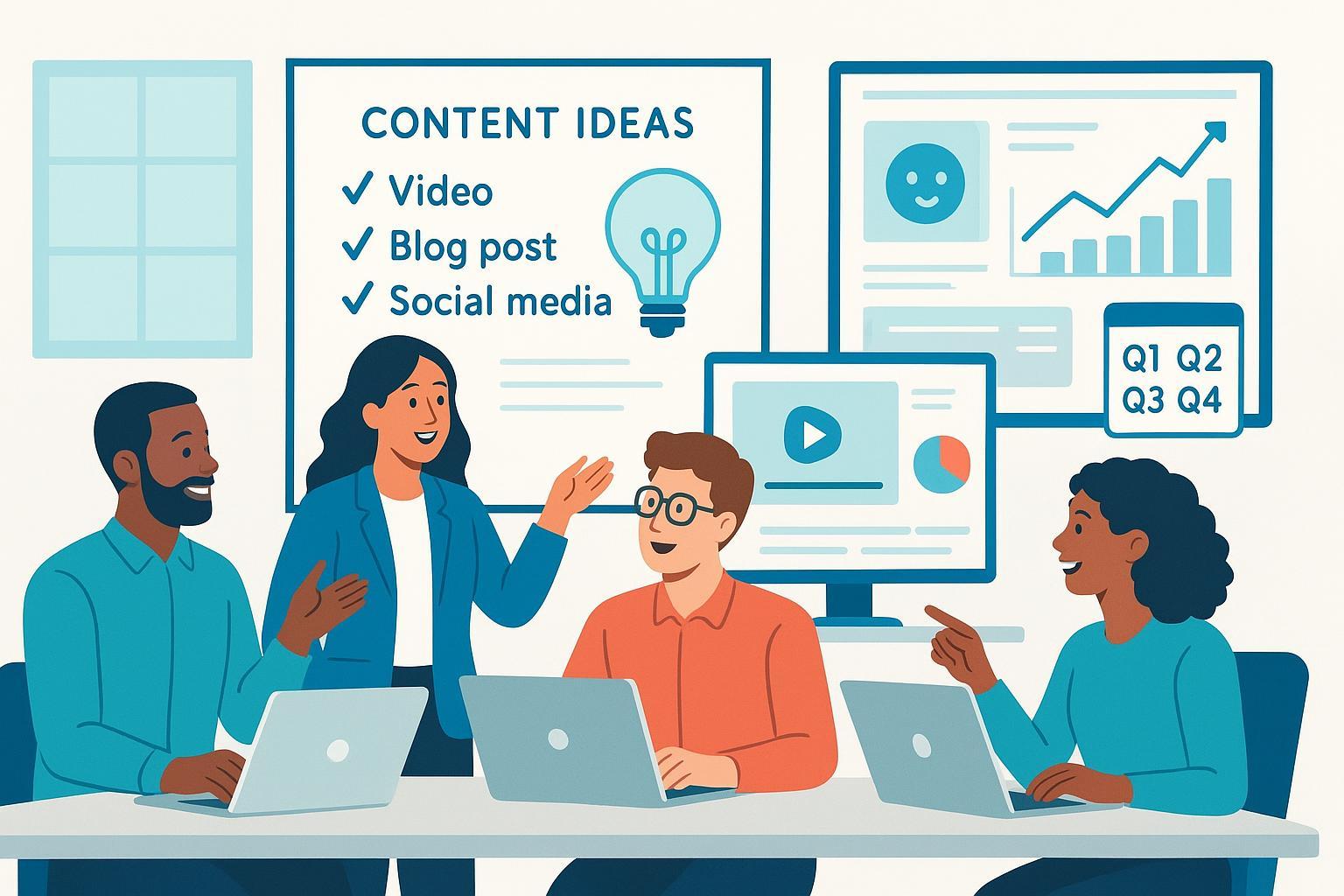
If this year had a headline, it would read: social-first distribution, short video that actually funnels, and AI-assisted workflows—without losing the human. Teams that win are packaging value natively for each platform, investing in defensible content (research, data, expertise), and feeding first-party channels like email.
How we chose (methodology): We prioritized ideas that reflect 2025 platform mechanics and marketer workflows. Selection criteria and indicative weights: channel fit in 2025 (25%), impact potential (25%), effort/repeatability (20%), evidence quality (20%), and compliance considerations (10%). These ideas align with predictions that emphasize zero-click social and AI-assisted production from studioID/TechTarget’s 2025 outlook, which highlights social as a priority distribution channel and video/testimonials as consistently effective formats (see the analysis in the Content Marketing + Demand Gen Predictions for 2025 by Informa TechTarget).
Social & Short Video (Ideas 1–10)
2025 favors platform-native packaging. On LinkedIn, practitioner tests consistently show native documents and text-first posts outperform link-outs for reach; note that LinkedIn itself emphasizes engagement and dwell time as ranking signals (see LinkedIn Engineering’s explanation of feed ranking and dwell time). On TikTok, search-style intents matter; captions, on-screen text, and relevant hashtags contribute to discovery (summarized in Hootsuite’s 2025 guide to the TikTok algorithm). On YouTube, official features now make it easier to bridge Shorts to long-form with Related Video links (see YouTube Help: Add a related video to your Shorts).
- Zero-click LinkedIn carousels (native documents)
- What it is: Mini slide decks that teach one specific thing without a link-out.
- How to execute in 2025: Open with a bold promise slide, keep 7–10 pages, and end with a comment prompt. Test image-first vs. text-heavy slides; watch completion rate and saves as lead indicators.
- Best for / Not for: Best for B2B, expertise-led brands; not ideal if you only have press-release updates.
- Effort & tools: M; templates + AI for first drafts; human edit for clarity.
- Repurpose: Turn into a blog outline, a webinar segment, and snippets for email.
- LinkedIn expert text threads (no links)
- Positioning: Opinionated, proof-backed mini-essays that spark qualified discussion.
- Execution: Lead with a strong claim, add 3–5 crisp points, close with a question. Post at consistent cadences and reply fast to early comments to increase dwell.
- Best for / Not for: Best for individual creators/executives; not for teams that can’t engage in comments.
- Effort & tools: S–M; draft with AI outlines; finalize manually.
- Repurpose: Compile into monthly “what we learned” posts or a newsletter column.
- Employee-generated content (EGC) spotlight reels
- Positioning: Human faces > brand logos. Feature internal experts and frontline teams.
- Execution: Record short vertical clips with consistent prompts (e.g., “One lesson from this week…”) and light branding. Curate into monthly reels.
- Best for / Not for: Best for trust-building; not for heavily regulated categories without approvals.
- Effort & tools: M; phone + captioning app; brand guide for consistency.
- Repurpose: Transcripts fuel blog pull quotes and case snippets.
- TikTok/IG Reels “how-to” series with SEO cues
- Positioning: Bite-size tutorials answering top “how to” and “X vs. Y” questions.
- Execution: Put the keyword on-screen in the first 2 seconds, echo it in captions, and use 2–5 highly relevant hashtags. Optimize for watch-time and rewatch.
- Best for / Not for: Best for product education and creators; not for complex enterprise sales without a follow-up path.
- Effort & tools: M; batch scripts; teleprompter; editing presets.
- Repurpose: Compile episodes into a YouTube long-form or gated guide.
- YouTube Shorts that bridge to long-form via Related Video
- Positioning: Short clips that tease a clear payoff and funnel to the full video.
- Execution: Use YouTube’s Related Video for Shorts to link your long-form. Reward the click in the first 10–20 seconds of the long video with the promised insight.
- Best for / Not for: Best for channels already producing tutorials; not for one-off uploads.
- Effort & tools: M; edit from long-form b-roll; end-screen consistency.
- Repurpose: Use the long-form as your blog/SEO anchor content.
- Creator collaborations with clear UGC rights
- Positioning: Partner with niche creators for credibility and reach; secure reuse rights.
- Execution: Contract UGC licensing up front (whitelisting, paid boosting, content windows). Align on briefs and disclosure.
- Best for / Not for: Best for consumer products and prosumer SaaS; not for teams without review cycles.
- Effort & tools: M–L; briefs, contracts, tracking links.
- Repurpose: Use creator content in ads, landing pages, and email nurtures.
- Live AMAs with timestamped recaps
- Positioning: Real-time Q&A that turns into evergreen FAQs.
- Execution: Host on LinkedIn Live, YouTube, or Instagram. Capture questions, then publish a recap with timestamps and short clips.
- Best for / Not for: Best for subject-matter experts; not for topics needing heavy legal review.
- Effort & tools: M; streaming suite; moderator; editor for recap.
- Repurpose: Build a searchable FAQ page and social clips.
- Social listening → quick-turn response content
- Positioning: Turn trending questions and objections into timely posts.
- Execution: Track keywords and competitor narratives. Ship fast explainers or comparisons within 24–48 hours.
- Best for / Not for: Best for agile teams; not for highly centralized approval processes.
- Effort & tools: S–M; listening tools; editorial guardrails.
- Repurpose: Fold top questions into sales enablement.
- TikTok Shop or shoppable pilots (aligned with category)
- Positioning: Meet buyers where they browse and purchase.
- Execution: Test limited SKUs with native shopping features and creator affiliates. Measure view-to-click and conversion, not just views. U.S. social commerce growth has been strongly driven by TikTok; see 2024–2025 analyses like eMarketer’s report on TikTok driving U.S. social commerce growth to gauge market momentum.
- Best for / Not for: Best for consumer goods and low-friction purchases; not for complex, high-ticket B2B.
- Effort & tools: M–L; storefront setup, creator ops, attribution.
- Repurpose: Turn product demos into short video variants and ads.
- Platform-native carousels for case studies
- Positioning: Tell a metrics-backed story in 8–12 slides.
- Execution: Hook with the outcome, show the messy middle, end with a takeaway. Avoid sensitive client data.
- Best for / Not for: Best for B2B proof; not for NDAs.
- Effort & tools: M; templates; QA for accuracy.
- Repurpose: Expand into long-form case studies and webinars.
Blog/SEO (Ideas 11–16)
Search remains a reliable engine when paired with quality and consolidation. Historical optimization and pruning can deliver outsized results—HubSpot reports updated articles increasing organic views by over 100% and materially lifting leads when executed as a program (see HubSpot’s guidance on content optimization results (2024)). For 2025, focus on originality, problem-solving depth, and clear guardrails for any AI assistance, aligned with the Semrush 2025 content trends study.
- Historical optimization sprints
- Positioning: Update decay-prone posts for today’s intent and SERP.
- Execution: Re-evaluate keywords, refresh data, improve UX, and add missing sections. Track before/after impressions, clicks, and conversions.
- Effort & tools: M; AI for outline comparisons; human SME review.
- Repurpose: Turn updated sections into social threads and email tips.
- Content consolidation and pruning
- Positioning: Merge overlap, redirect thin pages, and strengthen canonical hubs.
- Execution: Audit content cannibalization, consolidate into best-performing URLs, and 301 the rest. Improve internal links.
- Effort & tools: M; site crawl + analytics.
- Repurpose: Announce “we cleaned house” with what changed and why.
- Data-backed explainers with expert quotes
- Positioning: Authoritative explainers anchored by fresh stats and SME commentary.
- Execution: Pair first- or third-party data with practitioner quotes. Add diagrams and examples.
- Effort & tools: M–L; outreach; editorial polish.
- Repurpose: Breakout charts for LinkedIn and decks.
- Topical clusters and internal links
- Positioning: Own a topic by building a clear hub-and-spoke model.
- Execution: Map search intents, publish pillar and supporting pages, interlink with descriptive anchors. Update quarterly.
- Effort & tools: M; content map; link tracking.
- Repurpose: Convert the hub into a downloadable guide.
- Programmatic SEO with quality constraints
- Positioning: Template-driven pages for legitimate, high-intent variations—without thin duplication.
- Execution: Define strict inclusion criteria, unique value per page, and editorial QA. Kill what doesn’t add value.
- Effort & tools: M–L; data pipeline; review workflow.
- Repurpose: Use programmatic data for comparison tables and calculators.
- Long-form video → article expansions with transcripts
- Positioning: Turn webinars/podcasts into search-worthy articles.
- Execution: Edit transcripts into structured explainers with skimmable subheads, visuals, and FAQs.
- Effort & tools: M; transcription + editor passthrough.
- Repurpose: Create social clips and email snippets.
Email/Newsletters (Ideas 17–20)
Email is still a first-party workhorse—and monetization has expanded. Beehiiv’s 2025 landscape shows rapid newsletter growth and viable revenue via paid subscriptions and ad inventory, based on platform-wide data (see the Beehiiv State of Email Newsletters 2025). Segmentation remains one of the most reliable performance levers across benchmarks; apply it thoughtfully to job-to-be-done cohorts.
- “Operator diary” builder logs
- Positioning: A candid weekly note on what you shipped, tested, and learned.
- Execution: Keep it short, tactical, and personal. Add one chart or screenshot where helpful.
- Effort & tools: S; templated outline; consistent cadence.
- Repurpose: Compile best entries into a quarterly blog roundup.
- Segmented lifecycle series (JTBD)
- Positioning: Automations that educate by job-to-be-done, not demographics.
- Execution: Map the journey, then sequence 4–7 emails per segment with success milestones and resources.
- Effort & tools: M; CRM + behavioral triggers.
- Repurpose: Convert the series into an onboarding hub or course.
- Newsletter monetization (ads/paid tiers)
- Positioning: Turn attention into revenue without degrading reader trust.
- Execution: Test an ad slot with clear labeling, or a paid tier for deep dives and templates. Track churn and sentiment.
- Effort & tools: S–M; ad marketplace or payment stack.
- Repurpose: Offer sponsor exclusives as bonus content.
- Reader polls that seed content
- Positioning: Use one-click polls to pick future topics and collect quotable insights.
- Execution: Close the loop by publishing the results and tagging respondents.
- Effort & tools: S; native poll blocks; spreadsheet tracking.
- Repurpose: Spin results into carousels and mini data posts.
Community & UGC (Ideas 21–23)
If you feature user content or paid partnerships, disclosures and permissions aren’t optional. Review the U.S. guidance before you publish: the FTC’s Endorsements, Influencers, and Reviews hub explains clear-and-conspicuous disclosure and rights basics.
- UGC challenges with explicit reuse rights
- Positioning: Invite customers to share outcomes or tips, then amplify the best.
- Execution: Use entry terms that grant you reuse rights and specify channels and time windows. Disclose paid relationships.
- Effort & tools: M; legal-approved brief; moderation.
- Repurpose: Build a landing page gallery and social reels.
- Customer spotlight stories
- Positioning: Narrative case studies featuring real people and specific outcomes.
- Execution: Interview customers on the problem, turning point, and measurable result. Avoid hyperbole; show the steps.
- Effort & tools: M; interview guide; editor.
- Repurpose: Pull quotes for ads, decks, and email.
- Moderated peer forums or office hours
- Positioning: Create a safe place for practitioners to trade notes, not a pitch room.
- Execution: Publish house rules, recruit moderators, and run monthly themed sessions.
- Effort & tools: M; community platform; facilitation.
- Repurpose: Summaries become monthly “what the community’s solving” posts.
Events/Webinars (Ideas 24–25)
Big, hour-long webinars still have a place, but focused workshops convert attention into action more reliably for many teams. Treat format and length as variables to test. Measure attendance rate, completion, and pipeline impact—not just registrations.
- Workshop-style micro-webinars with live audits
- Positioning: 20–30 minute sessions solving one problem on-screen.
- Execution: Cap slides at five; spend most of the time auditing real submissions. Offer a worksheet.
- Effort & tools: M; simple studio setup; strong host.
- Repurpose: Clip each audit into Shorts/Reels and a blog FAQ.
- Virtual co-marketing summits
- Positioning: Partner with complementary brands to reach net-new audiences.
- Execution: Align on a theme, split promotion lists, and record everything for on-demand.
- Effort & tools: L; multi-speaker coordination; landing hub.
- Repurpose: Turn talks into podcast episodes and articles.
Research & Data (Ideas 26–28)
Original data earns links, press, and trust—when methods are transparent and timelines are clear. It also fuels social, sales, and email for months.
- Annual “State of X” mini report
- Positioning: A tight, 10–20 page report on one niche, updated yearly.
- Execution: Document sampling, time window, and limitations. Package with charts and a media kit.
- Effort & tools: L; survey tools; researcher; design.
- Repurpose: Release key findings as a social thread series and webinar.
- Pricing/ROI calculators
- Positioning: Interactive tools that tie your category to economic outcomes.
- Execution: Start with conservative default assumptions and explain them. Add export-to-PDF for sales.
- Effort & tools: M–L; spreadsheet → web app.
- Repurpose: Use anonymized inputs to inform future content.
- Benchmark dashboards
- Positioning: Rolling metrics that update quarterly for a specific audience.
- Execution: Pull from first-party data or public datasets; annotate notable changes.
- Effort & tools: L; data pipeline; visualization.
- Repurpose: Quarterly “state of” posts and social highlights.
Partnerships & Influencers (Ideas 29–30)
- Subject-matter co-creation (podcasts, guest posts)
- Positioning: Borrow expertise and distribution in one move.
- Execution: Co-own the brief and publishing rights; align on timelines and attribution.
- Effort & tools: M; editorial coordination.
- Repurpose: Cross-post clips, transcribe episodes, and compile thematic bundles.
- Newsletter swaps and distribution trades
- Positioning: Exchange short features or links with lists that share your audience but not your product.
- Execution: Set guardrails on audience size, link placement, and tracking.
- Effort & tools: S; outreach + simple tracking.
- Repurpose: Feature partners in social carousels and blog roundups.
Product-Led Content (Ideas 31–32)
- Implementation blueprints
- Positioning: Step-by-step guides for achieving a job-to-be-done with your product category.
- Execution: Show setup, common pitfalls, and time-saving shortcuts. Include screenshots and a downloadable checklist.
- Effort & tools: M; SME time; editor; visual support.
- Repurpose: Break into a lifecycle email series and a live workshop.
- Teardown case studies with time-boxed metrics
- Positioning: Transparent, auditable case stories over a fixed window (e.g., 30–90 days).
- Execution: Define the metric window and what you can/can’t attribute. Share wins and misses.
- Effort & tools: M; analytics + interview; legal review if needed.
- Repurpose: Social carousels, sales one-pagers, and conference talks.
—
Final thought: Pick three ideas you can execute in the next two weeks—one social/short video, one owned (blog/email), and one relationship play (community or partner). Ship, measure, and refine quarterly. If you need a place to start, build your zero-click social cadence and a monthly optimization sprint; they compound fastest.