How B2B Companies Can Use AI for SEO in 2025: A Practical Playbook for Pipeline Growth
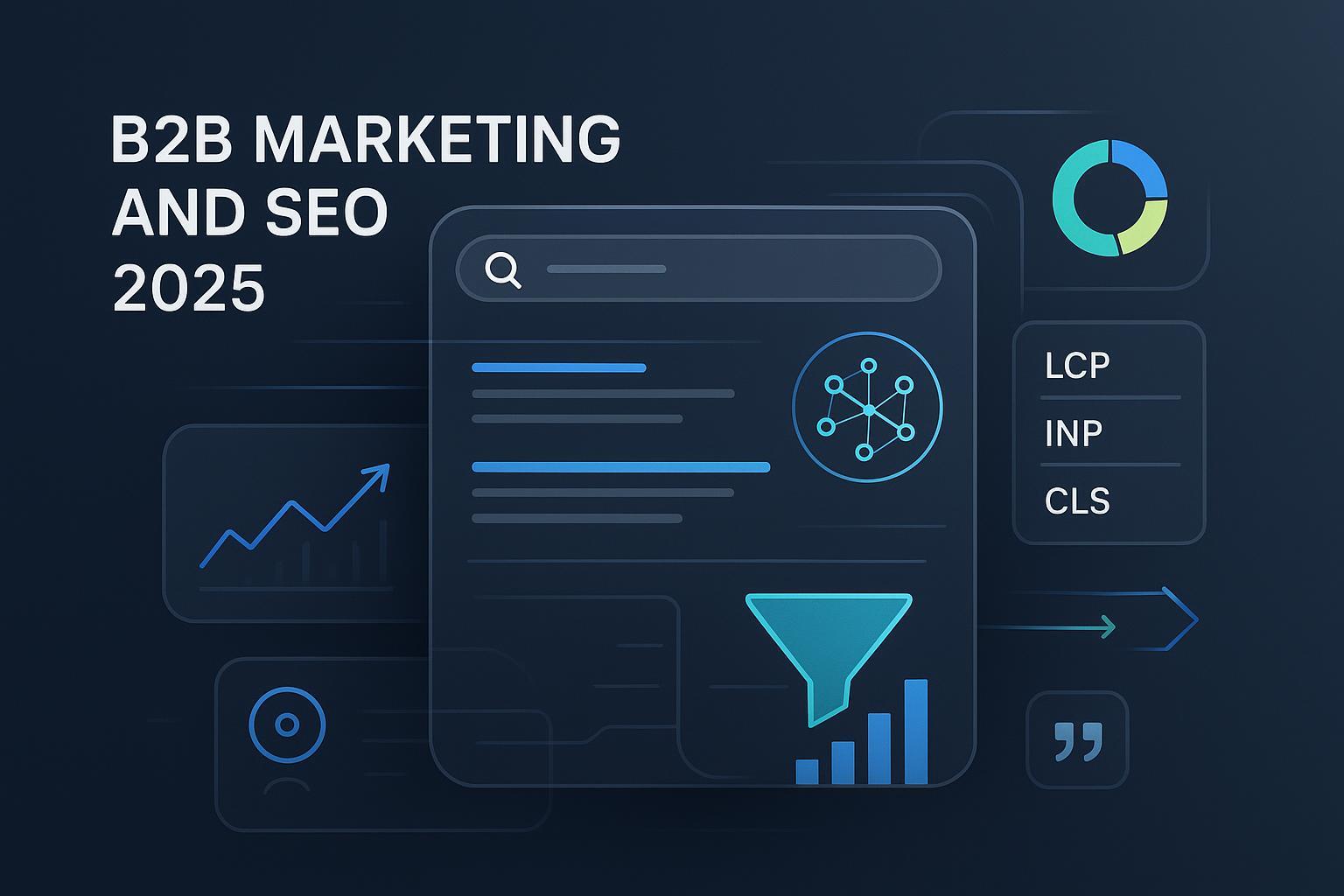
If AI search now answers more questions right on the results page, where does that leave B2B SEO? It puts the spotlight on machine-readable content, technical clarity, and outcomes tied to pipeline—not just traffic. This playbook shows how to combine AI-assisted workflows with human oversight, align technical SEO to 2025 realities, and measure impact the way your CRO cares about.
What changed in 2025 (and why B2B should care)
Google’s AI experiences (AI Overviews/AI Mode) and Microsoft’s Copilot Search now synthesize answers and cite sources. Google’s guidance emphasizes quality content and structured clarity rather than any special “AI schema,” and confirms that inclusion in AI features is an extension of good SEO fundamentals, not a separate rulebook, per Google’s own explanations in the 2025 post on how to succeed in AI search and the documentation for AI features and your website. See Google’s explanations in both the 2025 blog post on succeeding in AI search and the feature documentation: the focus is helpful content, clear structure, and freshness (Google Search Central blog, May 2025; AI features and your website).
On the Microsoft side, Copilot blends traditional results with synthesized answers and inline citations, keeping sources a click away (Introducing Copilot Search in Bing, Apr 4, 2025). Microsoft Advertising’s 2025 analysis notes sharp growth in referrals originating from AI answers and offers guidance for getting included (Optimizing Your Content for Inclusion in AI Search Answers, Oct 2025).
So what? In B2B, where complex products and buying committees rule, you’ll win when your pages provide concise, attributable answers up top—and then deliver depth, proof, and unique expertise that are worth a click.
Technical SEO you can implement now
2025 technical priorities are less about novelty and more about polish and precision. Think of your site as a data source for AI systems and a dependable destination for humans.
- Core Web Vitals with INP: INP officially replaced FID in 2024 and remains a key interactivity metric. Google maintains “good” thresholds—LCP ≤ 2.5s, CLS < 0.1, INP < 200ms (web.dev, Mar 2024; Core Web Vitals guidance).
- Crawl, index, and freshness: Keep XML sitemaps accurate with lastmod, fix canonical conflicts, and prevent orphaned content with sensible internal linking. For Bing, register in Bing Webmaster Tools and consider IndexNow to accelerate discovery; while not a guarantee of AI-answer inclusion, it supports freshness expectations (Bing Webmaster Guidelines).
- Schema and entity hygiene: Use JSON-LD for Organization, Person (author/SME), and Article. Keep author pages updated with credentials and sameAs links. Align entity names across copy, schema, and external profiles to reduce ambiguity.
- Passage-format optimization: For how-to and troubleshooting pages, pose the question in the subhead, provide a self-contained 40–120-word answer, then expand with steps, visuals, and tables. This improves both snippet eligibility and confidence for AI summarizers to cite your page.
| Core Web Vital | Target threshold (Google) | Quick wins for B2B sites |
|---|---|---|
| Largest Contentful Paint (LCP) | ≤ 2.5s | Compress hero media (AVIF/WebP), serve via CDN, prioritize critical CSS, defer non-critical JS |
| Cumulative Layout Shift (CLS) | < 0.1 | Reserve space for images/embeds, preload fonts, avoid layout-shifting ads/widgets |
| Interaction to Next Paint (INP) | < 200ms | Break up long tasks, use web workers, minimize heavy event handlers, ship less JS |
AI-assisted content workflows (with human QA)
Here’s the deal: AI can speed you up, but only a human SME can ensure accuracy, originality, and point of view that builds trust with a buying committee.
- Research and clustering: Use AI to synthesize SERPs, cluster queries by intent, and produce entity lists and required citations for briefs.
- Draft with sources: Generate first drafts with embedded source calls. Require human SMEs to add proprietary examples, customer language, and real screenshots where appropriate.
- Guardrails: Follow Google’s stance that AI-generated content is fine when it’s helpful and not manipulative—reliability comes first, not the tool you used (Google’s guidance on AI-generated content, 2025).
- QA and compliance: Run style and fact checks; validate schema; check links; log changes between drafts for your compliance trail.
- Technical automation: Auto-insert internal links to cluster pages, ensure descriptive alt text, and add/update JSON-LD programmatically.
A simple pipeline to standardize with your team: AI-assisted research → SEO/content brief → draft with citations → SME review and additions → AI QA pass → human approval → technical check (links, images, schema) → publish and monitor.
GEO/AEO tactics tailored to B2B
Generative/answer engine optimization isn’t a separate discipline—it’s a tighter expression of fundamentals for machine comprehension and attribution.
- Entity precision: Define canonical entities (company, products, core topics, key people) and represent them consistently in copy and markup. Keep author credentials visible and current.
- Answer-first formatting: Lead sections with succinct answers, then elaborate. Use tables when comparing options or parameters. Keep FAQs and HowTos only when your visible content truly supports them.
- Technical readiness: Hit Core Web Vitals targets, maintain accurate sitemaps and lastmod, keep crawl depth shallow with thoughtful internal links, and register in Bing Webmaster Tools (and experiment with IndexNow) to signal freshness.
- Measurement: Track AI citations where possible and compare AI-originated traffic against traditional organic. Look for assisted conversions and downstream influence, not just last-click wins.
Pitfalls to avoid:
- Generic AI text with no expertise, examples, or POV—this won’t earn citations or conversions.
- Markup that doesn’t match visible content—eligibility can be reduced and trust eroded.
- Over-investing in speculative tactics without official backing—treat them as experiments, not your core plan.
Measurement and ROI in 2025
B2B SEO reporting must speak pipeline. Define segments for AI-originated sessions (from Copilot/AI Overviews and similar experiences) and track how they influence opportunities.
- Attribute beyond rank: Use GA4 plus UTM governance, first- and multi-touch models, and offline conversion imports from your CRM.
- Build an “AI visibility” view: Track AI citations, AI-originated referrals, classical organic, and zero-click proxies (e.g., branded search lift after an AI inclusion event). Microsoft’s 2025 guidance highlights significant growth in AI referrals within their ecosystem; take that as a signal to segment and monitor this traffic pattern, while validating impact in your own B2B context (Microsoft Advertising, Oct 2025).
- Report what leadership cares about: Sales Qualified Opportunities, influenced pipeline, velocity, and CAC/LTV impacts by content cluster and intent—not only keyword positions.
Run quarterly cohort tests:
- Compare human-only vs. AI-assisted workflows across content velocity, quality, rankings, and pipeline contribution.
- Benchmark before-and-after crawl speed and indexation for pages using stronger freshness signals (e.g., lastmod accuracy, IndexNow for Bing).
- Feed findings into your briefs and entity models; update or consolidate underperformers.
Your 90‑day plan
Weeks 1–4: Foundation and fixes
- Audit Core Web Vitals, crawlability, and internal linking depth; ship high-impact INP fixes and stabilize CLS.
- Implement Organization, Person, and Article schema; publish or update author pages with credentials and sameAs links.
- Map three buying-committee problems into clusters (pillar + 3–5 support articles each) with answer-first formats and planned tables/diagrams.
Weeks 5–8: Produce and publish at velocity
- Run the standardized AI+human workflow to deliver at least two clusters (8–12 pieces). Require SME review to add proprietary insight and examples.
- Programmatically insert internal links across the cluster and validate JSON-LD.
- Register/verify in Google Search Console and Bing Webmaster Tools; consider IndexNow to accelerate discovery for new or updated pages.
Weeks 9–12: Instrumentation and iteration
- Stand up an “AI visibility” dashboard segmenting AI citations, AI-originated referrals, classical organic, and zero-click proxies.
- Analyze pipeline contribution by cluster and intent; revise briefs to reinforce entities and fill content gaps.
- Test passage-format improvements (question-led subheads with concise answers) on 5–10 legacy URLs; compare snippet wins and engagement.
The bottom line
AI reshaped how information is discovered, but the path to B2B wins hasn’t changed at its core: be the clearest, freshest, most trustworthy source—and prove it technically. Build entity-rich clusters, optimize for speed and stability, use AI to scale the busywork while SMEs elevate the insight, and measure success in pipeline terms. Ready to put this into motion over the next 90 days?