The rise of Atlas by Pepper Content — and how it’s changing AI‑native search optimization for content creators (2025)

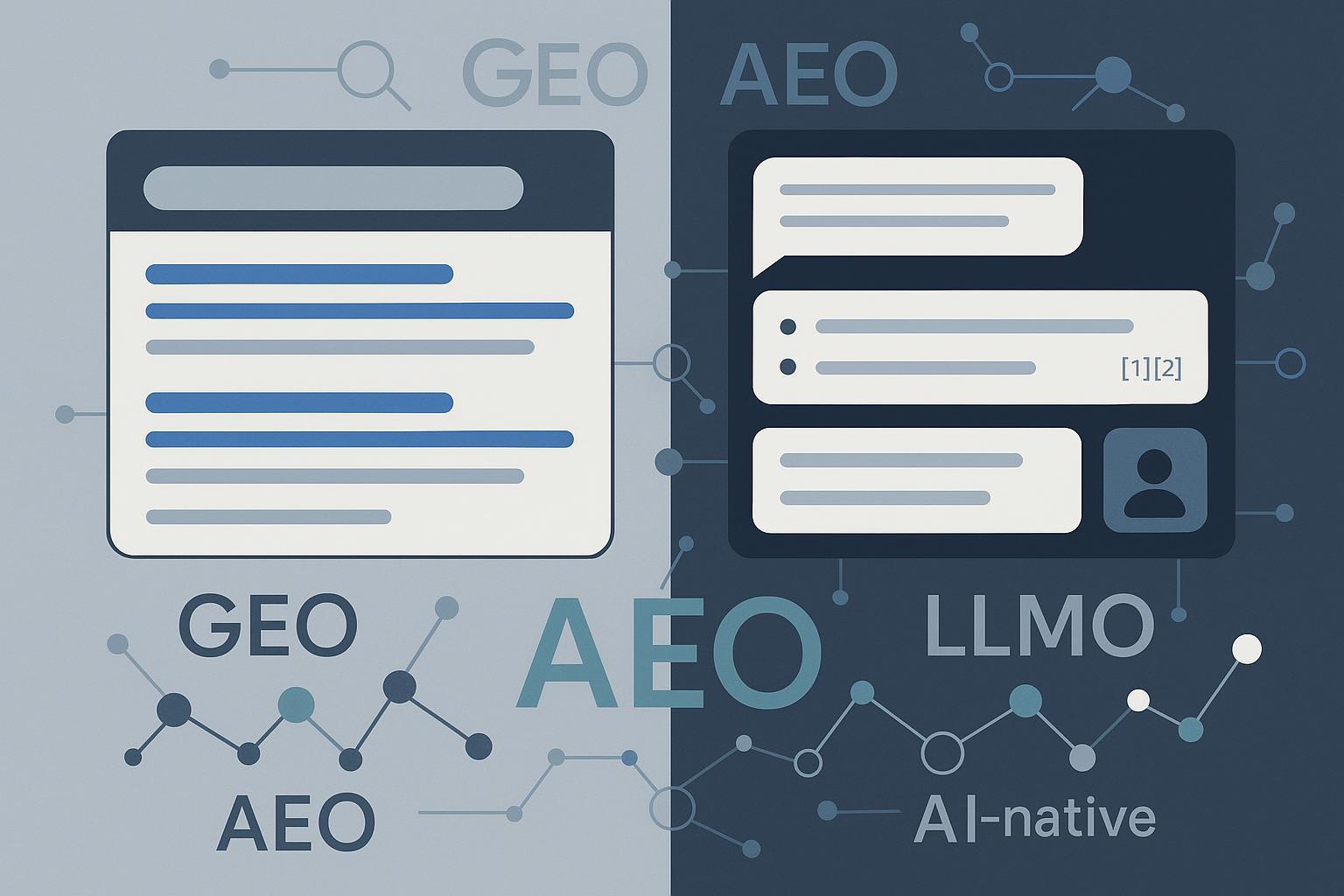
October 2025 isn’t just another moment in the AI-in-search timeline. With Pepper Content unveiling Atlas at Index’25, the conversation has shifted from “Should we care about AI answers?” to “How do we systematically optimize for them?” Pepper positions Atlas as an AI‑native optimization layer aimed at Generative/Answer/LLM‑driven discovery. Independent, in‑depth reviews aren’t out yet, but the framing is clear: creators must think beyond classic SERPs to earn visibility in AI summaries and chat interfaces.
According to the launch announcement in the NatLawReview mirror of EIN Presswire (Oct 3, 2025), Pepper introduced Atlas alongside programming centered on GEO, AEO, and LLMO at Index’25, highlighting how AI engines are reshaping discovery: see the event-aligned description in the Pepper Content Atlas launch press release (Oct 2025).
At the same time, Google has formalized guidance for creators about its AI search experiences. The company’s May 2025 documentation explains how AI Overviews and AI Mode factor into eligibility and performance, encouraging people‑first content, clear answers, and appropriate structured data; see Google Search Central’s “AI features and your website” (updated May 21, 2025).
GEO, AEO, LLMO — plain‑English definitions for 2025
Let’s demystify the acronyms:
- GEO (Generative Engine Optimization): shaping your content so generative systems can understand, cite, and summarize it accurately.
- AEO (Answer Engine Optimization): structuring content to be selected as the source for direct answers in AI summaries and chat responses.
- LLMO (Large Language Model Optimization): making your pages quotable to LLMs by emphasizing entities, verifiable claims, and machine‑readable evidence.
Not everyone thinks these are brand‑new concepts. Ahrefs argues these labels mostly repackage core SEO fundamentals—entities, intent, structure—adapted for AI surfaces; see Ahrefs’ “GEO is just SEO” (Apr 7, 2025). On the other hand, practitioners implementing answer‑first structures suggest there’s a meaningful workflow shift: Amsive outlines how to get cited by AI answer engines using clearer question‑answer formatting, schema, and entity coverage in Amsive’s AEO guide (Jun 13, 2025).
What’s not in dispute is the trend line. AI Overviews have been expanding. In mid‑2025, Semrush reported that AI Overviews appeared in 13.14% of queries, up from 6.49% in January—most in informational searches; see Semrush’s AI Overviews study (Jul 22, 2025).
What Atlas signals about the new objective function
Traditional SEO tools (e.g., content scoring platforms) are excellent at SERP‑centric briefs, NLP coverage, and optimization for blue‑link rankings. Atlas’ positioning suggests a different objective function:
- From “rank and CTR” to “be chosen and cited” in AI answers
- From “keywords and TF‑IDF” to “questions, entities, citations, and schema”
- From “GSC/GA4 only” to “LLM visibility diagnostics” (inclusion rates, citation frequency, placement within AI summaries)
This reframing reflects official guidance from Google that emphasizes experience‑rich content, structured data, and clarity in answers for AI surfaces; see Google’s AI search guidance (May 21, 2025). It also aligns with practitioner checklists that prioritize answer blocks, schema, and entity linking.
Still, proceed with healthy skepticism. As of publication, Atlas has limited public documentation. Treat it as a promising thesis rather than a proven cure‑all. Expect a validation wave (user stories, benchmarks) over the next 1–2 months.
From keywords to questions and entities: a practical mapping you can do now
You can start shifting your workflow today—no new platform required.
- Inventory your top queries and intents
- Translate head terms into natural‑language questions (who/what/why/how/when) that represent real user intent.
- Look for missing intent coverage and competing answers your pages don’t directly address.
- Restructure key pages around answers
- Add concise, scannable answer blocks (40–90 words) near the top, then elaborate below.
- Use Q&A sections and, where appropriate, FAQPage and HowTo schema.
- Elevate entities and citations
- Name key entities clearly (people, orgs, products, standards) and link to authoritative sources for disambiguation.
- Include publication dates, bylines, and “last updated” stamps to surface freshness and accountability.
- Make it machine‑readable
- Use JSON‑LD for Article/FAQPage/HowTo/Product/Organization where relevant.
- Keep semantic HTML, sensible headings, and clean lists for extractable steps.
If you need a deeper, step‑by‑step primer on AI‑summary prep, see this internal guide on GEO/AEO tactics for 2025.
Measure what matters: instrumentation for AI‑native visibility
You can’t optimize what you don’t measure. Until platforms publish turnkey dashboards, run a lightweight testing program:
- Build a 50–100 question bank mapped to your priority pages.
- Weekly, query across Google AI Overviews, Bing Copilot, and Perplexity; log whether your site is cited and where it appears.
- Track:
- Inclusion rate: percentage of questions where your domain is cited
- Citation frequency: number of times your domain is referenced across engines
- Placement prominence: whether your citation is visible without expanding
- Accuracy/sentiment: whether the AI summary represents your guidance correctly
- Operational metrics: refresh cadence, time‑to‑update after facts change
Tooling can help. Advanced Web Ranking and research‑oriented teams like iPullRank have shared approaches to monitor AI Overviews prevalence and sources; see AWR’s AI Overviews playbook and iPullRank’s overview research (2025) for methodologies you can adapt.
A 30–60 day transition plan for teams
Weeks 1–2: Foundation
- Audit your top 50 pages for entity clarity, answer blocks, and citation quality.
- Implement appropriate schema (Article, FAQPage, HowTo, Product, Organization). Validate with Rich Results Test.
- Add bylines, sources, and last‑updated dates. Ensure BingBot and Googlebot can crawl; submit sitemaps.
Weeks 2–3: Instrumentation
- Build your question bank (50–100 queries). Establish a weekly snapshot routine across AI Overviews, Copilot, and Perplexity. Save screenshots.
- Define KPIs: inclusion rate, citation frequency, placement prominence, accuracy/sentiment, update velocity.
Weeks 4–8: Iteration
- Update pages based on inclusion logs: tighten definitions, add missing entities, improve citations, refine headings.
- Expand internal linking between related entities and cornerstone content.
- Report outcomes against KPIs; schedule a monthly refresh.
For background on why entities and citations matter to LLM recall, this explainer on LLMO for marketers offers helpful context.
Executing the workflow in practice (editorial + technical)
Here’s what a “quotable” paragraph looks like after restructuring:
- Before: “AI search is important. Add schema and you’ll rank better.”
- After: “AI Overviews in Google appeared in 13.14% of queries in July 2025, predominantly informational, according to the Semrush AI Overviews study (2025). To be included as a cited source, provide a concise answer (40–90 words), reinforce it with JSON‑LD (FAQPage/HowTo when apt), and link to primary standards or official documentation.”
Process checklist per page:
- One‑paragraph definition or answer block near the top
- 3–5 entity references with disambiguating links
- 1–2 primary source citations for critical facts
- Appropriate schema (FAQPage/HowTo/Article) and clean headings
- Last‑updated and author byline for E‑E‑A‑T
If you prefer a structured editor to accelerate this work, you can implement the above using QuickCreator in a few steps—compose AI‑assisted briefs, insert answer blocks and schema‑friendly sections, and publish updates quickly. Disclosure: QuickCreator is our product.
For teams handling technical hygiene in CMSs, a concise CMS SEO checklist can prevent schema or indexing regressions that quietly undermine AI‑surface eligibility.
Caveats and risk management
- AI surfaces are volatile. Inclusion today doesn’t guarantee inclusion tomorrow. Treat optimization as ongoing QA.
- Perplexity crawling and controls remain contested. Cloudflare reported evidence of undeclared or stealth crawlers associated with Perplexity bypassing robots.txt directives; see Cloudflare’s investigation (Aug 4, 2025). Monitor server logs and consider rate‑limiting or firewall rules as needed.
- Don’t assume AI answers replace classic SEO. Google’s guidance continues to stress people‑first content and technical quality; AI Overviews are an additional surface, not a wholesale replacement. See Google’s AI search guidance (May 2025).
- Avoid overclaiming “LLMO” as a guaranteed channel. Frame improvements as hypotheses to test using the KPIs above.
Mini update log and how to keep this current
Because Atlas is new and AI search evolves rapidly, maintain a visible change‑log at the top of your article or playbook. Suggested format:
- Updated on: 2025‑10‑14 — Added early user feedback and examples for answer blocks
- Updated on: 2025‑11‑20 — Included a case study on inclusion rate changes post‑schema rollout
Set two checkpoints now:
- T+10–14 days: incorporate early user notes or public demos of Atlas; refine your FAQs and schema examples.
- T+45–60 days: add benchmarks or mini case studies (before/after inclusion rates, citation frequency) and adjust workflows accordingly.
Where Atlas might fit—and what to watch next
Atlas’ launch underscores a direction: optimization that targets AI answer engines and LLMs, not just ten blue links. In the near term, evaluate it (and competing approaches) against three criteria:
- Objective fit: Does it help you increase answer inclusion and source citations across engines?
- Evidence and transparency: Are there verifiable diagnostics, methodologies, and customer benchmarks?
- Workflow acceleration: Does it reduce brief‑to‑publish time and improve update velocity without sacrificing quality?
Until independent data arrives, most teams can make progress with the playbooks above and a disciplined measurement loop. When you’re ready to formalize the workflow in a collaborative editor, QuickCreator can help operationalize AI‑native briefs, answer blocks, and structured updates across your team—without committing to a new analytics stack.
References used in this article
- Atlas launch context: Pepper Content Atlas press release via NatLawReview/EIN Presswire (Oct 3, 2025)
- Google guidance: Google Search Central — AI features and your website (May 21, 2025); Google Search Central blog — succeeding in AI search (May 21, 2025)
- Definitions and practitioner views: Ahrefs — GEO is just SEO (Apr 7, 2025); Amsive — Answer Engine Optimization guide (Jun 13, 2025)
- Impact studies: Semrush — AI Overviews study (Jul 22, 2025)
- Crawling and controls: Cloudflare — Perplexity crawler investigation (Aug 4, 2025)