AI SEO for E‑Commerce Sites: 2025 Best Practices That Actually Move the Needle

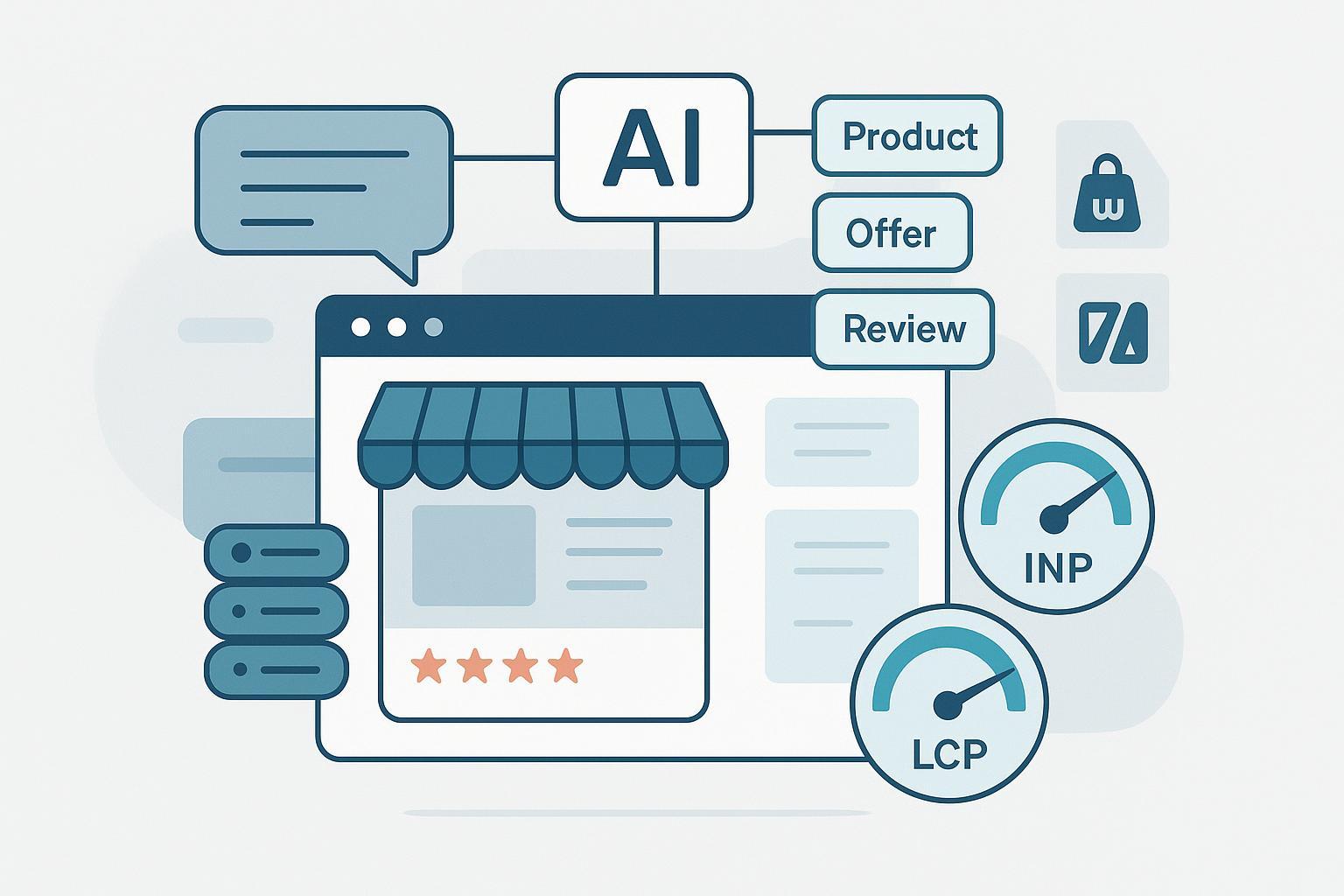
If shoppers now see AI Overviews and AI Mode before the classic “10 blue links,” what does that mean for your store? It means your product pages and supporting content need to be crystal clear, fact‑dense, and technically sound so AI systems can cite you confidently—and send qualified visitors.
According to Google’s official guidance in 2025, success in AI search hinges on helpful, experience‑led content, complete structured data, and solid UX performance, not on special “AEO markup.” See Google’s perspective in Top ways to ensure your content performs well in AI search experiences (May 2025) and the AI features overview for context.
What’s different now: classic SEO vs. AI‑driven SEO for stores
Classic SEO was largely about matching keywords, building links, and making pages crawlable. AI‑driven SEO adds a new layer: answer‑readiness. Your pages must read like trustworthy answers to conversational questions (“What’s the best breathable running shoe under $100?”), and your markup should make those answers machine‑readable.
Key shifts e‑commerce teams feel in 2025:
- Conversational intent and entities matter more than exact‑match keywords.
- Fact completeness and policy clarity (shipping, returns, sizing) reduce ambiguity and increase citation odds.
- Multimodal signals (images, video, ratings) help AI summarize and display your product credibly.
- Performance and UX aren’t just ranking factors—they’re part of what AI systems consider “helpful.”
Google reinforced this in 2025: make content helpful, cite sources, and maintain performance. See Google’s AI search guidance (2025).
Technical foundations AI relies on: Core Web Vitals and JS hygiene
Core Web Vitals are still the backbone. For commerce, optimize real user interactions to keep pages responsive and stable. Targets remain: INP < 200 ms, LCP ≤ 2.5 s, CLS < 0.1, per Google’s Core Web Vitals documentation (2025).
Practical actions:
- Trim main‑thread JavaScript: code‑split, defer non‑critical scripts, and cap third‑party tags.
- Speed up LCP: compress hero/product images, use WebP/AVIF, and reduce server TTFB with caching/CDNs.
- Prevent layout shifts: reserve media space and preload critical assets.
- Measure field data: use CrUX and Search Console; set performance budgets specifically for product and category templates.
Why this matters: slow, janky product pages frustrate shoppers and make AI systems less likely to treat you as a “helpful” source.
Structured data essentials for product pages
AI Overviews draw on clear, consistent signals. Your JSON‑LD should match visible content and cover products, offers, ratings, FAQs, and policies. Start with Google’s Product structured data (2025) and policy markup like shipping and returns structured data.
| Element | What to include | Where it lives |
|---|---|---|
| Product | name, image, description, brand, SKU/GTIN/MPN, itemCondition | Product Detail Page (PDP) |
| Offer | price, priceCurrency, availability, priceValidUntil | PDP; match visible price/stock |
| AggregateRating/Review | ratingValue, reviewCount, review author/date/body | PDP; reflect real UGC |
| FAQPage | sizing, materials, returns, shipping FAQs aligned to on‑page content | PDP or dedicated FAQ block |
| BreadcrumbList | hierarchical path to PDP | All relevant templates |
| Merchant policies | MerchantReturnPolicy; OfferShippingDetails/ShippingDeliveryTime | Policy pages and PDP snippets |
Implementation tip: Validation must be automated at scale. Ensure JSON‑LD parity with on‑page content; mismatches can erode trust and eligibility.
Content architecture for AI answers: intent clusters, PDP FAQs, and UGC
Think in conversations, not single keywords. Cluster by intent (“budget trail running shoes,” “vegan leather tote care,” “best camera for vlogging under $500”), then map supporting content:
- Pillar guides that summarize choices and trade‑offs, citing reputable sources.
- PDP‑level FAQs answering sizing, materials, compatibility, care, shipping, and returns.
- UGC and reviews with structured ratings to add lived experience. Moderate for accuracy and relevance; encourage photo/video reviews.
This approach builds topical authority and reduces ambiguity—two things AI systems reward when surfacing answers.
Image and video SEO that AI surfaces
Images and videos are part of how AI explains products. Follow Google’s image best practices (updated 2025) and add VideoObject markup where relevant.
- Alt text that’s descriptive and honest, tied to the product use context.
- Next‑gen formats (WebP/AVIF) and responsive sizes to protect LCP.
- Consistent image URLs; consider ImageObject for captions and licensing.
- Video transcripts/captions; place videos near related text and include clear titles and thumbnails.
Search Engine Journal noted Google’s emphasis on consistent image URLs in 2025; see coverage of the image SEO guide update (May 2025).
Platform patterns: Shopify, WooCommerce, Adobe Commerce
You don’t need identical setups; you need the same outcomes.
- Shopify: Most modern themes ship JSON‑LD for products and reviews; Hydrogen supports server‑side rendering for crawler‑friendly HTML. Audit theme schema, minimize heavy apps, and leverage Markets for hreflang. Monitor platform docs at Shopify Developers.
- WooCommerce: Rely on SEO plugins (Yoast, Rank Math) for schema; performance leans on hosting, caching, and efficient themes. Validate markup and use lazy loading; see WooCommerce developer docs and the WooCommerce 9.9 performance release (June 2025).
- Adobe Commerce (Magento): Use built‑in rich snippets and PWA Studio SSR/prerender options; set performance budgets and validate JSON‑LD. Reference Adobe Experience League Commerce.
Internationalization and hreflang for global stores
For multi‑region catalogs, map localized URLs with correct hreflang and canonical relationships. Align currency, units, sizing charts, and policy language—and reflect shipping regions in markup when possible.
Shopify Markets streamlines; WooCommerce needs WPML/Polylang/TranslatePress; Adobe Commerce supports multi‑store architectures. Consistency prevents duplicate‑content confusion and helps AI attribute the right page for each locale.
AI‑powered workflows and a pragmatic micro‑example
Disclosure: QuickCreator is our product.
A practical workflow many teams adopt:
- Intent/entity clustering from customer queries and Search Console data.
- Draft pillar pages and PDP FAQs with a human editor ensuring fact density and policy clarity.
- Generate multilingual variants where demand justifies; add hreflang.
- Validate schema at scale and run performance budgets.
- Track AI citations/mentions and iterate.
How this looks with a tool: Using QuickCreator, an e‑commerce marketer can auto‑draft a PDP FAQ block from real customer questions, embed structured data snippets that mirror visible answers, and publish updates to WordPress or a hosted blog in one click. Built‑in prompts help keep content conversational and intent‑aligned, while the editor’s block structure makes it easy to position FAQs near product details. For image SEO, the workflow supports alt‑text suggestions and consistent URLs. This saves hours per product, especially across large catalogs.
For a deeper setup aid on lightweight audits, see the step‑by‑step SEOquake extension installation and setup guide.
Measure and iterate: tracking AI citations and performance
Treat AI discovery as a channel. Create a report that tracks:
- Mentions/citations in AI Overviews/AI Mode for priority products and guides.
- CTR and engagement deltas versus classic SERPs.
- CWV trends (INP/LCP/CLS) by template.
- Schema validation coverage and parity issues.
Why not set a quarterly target for “number of PDPs with complete policy markup and answer‑ready FAQs”? It’s concrete and aligns with how AI summarizes pages.
Pitfalls and risk controls
- Hallucination and accuracy: Keep content fact‑dense; cite authoritative sources; avoid speculative claims.
- Privacy and personalization: Personalize responsibly, disclose clearly, and avoid dark patterns that erode trust or harm rankings.
- Accessibility: Alt text, captions, color contrast, and keyboard navigation are table stakes.
- Mismatched schema: JSON‑LD must match visible content; automate checks to avoid drift.
Your 30‑day action plan
- Audit 20 top‑revenue PDPs for: Product/Offer/Review/FAQ/Breadcrumb structured data and visible policy clarity (returns/shipping). Fix parity issues.
- Improve performance budgets: cut two heavy scripts, convert hero images to AVIF/WebP, and set INP target < 200 ms on PDPs.
- Build intent clusters for three categories; publish one pillar guide and add PDP FAQ blocks answering the top five questions.
- Validate image and video SEO: alt text accuracy, consistent URLs, transcripts; submit/update sitemaps if needed.
- Set up tracking: create an AI citations report, log mentions weekly, and compare CTR versus classic SERPs.
Keep moving: validate and iterate
AI search is here, and it rewards helpful, stable, answer‑ready pages. Start with your highest‑impact templates, measure AI citations alongside CWV, and iterate. If you uncover patterns that consistently earn AI mentions, double down—and share your findings with the team. Ready to test and learn? Let’s dig in.