How AI Search Recommends Your Competitors—and What To Do About It

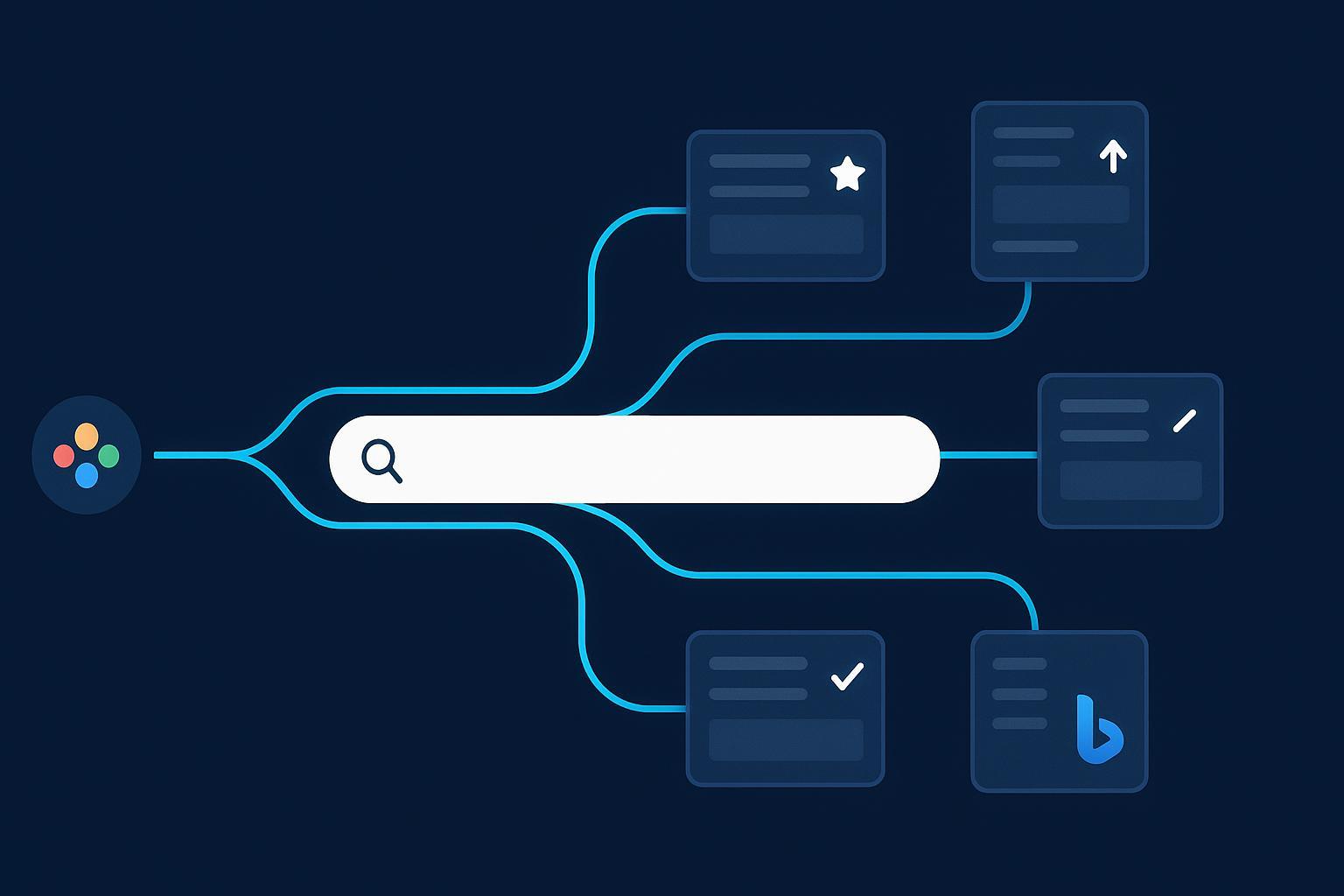
Ever wonder why a competitor gets name-checked in an AI answer even when you outrank them in classic results? Here’s the deal: modern “answer engines” broaden the query, pull from a wider set of sources, and then summarize with citations. If your competitor lines up better with those signals, they’ll be recommended right next to you—or instead of you.
As of 2025, AI-enhanced search experiences like Google’s AI Overviews/AI Mode, Microsoft’s Copilot, and Perplexity don’t just list pages; they synthesize and shortlist. That changes who gets visibility, and why.
What AI answer engines actually do
AI answer features are designed to speed up discovery. Instead of giving you ten similar links, they assemble a concise answer and attach relevant sources so you can dig deeper.
- Google explains that AI Mode builds on AI Overviews and helps people explore complex topics with AI-organized results, acting as a jumping-off point with prominent links to learn more. See Google’s product update in the Google Search AI Mode update (2025).
- Microsoft positions Copilot as transparent about grounding. When Copilot composes an answer from retrieved content, it shows citations back to the source. Microsoft reiterated this emphasis on citations in the Ignite 2024 update for Microsoft 365 Copilot in Word.
- Perplexity is built around live retrieval and numbered, clickable citations in its answers. Its help center describes how it grounds responses with links in How Perplexity works.
Compared with “10 blue links,” these systems often:
- Expand your query into multiple sub-queries (a “fan-out”),
- Retrieve across varied formats (articles, docs, videos), and
- Present a synthesized answer with a curated set of citations.
Think of it like a sharp research assistant who spins up several mini-searches, reads across them, and then hands you a neat briefing with footnotes.
The mechanics behind competitor recommendations
Why would an AI answer engine surface your competitors? Several mechanisms are at work:
- Query expansion and multi-step retrieval: The system doesn’t stick to your exact words. It reformulates the prompt into related terms and subtopics to improve recall and coverage. That broader net can catch competitors who cover the question more completely, even if they aren’t the top organic result for your original phrasing.
- Entity and knowledge signals: Clear entity definitions (brand, product, people) and consistent references help engines connect your content to the right topics. Strong entity alignment can make a competitor look like the safer “canonical” source for a niche.
- E-E-A-T and helpfulness: Google’s guidance around core updates stresses people-first content that demonstrates experience, expertise, authoritativeness, and trustworthiness. That quality bar shapes which sources AI is comfortable citing; see Google’s core updates guidance.
- Freshness and completeness: Up-to-date, comprehensive resources are more likely to be summarized and cited, especially for fast-moving topics.
- Diversity and citation behavior: Independent analyses found that AI Overviews frequently cite sources that overlap with strong organic rankings, while behavior shifts over time and by query. One large 2024 study reported very high overlap between AI Overview citations and top-10 organic results (with top results frequently represented), underscoring that authority still matters; see the August 2024 analysis summarized by Search Engine Land in “Google AI Overviews overlap 99.5% with top organic results”.
The takeaway: engines widen retrieval but still prefer sources that look authoritative, helpful, and current. If a competitor checks those boxes better on a given subtopic, they’ll earn a slot.
Why your competitors show up (even when you rank well)
Traditional rankings measure how your page matches a single query and intent. Answer engines evaluate how well your material supports a fuller task:
- They detect topical authority: depth across related subtopics, not just a single page’s relevance.
- They favor first-hand experience: original data, step-by-step methods, and clear outcomes.
- They reward clarity and structure: clean headings, on-page answers to common questions, and supportive visuals or video.
- They lean on consistent entity signals and references from credible sources.
So if your competitor publishes a hands-on, well-cited guide that answers the broader task—complete with structured data and helpful media—they may be shortlisted, even if you hold the classic top position for a narrow keyword.
The practical playbook to earn recommendations
Use these tactics to improve your odds of being cited and recommended by AI answer engines:
- Publish experience-led assets: Include first-hand tests, methodologies, screenshots, and results. Make it obvious a person did the work.
- Tighten entity hygiene: Align brand, product, and author entities across your site and trusted profiles. Be consistent with names, descriptions, and links.
- Add accurate structured data: Use schema that matches visible content to help systems understand page type, authorship, products, FAQs, and how-tos.
- Cover the whole task: Create comprehensive resources (FAQs, how‑tos, comparisons, buyer’s guides) that address common follow-ups, not just a single definition.
- Keep a freshness cadence: Update priority pages on a schedule. Note update dates in content and meaningfully revise—not just add a line.
- Cite authoritative sources: Where you rely on external facts, link to strong primary references. That signals care with evidence.
- Mix formats where helpful: Embed concise videos, diagrams, or step-by-step images when they improve clarity.
Are you being shortlisted or skipped? If you’re not cited on an answer where you should be, compare your page against the cited competitor for experience signals, entity clarity, and completeness.
Monitoring and measurement
Here’s a lightweight workflow to understand and improve your presence:
- Check Search Console: Google states that impressions and clicks from AI features roll into the Web search type in Performance reports, which helps you track impact without a separate dashboard; see Google’s AI features documentation.
- Spot-check priority queries: Run core head terms and common how‑to/FAQ queries. Record which brands and pages are cited in AI answers.
- Log Perplexity citations: Because answers include clickable, numbered sources, you can track which of your pages (or competitors’ pages) Perplexity picks up most often and for what questions.
- Watch Bing/Copilot answers: When answers are grounded in web content, Copilot aims to show citations. Note which sources appear and how often, especially for your category-defining queries. Microsoft’s emphasis on transparency is summarized in the Ignite 2024 Copilot blog.
- Compare share of voice: Build a simple spreadsheet that logs citations by engine, query, and brand over time. Look for patterns across formats (video vs. article), recency, and entity clarity.
Risk management: hallucinations, bias, and corrections
Even the best systems can misstate facts or favor shallow sources. Treat this like reputation management:
- Use feedback controls: When an AI answer misrepresents your brand or cites an outdated source, use in-product “Feedback” to report it.
- Publish authoritative corrections: Maintain a clear, well-linked page that states the facts you want engines to retrieve and cite.
- Strengthen third-party references: Encourage accurate coverage and citations from reputable sites. Engines take cues from trusted sources.
- Track and revisit: Add suspect answers to your monitoring sheet. Recheck after updates or after you publish stronger, clearer material.
Quick reference: how engines shortlist competitors and how to respond
| Engine | How competitors appear | What increases your odds of being shortlisted |
|---|---|---|
| Google AI Overviews / AI Mode | Multi-step “fan-out” retrieval across subtopics; cites sources that align with helpfulness, authority, and freshness. | Experience-led content, strong entity/structured data, comprehensive task coverage, credible citations, and updated pages. Reference the AI Mode update (2025) and core updates guidance for principles. |
| Microsoft Copilot (web-facing answers) | Shows citations when answers are grounded in retrieved content; visibility varies by experience. | Publish clear, authoritative resources that directly answer common tasks; make your claims verifiable. Microsoft’s focus on citation transparency appears in the Ignite 2024 Copilot blog. |
| Perplexity | Real-time retrieval with numbered, clickable citations; often favors comprehensive, well-cited pages. | Create complete, well-structured pages with strong references so Perplexity can ground answers cleanly; see How Perplexity works. |
A closing nudge
You can’t control every answer, but you can stack the deck: build experience-first resources, clean up entity and structured data, keep your best pages fresh, and track citations like a KPI. Start with five priority queries this week, compare your pages to whoever’s being cited, and ship one meaningful upgrade. Then repeat.