How to Increase Citations in AI Search

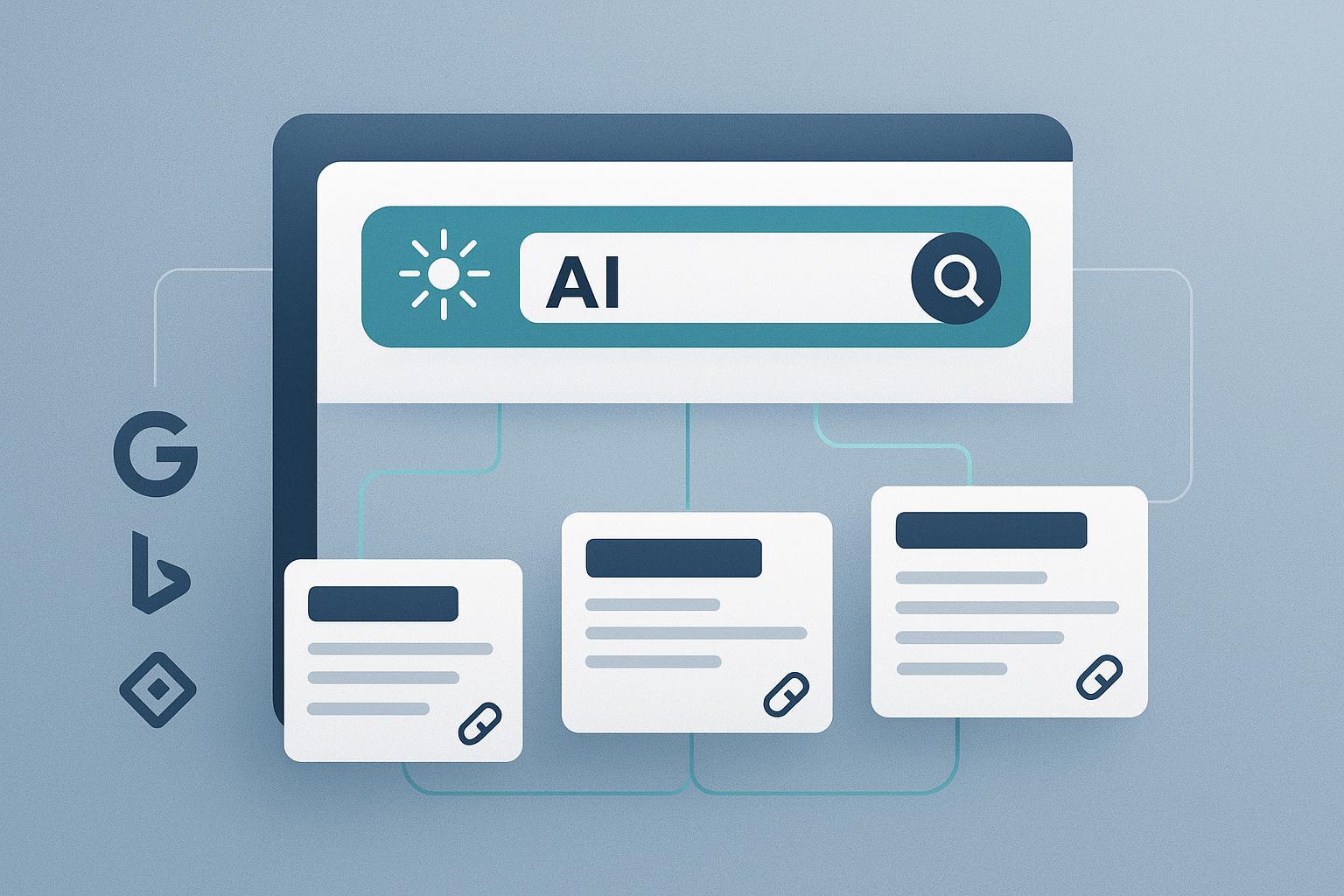
When AI answers include your link in the sources, you win visibility, trust, and qualified demand—even if the click-through happens later. In 2025, that blue-link moment often starts inside AI responses across Google’s AI Overviews/Mode, Bing Copilot, Perplexity, and ChatGPT browsing. Let’s define the target clearly: an AI citation is an explicit link or attribution to your page within an AI-generated answer. Your job is to make your pages the easiest, safest, and most credible sources for those answers.
According to Google’s own description of AI in Search, responses are designed with “prominent links” to help people verify and explore sources, signaling a strong incentive for publishers to be cited and clicked from AI views. See Google’s explanation in the 2025 update about driving discovery and quality clicks in AI results in the AI in Search overview (Google, 2025).
How AI engines choose citations (what we know in 2025)
AI systems pull from the open web and prefer sources that are easy to parse, clearly authored, up to date, and semantically explicit. Multiple analyses show overlap between AI-cited pages and high-ranking organic results, but the degree depends on scope and methodology. For Google’s AI Overviews specifically, large-scale research indicates a strong pull from top results: Ahrefs’ 2025 study reports that about 76% of AI Overview citations are drawn from the top 10 organic pages and roughly 86% from the top 100, with caveats on definitions and sampling explained in the Ahrefs analysis of rankings vs. AI citations (2025).
Here’s a quick comparison of how major engines present citations and what they tend to favor:
| Engine | How it cites | What it tends to favor | Notes |
|---|---|---|---|
| Google AI Overviews/Mode | Inline links beneath or beside generated answers | Pages with clear answers, fresh dates, credible authorship, and strong organic presence | Highly volatile; content and links can change frequently |
| Bing Copilot | Source panel with linked references | Authoritative, formatted pages and recognized publishers | In Edge, Copilot can format academic-style citations |
| Perplexity | Numbered, footnote-style links to sources | Concise, well-structured explanations and original sources | Designed around transparent source attribution |
| ChatGPT (browsing modes) | Links appear within or after the answer (varies by mode) | Pages that load fast, render cleanly, and present unambiguous facts | Consistency varies; reliability improves with clearer extractable facts |
Make your content quotable (formatting that AIs can lift)
Think like an answer engine. Put the answer first, then the context. Use explicit Q&A blocks and small, standalone fact units that are trivial to quote.
- Lead with a 1–2 sentence “answer-first” paragraph under each H2/H3.
- Break concepts into short sections with descriptive headings (not cute names).
- Include 3–6 concise FAQs per strategic page; mark them up in JSON-LD.
- Represent key facts in small tables, bullet lists, or infoboxes with dates and sources.
- Keep numbers stable and cite canonically so engines can verify and reuse them.
Why does this matter? Engines are extracting spans, not reading like humans. If your core claim isn’t available in a clean, copyable block, it’s easy to skip you for a competitor.
Mini-checklist for “quotability” you can apply today:
- Write an answer-first paragraph for every key subsection.
- Add or refresh 3–6 FAQs with clear Q/A pairs and unique angles.
- Convert 1–2 key data points into a compact table or list with a visible date.
- Add a short methodology note when presenting original data.
For a practitioner-friendly, cross-engine list of formatting and markup ideas, see Aleyda Solis’s 2025 AI search optimization checklist.
Structure your entities and schema (E-E-A-T machines can verify)
E-E-A-T isn’t just for humans—it’s for parsers. Make your expertise and identity machine-legible.
- Article/NewsArticle: Include author, datePublished, dateModified, publisher, and a stable headline. Add ArticleSection where relevant.
- Organization and Person: Implement schema with sameAs links to authoritative profiles (LinkedIn, knowledge panel, professional associations). Keep names, titles, and bios consistent across the web.
- FAQPage/QAPage: Mark up the precise Q/A blocks you want cited. Keep answers concise (40–120 words typically works well) and fact-specific.
- BreadcrumbList: Reinforce topical context and reduce ambiguity.
- Dataset (when applicable): If you publish data tables or downloadable CSVs, expose them via Dataset schema with a clear description and license.
Also, demonstrate your evidence trail: cite authoritative external sources with dates; explain methods for original findings; and avoid ambiguous claims. Engines favor sources that look verifiable and responsibly edited.
Research on AI citations supports that “what’s easy to trust” is often “what’s easy to parse.” Search Engine Land’s cross-engine analysis of roughly 8,000 citations highlights patterns such as strong representation of detailed, nested content and blogs/news/community pages. Review the patterns in the Search Engine Land 8,000-citation study (2025).
Technical readiness for AI crawlers
If bots can’t fetch or parse it quickly, they won’t cite it. Optimize for crawlability, renderability, and control.
- Robots and snippet controls: Google clarifies that AI features honor standard controls like nosnippet, data-nosnippet, max-snippet, and noindex. See the Google Search Central AI features and snippet controls for details and examples.
- Renderability: Ensure server-side rendering for primary content. Heavy client-side rendering can block extraction. Keep TTFB low and avoid fragile JS gates for essential information.
- Sitemaps and canonicals: Provide XML sitemaps with lastmod; include self-referencing canonicals; prevent duplication.
- AI user-agents: Maintain robots.txt directives for common AI crawlers (e.g., GPTBot, OAI-SearchBot, ClaudeBot/anthropic-ai, PerplexityBot, CCBot). For a 2025 view of crawler growth and behaviors, see Cloudflare’s overview in From Googlebot to GPTBot: who’s crawling your site (Cloudflare, 2025).
- Monitoring and enforcement: Many AI crawlers don’t honor crawl-delay; consider WAF-level rate limiting, IP validation where providers publish ranges, and logs to confirm adherence to your policies.
Tip: If your policy is to be cited widely, ensure you’re not accidentally blocking AI user-agents at the origin, CDN, or a legacy robots.txt rule.
Track, audit, and improve your AI citation share
If you don’t measure, it didn’t happen. Build an “AI prompt panel” for your topics and audit weekly.
- What to log: prompts, engine, date/time, cited URLs, position/order, and screenshots/HTML for reproducibility.
- KPIs: citation frequency (by URL/domain), citation latency (publish-to-citation time), platform share (share of your citations across engines), prompt coverage (share of prompts that cite you), and competitor share-of-citation.
- Volatility management: AI answers change fast. Expect churn. When you see a drop, refresh on-page facts, expand FAQs, update dates where warranted, and strengthen supporting citations.
Sample weekly workflow you can copy:
- Run your prompt panel (10–25 key prompts) across Google AI, Bing Copilot, Perplexity, and ChatGPT browsing; capture outputs.
- Record which of your URLs were cited, by which engine, and in what position/order.
- Identify two quick wins (e.g., missing FAQ, unclear headline, outdated date) and one deeper fix (e.g., add Dataset schema for a table) for each priority page.
- Ship updates within 48–72 hours; re-check prompts after indexing signals (e.g., lastmod ping, internal links updated).
Note: Several tools can automate parts of this, but even a spreadsheet-driven program can surface patterns fast. Over time, you’ll see which formats and entities earn consistent citations in your vertical.
Industry nuances and practical examples
- B2B SaaS and complex services: Longform explainers with crisp “answer-first” intros plus schematic diagrams/tables tend to get cited. Include pricing definitions, integration constraints, and metrics with dates. Author credentials matter when claims guide buying.
- Consumer guides and ecommerce: Comparison tables, step-by-step how-tos, and safety notes are easy for engines to quote. Keep product specs and availability current.
- Health and finance: Add editorial policies, medical/financial reviewers, and explicit update logs. Mark up reviewers with Person schema and include their credentials in the page.
- Multimedia: Transcribe podcasts and videos; expose key takeaways in text with timestamps. Provide image alt text and captions that stand on their own. Why miss a citation just because your best insight was trapped in audio?
Future-proofing (next 6–12 months)
- llms.txt conversations: There’s no recognized standard as of late 2025. Rely on robots.txt, meta robots, and WAF controls for now. If you test llms.txt, treat it as advisory and monitor logs.
- Passage chunking and modular updates: Write in self-contained sections so engines can cite a piece without needing the whole page. Small, frequent updates help with freshness and reduce citation latency.
- Agentic browsing and deeper source graphs: Expect engines to issue more sub-queries and follow more links. Clear internal linking and breadcrumb trails will make your clusters easier to traverse.
- Ethics and attribution policy: Publish a brief policy stating how you handle AI access, citations, and corrections. It signals trust—and it’s the right thing to do.
Closing: Build a repeatable operating system, not a one-off hack
Earning citations in AI search isn’t luck. It’s the outcome of clear, answer-first writing; machine-readable E-E-A-T; technical access that never gets in the way; and disciplined measurement. Start with a quotability pass on your top five pages, add robust schema and entity signals, open the right doors for AI crawlers, and run a weekly audit of prompts and citations. Then do it again. Want the simple test? If an engine needed a single, verifiable sentence to explain your topic today, would your page provide the cleanest version of that sentence—or would someone else’s?