The Future of SEO: AI-First Content Strategies

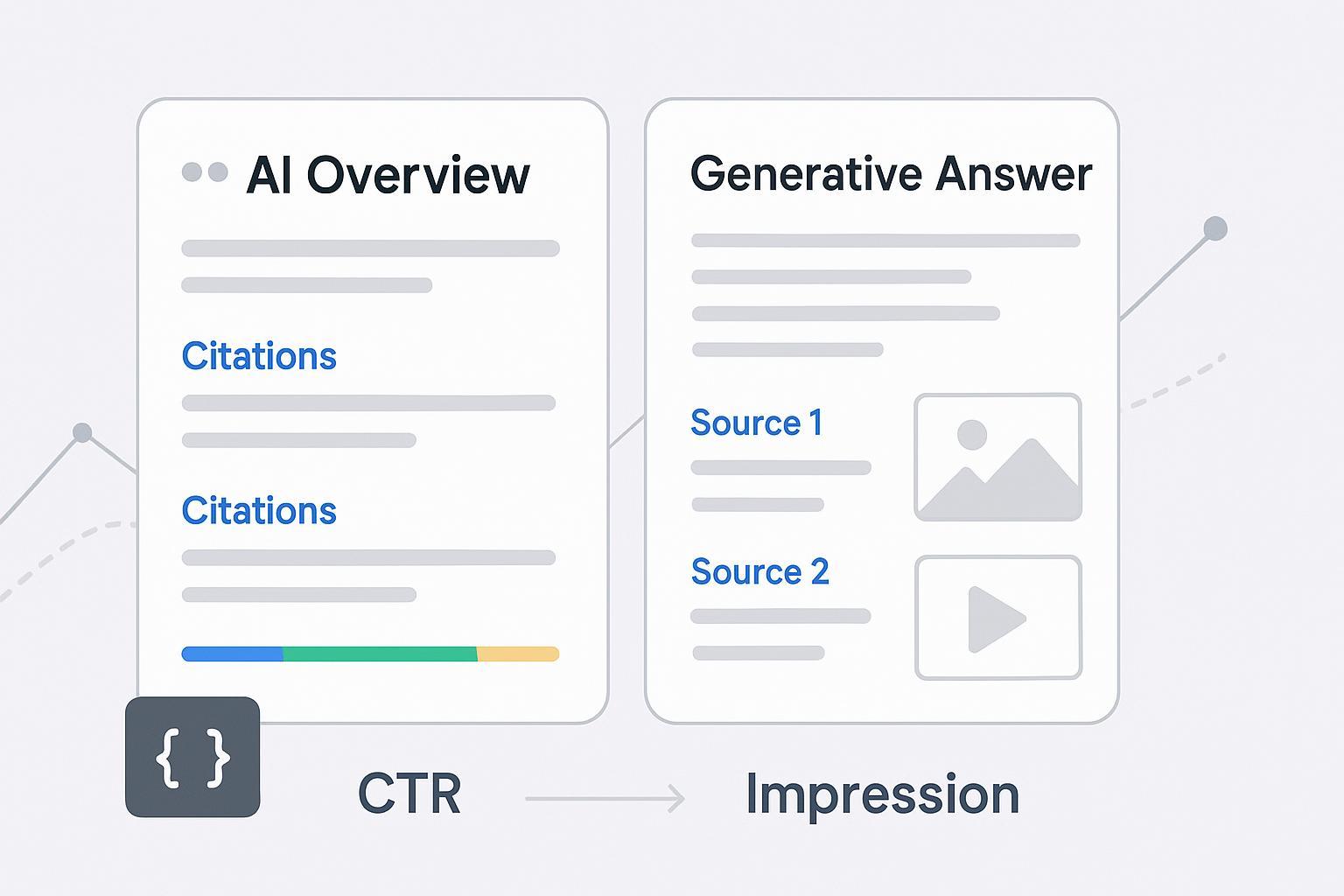
If search is increasingly answering before it sends, your content has to be ready to be the answer. AI-first SEO isn’t about chasing tricks; it’s about building verifiable, structured, and genuinely useful resources that AI systems can summarize with confidence—and that humans want to click, save, and share. In the next 12 months, the winners will combine answer-first writing with crisp structure, trustworthy citations, and disciplined measurement.
What “AI-first SEO” means now
AI-first doesn’t replace traditional SEO; it reframes priorities. Think overview-ready. That means your page leads with a concise, accurate answer, organizes proof and details underneath, and gives search engines (and their AI layers) clean structure to extract. You still need to rank. But the content that earns inclusion in AI summaries tends to be direct, well-cited, and easy to parse.
It also means designing for conversational, multi-turn behaviors. Google’s AI features moved from experiments into mainstream experiences in 2024 and 2025, with AI Overviews and the newer AI Mode introducing synthesized answers and follow-up prompts. Your content must withstand that synthesis: clear definitions, crisp steps, plain-language explanations, and supporting evidence that can be quoted.
What the data says (2024–2025)
Google began broadly rolling out AI Overviews to U.S. users in May 2024, and continued upgrading the experience, later introducing AI Mode in May 2025 to support deeper, multi-turn answers, as described in Google’s own updates (Google, May 2024; Google, May 20, 2025).
Independent tracking shows steady growth of AI Overviews. In an October 23, 2025 study, seoClarity reported that mobile U.S. AI Overview presence grew nearly 475% year over year from September 2024 to September 2025, and that roughly 30% of desktop U.S. keywords triggered AI Overviews by September 2025. Crucially, 99.5% of AI Overviews included at least one site already ranking in the top 10, underscoring the continued value of classic rankings for AI inclusion (seoClarity research, Oct 23, 2025).
Zero-click behaviors are nuanced. While “answer on the SERP” patterns can depress clicks, not every AI Overview reduces engagement. In one 2025 analysis, SEMrush observed that for tracked queries gaining AI Overviews, zero-click rates dipped from 38.1% to 36.2% between January and March 2025—variation that likely depends on intent and result design (SEMrush study, July 22, 2025). Meanwhile, market share watchers noted Google’s global share dipped below 90% late in 2024, a small but noteworthy shift in a long-stable landscape (Search Engine Land, Jan 13, 2025).
Here’s the deal: AI-first strategies must assume more answers will happen on the SERP, but they should also target the very sources those answers cite.
Overview-readiness engineering: a repeatable framework
Overview-readiness is about extractability and trust. Use this framework to make your pages easier for AI systems to summarize accurately—and attractive for humans to click into for depth.
- Lead with a direct answer: In your intro or immediately after it, include a 2–4 sentence summary that answers the core query with plain, specific language. Avoid hedging and fluff.
- Structure for extraction: Use descriptive H2/H3 subheads that mirror questions users ask. Add short tables or bullets for processes, comparisons, and definitions. Keep HTML clean and semantic.
- Bind claims to evidence: Attribute key stats and definitions to authoritative sources with clear, dated anchors. Where you have first-hand experience, call it out with author bylines and credentials.
- Add the right schema: Consider Article, FAQPage, HowTo, Product, VideoObject, and BreadcrumbList where relevant. Ensure fields are accurate and reflect visible content.
For deeper playbooks on answer-first content and schema usage, practitioners often cite Ahrefs’ guidance and timelines, which stress structured, evidence-backed pages as the backbone of AI visibility (Ahrefs guide and timeline, May 27, 2025).
The dual-engine play: Google vs. Bing generative answers
Google’s AI Overviews and AI Mode are not identical to Bing’s generative answers within Copilot and Edge. Both synthesize, both cite, and both keep traditional results beneath or alongside—but their design choices create different tactical opportunities. Analysts have noted Bing’s emphasis on citation transparency and its tight integration with Copilot, which can influence how and where users click during research journeys (Impression Digital comparison, July 8, 2025).
Below is a simple comparison to guide prioritization.
| Area | Google AI Overviews / AI Mode | Bing Generative Answers / Copilot Search |
|---|---|---|
| Citation style | Citations under the overview; AI Mode offers multi-turn follow-ups | Prominent inline citations with visible source cards |
| Trigger prevalence (2025 U.S.) | Rising; desktop around ~30% by Sept 2025 per third-party research | Present on many queries; visibility boosted within Edge/Copilot ecosystem |
| Follow-ups | Conversational follow-ups in AI Mode with “query fan-out” synthesis (Google, May 20, 2025) | Persistent chat-like interface invites iterative refinement |
| Ads | Ads have appeared around AI Overviews since late 2024 per trade press; behavior continues to evolve | Ads co-exist with generative modules; placements vary with layout |
| Optimization emphasis | Rank in top 10, direct-answer blocks, schema fidelity, evidence | Authority signals plus clear scannable answers; ensure sources render well in Edge/Copilot |
Multimodal enrichment that AI systems can trust
AI layers increasingly surface visuals and steps. Strengthen selection odds and user engagement with practical, verifiable media:
- Pair each major step with an image or mini-diagram. Use descriptive file names, alt text, and captions that restate the key action or outcome.
- Prefer original visuals; if using charts, annotate data sources and dates visibly within the graphic.
- Mind performance: compress images, specify dimensions, and use modern formats when possible.
Measurement and iteration in a zero-click world
You can’t improve what you don’t measure. Track AI-era visibility at the query-class level and tie it to business outcomes.
- Monitor presence: Annotate queries that trigger AI Overviews/generative answers, and watch how impressions, CTR, and average position shift when these surfaces appear. seoClarity’s 2025 findings offer helpful context on prevalence and the importance of top-10 rankings for inclusion (seoClarity, Oct 23, 2025).
- Watch engagement nuance: Use Search Console, analytics, and rank trackers to segment intent types. SEMrush’s 2025 analysis shows zero-click behavior can move in both directions—interpret within your data and device mix (SEMrush, July 22, 2025).
- Keep a change-log: When you materially update a page—new data, improved schema, added media—note what changed and when. Over time, correlate updates with visibility and conversion shifts. It’s not glamorous, but it’s how you learn fast without guesswork.
A practical workflow (example)
Disclosure: QuickCreator is our product. The following process is tool-agnostic and reproducible with many stacks; we’ll note where QuickCreator can simplify steps.
-
Define the query set and intent clusters. Draft an “overview-ready” brief that includes the target question, 2–4 sentence direct answer, supporting sub-questions, required sources, and schema candidates. For a primer on how keywords and topics map to briefs, see this reference (QuickCreator Docs: what keywords and topics mean).
-
Draft with evidence binding. Write the direct-answer block first, then expand with headings and short tables/bullets. Add citations to authoritative sources inside the prose with descriptive anchors and dates. If you want a tool-assisted starting point that embeds citations during generation, this walkthrough explains the approach (QuickCreator: AI writer with citations).
-
Add and validate schema. Implement Article plus FAQPage/HowTo/Product/VideoObject as appropriate. Ensure values reflect visible content. Validate using structured data testing tools and fix warnings.
-
Enrich with visuals. Create original diagrams or screenshots for key steps. Use alt text and captions that reinforce the main points. Keep files compressed and sized for speed.
-
Publish, measure, iterate. Track whether the query now triggers AI Overviews or Bing generative answers and whether your page is cited. Watch CTR and conversions. Update the brief and page with what you learned.
A short checklist to operationalize AI-first SEO
- Write a 2–4 sentence direct-answer block for every primary query.
- Use descriptive H2/H3s that match real sub-questions.
- Add at least one table or bullet set where extraction helps.
- Cite authoritative sources with dates inside the sentence.
- Implement the most relevant schema types and validate.
- Add original visuals with alt text and captions.
- Segment performance by query class and device; annotate changes.
- Refresh pages on a set cadence and keep a change-log.
Calm, pragmatic next steps
AI-first SEO rewards teams that ship, measure, and refine. Start with one priority cluster, engineer overview-readiness, publish, and watch how AI layers treat your work. If you see citations and stable rankings, expand the approach to adjacent clusters. If not, adjust your answer block, tighten citations, or enrich the visuals—then test again. Simple, disciplined loops win here.
If you want a platform that supports structured briefs, evidence binding, multimodal enrichment, and SEO fundamentals without a heavy lift, you can explore an overview of capabilities here (QuickCreator: blog SEO overview).