Demystifying AI Creative Optimization (ACO): The Marketer’s Power Tool for 2025

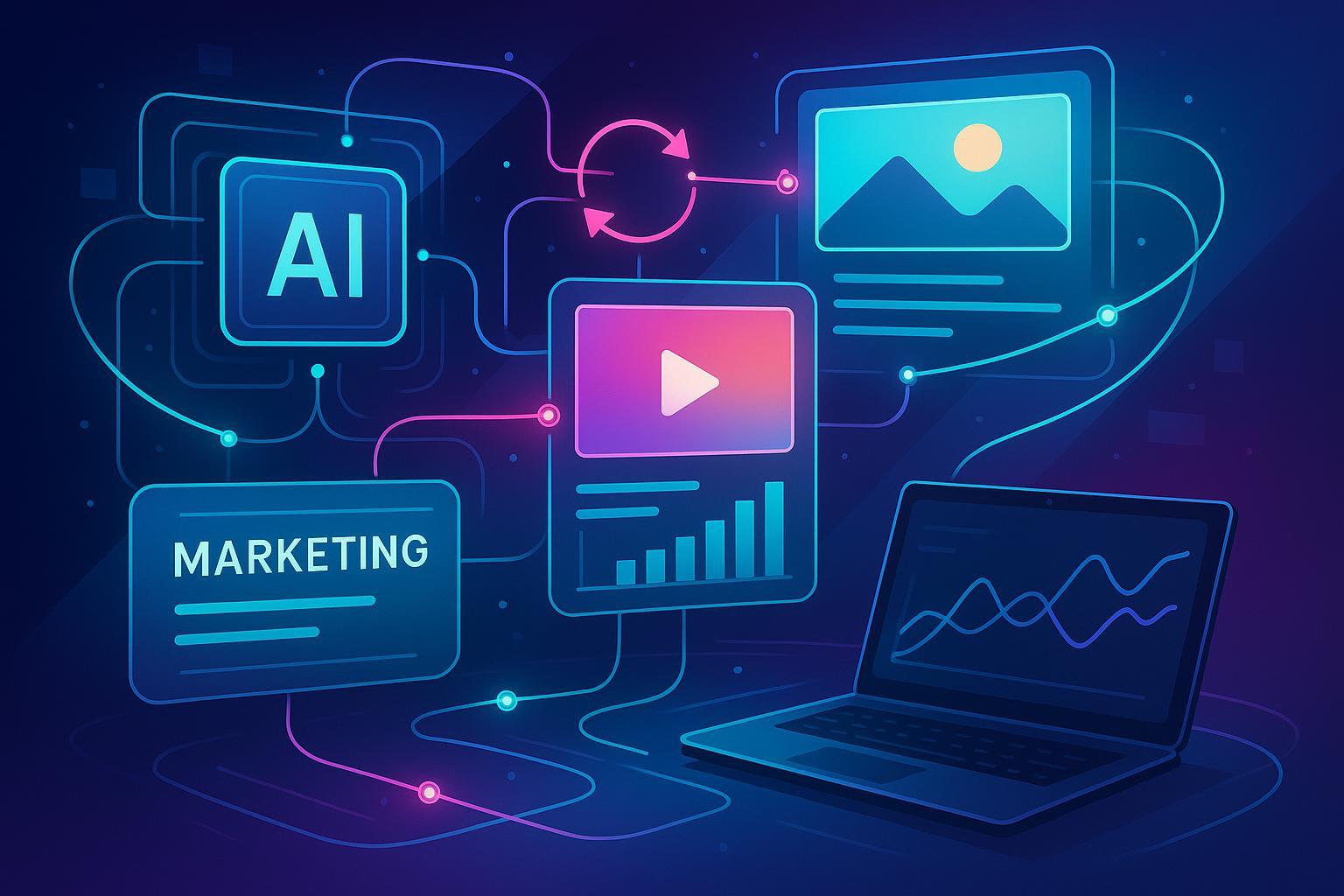
In a world where content speed, relevance, and impact decide marketing winners, what if AI could not just generate creative—but make it smarter each day? That’s the promise of AI Creative Optimization (ACO).
What is AI Creative Optimization (ACO)?
AI Creative Optimization (ACO) is the process of using artificial intelligence to automatically generate, test, and optimize marketing creatives—images, copy, video, and more—in real time, ensuring audiences see the most effective versions without constant manual tweaking. In other words: ACO is your creative “autopilot”—not just speeding up asset production, but continuously elevating their performance.
Breaking Down the Concept
- AI: Algorithms that learn from massive data sets (user behaviors, campaign results).
- Creative: Everything you use to attract and convert users—ads, blog banners, email headers, social posts.
- Optimization: Not a one-off activity! This is a never-ending feedback cycle: generate, test, analyze, improve, repeat.
Think of ACO as a creative coworker who not only helps you brainstorm and produce new materials, but also quietly studies every user’s reaction—then instantly tweaks or swaps out underperformers for something stronger. Unlike classic “set it and forget it” marketing, ACO is always learning, always iterating.
How Does ACO Actually Work? (A Workflow Walkthrough)
Imagine you’re launching a SaaS product campaign. Here’s how ACO fits into your team’s real-world process:
User Data → Segmentation (age, interests, behavior)
         → Generative AI assembles copy, images, CTAs for each segment
         → AI mixes and matches combinations for testing
         → Real-time campaign performance tracked (clicks, conversions, etc.)
         → The system automatically pauses losers, promotes/pass top performers
         → Human editors oversee, tweak, and approve for brand/quality
         → Feedback loop repeats endlessly—data goes back in, new creative comes out
Key, actionable ingredients:
- Strong, modular content library (snippets, visuals, CTAs)
- Reliable tagging and measurement
- AI models (think: GPT for text, GANs for visuals)
- Human oversight (critical as ever—see troubleshooting below)
For a deep dive into these workflows, see the Curinos Amplero capability overview.
ACO vs. DCO vs. AI Personalization: Drawing the Boundaries
| ACO | DCO (Dynamic Creative Optimization) | General AI Personalization | |
|---|---|---|---|
| Core Function | AI-driven, continuous creative generation and performance optimization | Real-time, rule-based assembly from a predefined asset pool | AI customizes user experience broadly—content, recommendations, etc. |
| Who controls? | Mostly platform-automated (e.g., TikTok, Odoscope) | Advertisers define rules/variants | Varies by use case |
| Data Used | Campaign metrics, user behavior, first-party segmentation | User data/context | Broad—any user signal |
| Example Use | Ad creative that updates itself based on live campaign feedback | Ads serving different headlines to different users | Websites changing layouts per user preference |
Curious for more? StackAdapt’s DCO explainer is a must-read.
The Tech Powering ACO (With Zero Code Headaches)
- Data Management Platforms (DMPs) collect and segment user and campaign data.
- Creative Management Platforms (CMPs) store, tag, and assemble assets.
- Generative AI models (transformers, GANs) invent endless creative variations.
- Reinforcement Learning tracks performance in real time, shifting resources to what works best.
- A/B and Multivariate Testing happen behind-the-scenes, at superhuman scale.
Visualizing It:
+--------+         +-----------+        +--------+        +--------+
| User   |         | DMP (Data |        | CMP    |        | AI     |
| Data   |-------> | Mgmt/Segm)|------->| Asset  |------->| Generation/testing |
+--------+         +-----------+        | Library|        |/Optimization|
                                         +--------+        +--------+
                                             |                |
                                             v                v
                                        Content Delivery   Feedback Loop
This cycle happens with blinding speed—no spreadsheet required.
Real-World ACO: Use Cases and Uplift Stories
- Publishing: Sage used AI platforms to speed up textbook descriptions, cutting writing time by 99% and costs by half (M1-Project case study).
- Communications & SaaS: Cox Communications leveraged AI-managed editorial calendars, resulting in a 50% conversion lift for pay-per-view stories.
- Healthcare: Bayer’s campaigns, optimized by AI, saw an 85% higher click-through rate and one-third lower costs versus manual approaches.
- Hospitality: Accor Hotels’ AI-powered ad campaigns yielded 14% more incremental conversions—without a bigger team.
Quick Take: Even small brands can see results if their content assets are well-structured and they trust AI to run tests at scale.
Hands-On Framework: Getting Started (and Avoiding Pitfalls)
Action Steps
- Inventory your content assets. Divide copy, visuals, CTAs, etc. into modular chunks. The more versions, the more optimization possibilities.
- Tag and measure. Use metadata so every component’s impact is tracked—and underperformers can be swapped without fuss.
- Automate testing cycles. Let AI set up tests combinations beyond human capacity.
- Define KPIs early. Focus on engagement, conversions, or ROI, not just impressions.
- Create feedback channels. Every piece should feed performance data back into the system.
- Maintain human review. AI is powerful, but require editor sign-off to avoid compliance, quality, or “robotic” tone mishaps.
Troubleshooting & Tips
- Pitfall: Over-automation. Letting AI run wild can lead to off-brand or bland output.
- Solution: Define clear brand guidelines and routinely spot-check results.
- Pitfall: Using poor data—or too little asset variety.
- Solution: Invest in both data quality and content library modularity from day one.
- Pitfall: Disregarding compliance/ethics. Stay updated on regulations like the EU AI Act (Rapid Innovation guide).
The Analogy Zone: Making ACO Memorable
ACO as a "Creative Coworker"
Picture working side-by-side with a relentless creative partner—one who tries new ideas non-stop, learns from every customer click, and never gets tired.
"Vibe Coding" for Marketers
Rather than coding, ACO lets you simply tell the AI the "vibe" or intent you want—“make it bolder,” “appeal to designers”—and the system experiments until it nails the tone and message. No developer hat required.
The Big Picture: Where Does ACO Fit in Modern Marketing?
ACO isn’t just a tool: it’s the glue between creative, data science, and marketing automation. It enables:
- Unified campaign management (across social, email, display, video)
- Real-time personalization at scale
- Continuous creative improvement without burning out your team
- De-risked testing: Bad ideas are quickly weeded out, strong ones rapidly scaled
For a conceptual “map” of these connected ideas, check out the structural mapping in AppsFlyer’s DCO overview.
2025 Trends & What’s Next for ACO
- Hyper-personalization: Generative AI will increasingly craft unique content for each user instantaneously.
- Immersive formats: Expect optimization of everything from interactive AR/VR assets to shoppable videos (Ziuma trends forecast).
- Tighter martech integrations: Unified dashboards blending creation, analytics, and compliance as one system.
- Regulation & quality pushback: Risks of “AI sameness” or ethical missteps mean human creativity and oversight will become even more vital—not less.
Final Thoughts: ACO = Your Next Marketing Superpower
As digital competition intensifies and creative fatigue grows, the marketers who thrive will blend human vision with AI’s relentless optimization. AI Creative Optimization isn’t about replacing creativity—it’s about unlocking its full, scalable potential, so your next campaign can be smarter, faster, and more impactful than ever.
Further reading and authoritative sources:
- Amazon Advertising: AI in Marketing Guide
- Flowster: Using AI to Optimize Content Workflows
- EA Voices: The Creativity Paradox of Generative AI
- Sprout Social: AI Content Marketing Insights
- Claritas: The Future of Marketing with AI Creative Optimization
Stay curious, test relentlessly, and let AI optimization amplify—not replace—your creative spark.