How Agencies Can Standardize Content Quality

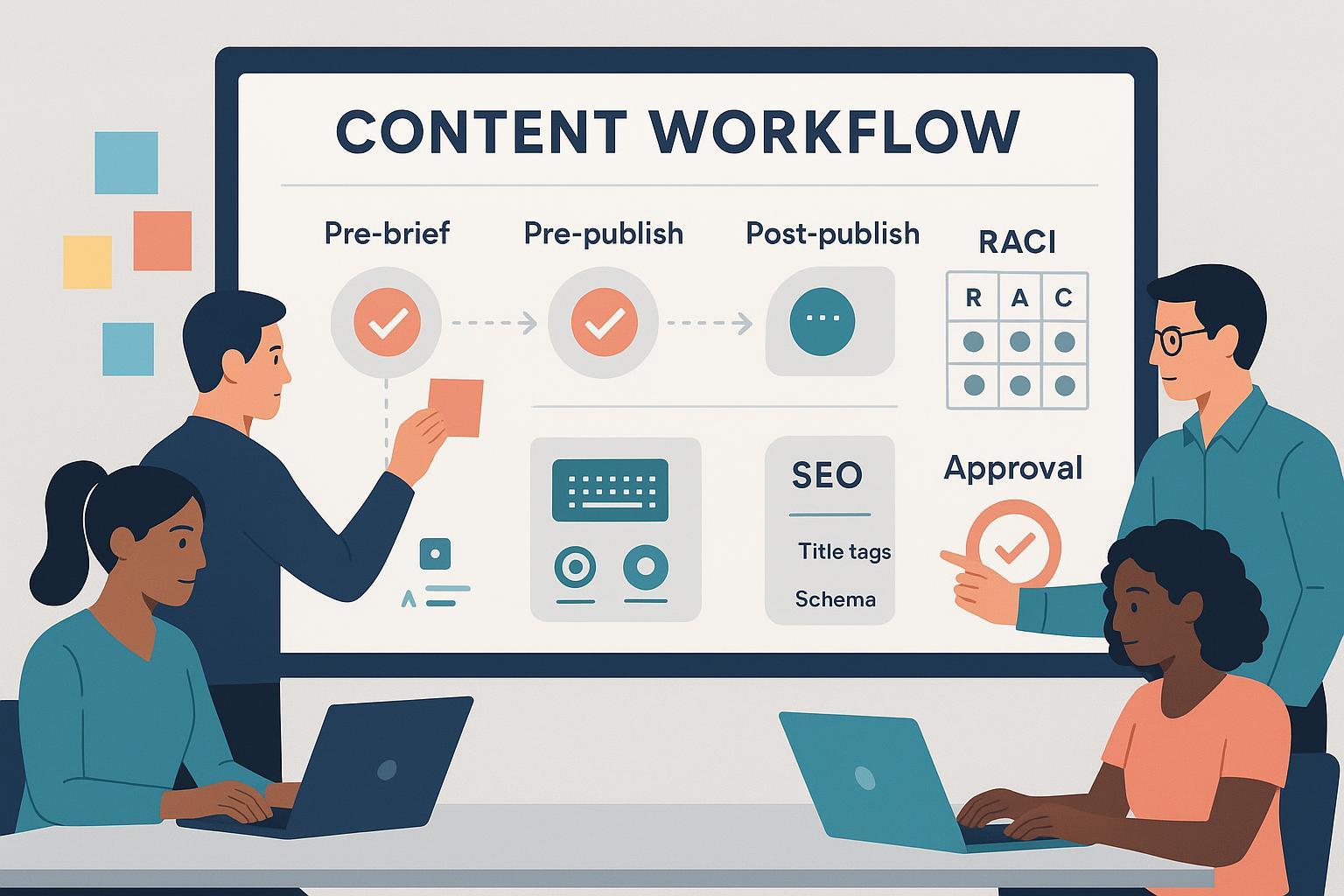
Missed deadlines, rewrites, and “Who approved this?”—if any of that sounds familiar, you don’t have a content problem; you have a standardization problem. Quality isn’t a vibe. It’s a system. Agencies that define measurable standards, wire them into daily workflows, and assign clear ownership deliver faster, more consistent work with less rework and less risk.
This guide lays out the operating framework: what “quality” means, who owns it, where to check it, which tools help, and how to measure and keep improving. Use it as your blueprint across clients and brands.
1) Define what “quality” means (and make it measurable)
Quality starts with policy, not preference. Anchor your standards to recognized references—then translate them into acceptance criteria your team can check in minutes. For search and credibility, align to Google’s emphasis on people‑first content and E‑E‑A‑T, and document evidence expectations (author bios, citations, first‑hand experience where relevant) using the public guidance in the Google Search Quality Evaluator Guidelines (PDF) and the people‑first content guidance on Search Central. For accessibility, set WCAG 2.2 Level AA as your default target across web properties and editorial assets; keep a quick reference handy via the W3C WAI overview of WCAG. For public‑sector or regulated clients, mirror language and structure from government exemplars such as the GSA Web Style Guide content standards.
Define acceptance criteria that are brief and specific: E‑E‑A‑T evidence is present and correct; accessibility minimums are met (alt text for images, semantic headings, visible keyboard focus, clear link text); SEO hygiene is complete (unique title/meta, headers make sense, internal links mapped to intent, valid schema where useful); brand voice is consistent and plain‑language; and any compliance notes or disclaimers are resolved. If a reviewer can’t score a criterion 1–5 in 10 seconds, rewrite it.
2) Governance that scales across clients
You need a governance charter that clarifies how standards get applied, updated, and enforced—especially in multi‑brand or multi‑client setups. Decide your ownership model (centralized editorial ops, distributed by account, or a hybrid). Then assign roles using RACI/DACI so everyone knows who is Responsible vs. Accountable and who must be Consulted or Informed. Risk‑based approval helps you move fast where you can and be rigorous where you must. Low‑risk content gets streamlined approvals; high‑risk/YMYL content adds SMEs and legal. For high‑visibility or regulated work, keep an immutable audit trail in your CMS or approval platform, similar to the documented checkpoints you see in public‑sector processes like the GOV.UK publishing checklist.
Sample RACI by lifecycle phase (adapt per client):
| Phase | Responsible (R) | Accountable (A) | Consulted (C) | Informed (I) |
|---|---|---|---|---|
| Briefing | Content Strategist | Account Director | SEO, Accessibility Lead | Client Stakeholders |
| Drafting | Writer | Managing Editor | SME, Designer | Project Manager |
| Editorial QA | Editor | Managing Editor | SEO, Accessibility Lead | Writer |
| Compliance Review (risk‑based) | SME/Legal | Account Director | Editor | Client |
| Final Approval | Account Director | Client Lead | Editor, Strategist | Team |
| Publication | CMS Publisher | Managing Editor | QA | Client |
| Post‑publish Audit | QA Lead | Managing Editor | SEO, Accessibility Lead | Account Team |
Document how this matrix changes by risk class (low/medium/high), and keep it visible in your project hub or knowledge base.
3) Build quality gates into the workflow
Don’t bolt quality on at the end. Embed three gates in the lifecycle so errors surface early and audits take minutes, not days. A pre‑brief gate confirms user intent, audience, constraints, the E‑E‑A‑T evidence you’ll provide, the sources you’ll cite, the accessibility plan (alt text needs, transcripts), and how success will be measured. A pre‑publish gate combines automated scans with human judgment: accessibility checks (automated plus manual spot checks for headings, focus, and forms), editorial review for clarity and inclusive language with fact checks, and SEO hygiene (title/meta, headings, internal links, schema, link integrity). A post‑publish gate verifies live rendering, confirms accessibility isn’t broken by theming or components, monitors early performance, and logs defects for the backlog.
In multi‑brand agencies, parameterize these checks by content type and risk, so you don’t over‑engineer low‑stakes work or under‑scope high‑impact pieces.
4) Tooling that supports (not replaces) human judgment
Automation accelerates checks, but people protect quality. Establish a neutral, criteria‑based tool stack and document where tools end and humans decide. For accessibility testing, standardize on a small set of scanners and a manual protocol, using neutral directories like the W3C WAI evaluation tools list to guide selection; train editors to validate headings, alt text, focus order, and forms by hand. For SEO QA, use crawlers and on‑page checkers to catch hygiene issues, but ensure briefs tie content to search intent and E‑E‑A‑T, validated against Google’s people‑first guidance. Editorial tools can help with grammar and style, but editors must still judge tone, nuance, and originality. For approvals, choose systems that offer role‑based permissions, comment resolution, and a permanent audit trail, and integrate them with your CMS or PM suite to avoid shadow workflows. Publish a one‑pager per tool: what it does, when to use it, where human review overrides it, and how results are logged.
5) Measurement and reporting
If you can’t see quality, you can’t manage it. Build a monthly “quality health” dashboard per client and a quarterly governance review across the portfolio. Track a core scorecard (E‑E‑A‑T evidence present, accuracy spot‑checks, editorial clarity), accessibility conformance (percentage of pages meeting WCAG 2.2 AA, issue severity mix, mean time to remediation, and regression rates after updates), workflow efficiency (time‑to‑approve by content type/risk class, rework rate, on‑time publication), search and UX indicators (intent‑match coverage, CTR for target queries, organic clicks/impressions, on‑page engagement), and risk/compliance signals (legal/SME SLAs met, YMYL expert review, audit trail completeness). Keep definitions consistent across clients so you can benchmark and learn.
6) Continuous improvement and escalation
Standards aren’t static. Create loops that turn defects into upgrades. Capture issues from each gate and post‑publish monitoring, categorize them (accessibility, accuracy, voice, SEO, compliance), and trend quarterly. Run cross‑functional retrospectives every quarter to tune checklists, approval matrices, and training. Provide annual accessibility and E‑E‑A‑T refreshers with examples of “good” and “avoid,” and maintain a searchable repository of exemplars. Define thresholds for SME/legal review, temporary unpublishing, or public correction notices—mirroring the transparency seen in government web governance like the GSA references.
7) Mini‑templates you can copy
Use these as starting points in your playbook.
Content brief minimums (adapt per content type): State audience and intent; scope and constraints; required E‑E‑A‑T signals (author, sources, first‑hand experience if relevant); the accessibility plan (alt text list, heading outline, transcripts/captions); and your measurement plan (target intents/queries, KPIs, success thresholds).
Editorial quality rubric (score 1–5 per dimension): Evaluate accuracy and sourcing with primary or authoritative references and date checks; clarity and structure for headings, scannability, and plain language; inclusivity and accessibility for bias checks and WCAG basics; brand voice consistency for tone, terminology, and reading level; and originality and value—does the piece add insight, examples, or data beyond a rehash?
Compact approval matrix (risk‑based): Low risk gets Creator + Editor sign‑off; medium risk adds SEO/accessibility QA and an Account Manager; high risk/YMYL adds SME and Legal with documented sign‑off and an audit trail.
8) Troubleshooting common failure modes
Bottlenecks often come from too many approvers on low‑risk content; adopt risk‑based matrices and delegate final approval to the accountable role. Unclear ownership shows up as R vs. A confusion; fix it by publishing a visible RACI per content type and reinforcing it in kickoffs. Over‑automation happens when tool outputs are accepted as truth; define where human review overrides tool suggestions and sample tool accuracy in retros. Compliance drift occurs when standards exist but aren’t used; add gate checklists in the CMS, run monthly hygiene sweeps, and schedule quarterly audits tied to training updates.
Make it real this quarter
Pick one pilot client or content type. Document your standards, publish a RACI, and add three gates to the workflow. Establish your dashboard with five KPIs. After one month, run a retrospective and ship version 1.1 of your standards. That’s how standardization sticks—through small, visible wins and a cadence that keeps improving.
Further reading to ground your playbook in recognized standards (each cited once above): Quality Evaluator Guidelines PDF, people‑first content guidance, W3C WAI overview of WCAG 2.2, WAI evaluation tools list, and the GOV.UK publishing checklist.