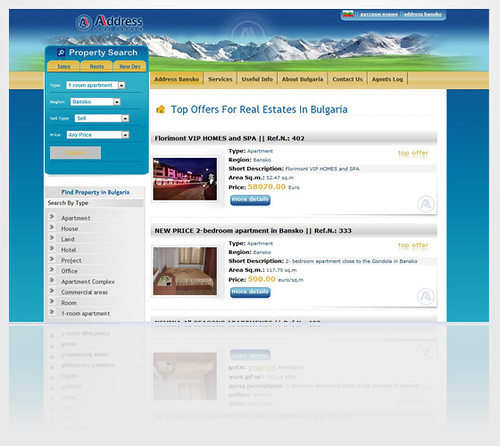
The Impact of Website Design on Real Estate: Optimizing for User Experience and Branding
Introduction
In today's digital age, having a website for your business is not just an option - it's a necessity. This is especially true in the real estate industry where competition can be fierce and potential clients are searching online for their next home or investment property. However, simply having a website isn't enough; it needs to be well-designed with user experience and branding in mind. The design of your website has a significant impact on how users perceive your brand and interact with your content, which ultimately affects their decision-making process. In this article, we'll explore the importance of website design in the real estate industry and how optimizing for user experience and branding can help set you apart from competitors.
Analyzing Website Design
When it comes to optimizing a website for the real estate industry, analyzing its design is one of the crucial steps. Analyzing website design involves evaluating different aspects such as user experience, branding, and competitive analysis. By doing so, it can help identify areas for improvement and enhance the overall performance of the website.
User Experience Analysis
One of the essential elements of website design that affects real estate businesses' success is user experience (UX). It refers to how users interact with websites and how they navigate through them. To analyze UX effectively, one needs to focus on several critical factors such as navigation, page speed, and mobile responsiveness.
Navigation plays a vital role in creating an intuitive user interface that allows visitors to find what they are looking for quickly. Therefore it's necessary to examine if menus are accessible from all pages or whether important links are visible enough on each page.
Page speed is another factor that has a significant impact on UX since slow-loading pages can lead visitors away from your site before even seeing what you have to offer. Optimizing images size or using caching techniques could be some ways you can increase your page load time.
Lastly but no less important than others is mobile responsiveness; this ensures that your site will look good on any device regardless of screen size or resolution. In today's world where people use their smartphones more frequently than ever before - especially when searching online - being optimized for mobile devices becomes essential.
Branding Analysis
Branding is also a critical element in web design that should not be overlooked while optimizing sites for real estate purposes. By analyzing branding elements like color scheme, typography choice and imagery used throughout your site gives insights into building trustworthiness among potential clients by providing recognizable visual cues about who you are as an organization or individual agent.
Color schemes play an integral part in establishing brand identity since colors evoke emotions and feelings associated with them; therefore choosing colors wisely may create positive associations with your brand. Typography choice is another aspect of branding that can help communicate your brand's message effectively, which further emphasizes the importance of consistency throughout your site.
Imagery used on a website should align with the overall brand image and convey trustworthiness to visitors. Relevant images that showcase properties or agents can create an emotional connection between users and your business, leading them towards engagement.
Competitive Analysis
Competitive analysis becomes crucial when it comes to optimizing websites for real estate purposes. It involves evaluating how competitors' websites perform in terms of design elements such as navigation, color scheme, typography, imagery, etc., and identify areas where improvements can be made.
By analyzing competitors' sites one could identify what works well within their industry niche and incorporate these ideas into their own website strategy while avoiding common pitfalls.
Optimizing Website Design
Website design plays a vital role in creating a positive user experience and building a strong brand for real estate businesses. Optimizing website design improves the usability of the site, enhances branding efforts, increases traffic and leads to higher conversion rates. In this section, we will discuss how to optimize website design through techniques such as color psychology, visual hierarchy, mobile optimization, accessibility and A/B testing. Color Psychology
Color psychology is the study of how colors affect human behavior and emotions. It is an essential element in web design as it can influence users' perceptions and create particular moods or feelings that align with your brand message. Choosing the right colors for your real estate website can enhance its appearance while also improving user engagement.
For instance, blue conveys trustworthiness and professionalism; green represents growth and balance; yellow signifies optimism; while red evokes excitement or urgency. By using these colors strategically on different parts of your site like call-to-action buttons or headlines can help users quickly understand what actions they should take next.
Visual Hierarchy
Visual hierarchy refers to how content elements are arranged on a page based on their importance to guide users' attention towards specific areas of interest effectively. For real estate websites, visual hierarchy allows showcasing properties more efficiently by prioritizing images over text-based descriptions. A simple trick used by designers when organizing information is through F-pattern layout where important details are placed at the top left corner because people tend to scan from left to right before moving downwards across screens following an "F" shape pattern.
Another technique used by designers is grid-based layout which divides pages into columns whereby each column has equal width but varying heights depending on content length resulting in organized layouts that prioritize information according to importance.
Mobile Optimization
With mobile devices accounting for over 50% of all internet traffic globally (Source: Statista), optimizing websites for mobile devices has become necessary than ever before. For real estate professionals targeting local markets, mobile optimization is crucial as users primarily search for properties on-the-go using their smartphones.
Mobile optimization involves designing websites with a responsive layout that adapts to different screen sizes and resolutions. The aim is to ensure all content elements remain accessible and readable without zooming in or out of the page. A mobile-friendly website not only improves user experience but also increases search engine rankings since Google has made it clear that sites optimized for mobile devices will rank higher than non-optimized ones.
Accessibility
Accessibility refers to designing websites that can be used by people with disabilities like visual impairments, hearing loss, or mobility issues. It's important to optimize your real estate website design so everyone can access its features regardless of their physical abilities.
To achieve this, designers should use appropriate color contrasts between text and background colors; provide descriptive alt tags for images; use large enough fonts that are readable even when zoomed-in; make sure links are distinguishable from other texts and have sufficient contrast ratios against their backgrounds.
A/B Testing
A/B testing involves creating two versions of a website design element (e.g., headlines or calls-to-action) randomly showing one version to half your audience while displaying another version to the other half then measuring which one performs better through tracking metrics such as click-through rate (CTR) or conversion rates. A/B testing helps identify what changes could improve a site's performance by comparing two variations side-by-side allowing you to make informed decisions about future iterations based on data rather than guesswork. By optimizing real estate websites through A/B testing techniques, businesses can enhance user engagement resulting in more leads generated over time.
Quick Creator
Website structure is a critical aspect of optimizing for SEO and user experience. Quick Creator, an AI-powered landing page creator, can help website owners optimize their website structure to enhance both aspects. With the use of machine learning algorithms, Quick Creator analyzes a website's content and creates optimized landing pages that improve search engine rankings. One key feature of Quick Creator is its ability to identify keywords relevant to the real estate industry and incorporate them into the landing page's content seamlessly. This helps increase visibility on search engines like Google and Bing by improving organic search results for targeted keywords.
Quick Creator also offers customizable templates that allow users to tailor their landing pages according to their specific brand guidelines while still maintaining website optimization standards. These customizable templates provide flexibility in design without sacrificing performance.
Moreover, Quick Creator provides recommendations for improvement based on data analysis from previous successful campaigns. The tool suggests actionable steps such as adding more visuals or restructuring text sections in order to improve engagement rates with potential customers.
Conclusion
In conclusion, it is evident that website design plays a crucial role in the success of the real estate industry. A well-designed website not only attracts potential clients but also helps to establish a strong brand identity and improves user experience. Therefore, optimizing your website for both branding and user experience should be a top priority for all real estate professionals and website owners. Quick Creator is one of many tools available to help optimize website performance; however, regardless of which tool you use, it's essential to ensure that your site is optimized with best practices in mind. By doing so, you can improve your online presence and ultimately increase leads and sales for your business.
See Also