The Power of A/B Testing for eCommerce Retargeting: Optimizing Your Campaigns
Introduction
Retargeting is a powerful tool for eCommerce businesses to bring back customers who have shown interest in their products or services. However, capturing customer data for retargeting can be challenging as customers may not always provide their contact information or complete a purchase. This is where A/B testing comes into play. A/B testing allows eCommerce marketers to test different variations of ads and landing pages to see which ones perform better with their target audience. By using A/B testing, businesses can improve the effectiveness of their retargeting campaigns and ultimately increase conversions. The Importance of Retargeting in eCommerce
Retargeting is an essential part of any successful eCommerce marketing strategy. According to recent studies, only 2% of web traffic converts on the first visit to an online store. This means that 98% of potential customers leave without making a purchase, but it doesn't mean they aren't interested in your product or service. With retargeting, businesses can reach out to these potential customers and bring them back to complete their purchase.
Retargeted ads also tend to have higher click-through rates than regular display ads because they are targeted at people who have already shown interest in the business's products or services. This makes them more likely to convert into paying customers.
The Benefits of A/B Testing
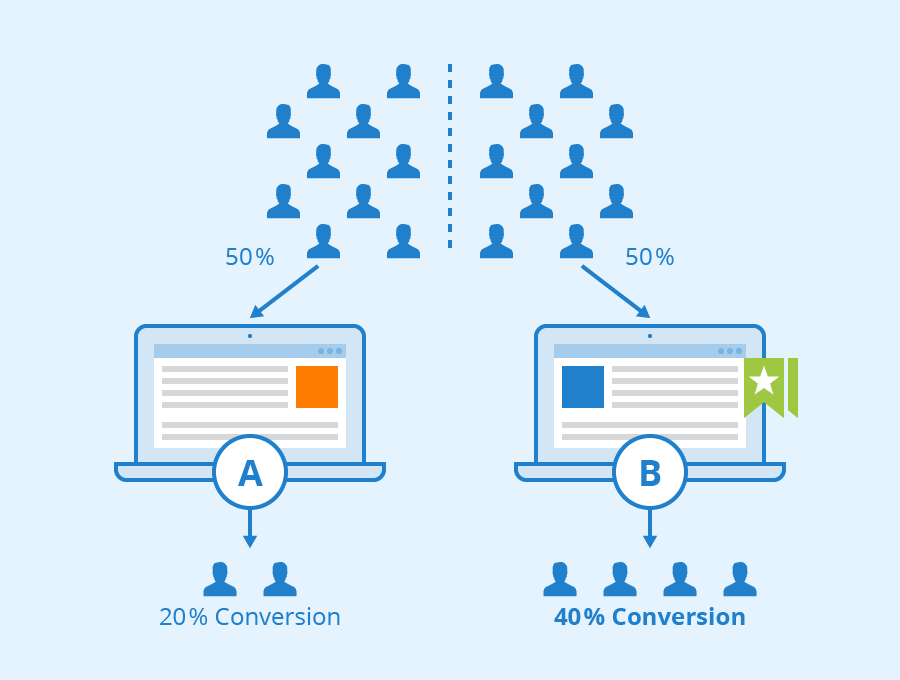
A/B testing involves creating two versions (or more) of an ad or landing page and showing each version randomly to different segments of your audience. By comparing the performance metrics such as conversion rate, click-through rate, bounce rate etc., you can determine which version performs better with your target audience.
One major benefit of A/B testing is that it provides concrete evidence on what works best for your specific audience instead relying on guesswork or assumptions when designing ad campaigns . Another benefit is that it helps identify areas for improvement so you could optimize future marketing efforts by implementing findings from tests results gathered from previous experiments..
Setting up A/B Tests
Setting up A/B tests is crucial to getting reliable results for retargeting campaigns. A/B testing involves creating two groups, the control group and the test group, and comparing them to see which one performs better. The importance of setting up A/B tests correctly cannot be overstated as it can help eCommerce business owners and marketers optimize their campaigns by identifying the best-performing variables. Selecting Variables to Test
Selecting relevant variables that are specific to a retargeting campaign is essential in ensuring accurate testing results. Relevant variables include ad copy, images, calls-to-action (CTAs), landing pages, etc. These elements impact how customers perceive your brand and whether they take action or not.
For instance, you could test different CTAs like "Buy Now" vs "Shop Now." By creating a control group with one CTA and a test group with another CTA using similar conditions such as audience size or demographics; you can determine which message resonates more with your target audience.
Creating comparable test groups is also vital in achieving reliable data from A/B tests. Ensure that there are no significant differences between both groups other than the variable being tested.
Determining Sample Sizes
To achieve statistically significant results during an A/B test for retargeting campaigns requires determining appropriate sample sizes based on estimated conversion rates accurately. This process ensures that enough visitors see each variation before drawing any conclusions about performance differences between them. The number of visitors needed per variation depends on various factors such as desired significance level (typically 95% or higher) and minimum detectable effect size -the smallest difference worth detecting- among others.
Statistical significance determines if there's enough evidence supporting observed changes in conversion rates due to variations tested rather than random fluctuations attributed solely to chance occurrences during testing periods.
In summary, setting up proper A/B tests helps eCommerce marketers identify winning variations among multiple options while avoiding costly mistakes made without adequate research beforehand.
Analyzing Results
Once you've conducted your A/B test, it's important to analyze the results in order to improve your retargeting campaigns. Analyzing A/B test results involves identifying statistically significant differences between the control and variation groups, understanding confidence intervals, and interpreting test metrics. Identifying Statistically Significant Differences
Statistical significance is a measure of whether the difference between two groups is likely due to chance or if it's a real effect. It's important for A/B testing because we want to know if our changes are making a meaningful impact on user behavior. To calculate statistical significance, there are several common statistical tests that can be used depending on the type of data being analyzed. Once you have calculated statistical significance, you'll need to understand confidence intervals - an estimate of how much uncertainty there is around your sample mean. Confidence intervals help us determine how confident we can be in our findings. Interpreting Test Metrics
Common test metrics used in A/B testing include click-through rates (CTR) and conversion rates (CR). CTR measures how many people clicked on an ad compared with how many times it was shown - essentially measuring engagement with your ad campaign; whereas CR measures what percentage of users who visited your site took action towards achieving a goal like purchasing something from your store or submitting their email address for newsletter subscriptions- this indicates effectiveness at driving conversions through landing pages or website optimization efforts . These metrics provide insight into which version performs better overall as well as which specific elements within each version contribute most significantly toward those outcomes.
Interpreting these metrics requires analyzing them over time across multiple iterations and ensuring that any one change made during experimentation doesn't create unintended consequences elsewhere that could lead astray from original goals set forth by stakeholders.
By following guidance provided above about analyzing A/B tests, eCommerce business owners can make data-driven decisions based on objective evidence rather than guesswork.These insights help marketers optimize their campaigns for higher ROI by identifying areas where further experimentation may be necessary or where changes need to be made. Overall, analyzing A/B test results is crucial for improving the effectiveness of retargeting campaigns and ensuring that your marketing efforts are aligned with business goals.
Optimizing Campaigns
Optimization is a crucial step in the retargeting campaign process. It allows eCommerce business owners and marketers to identify which elements of their campaigns are working and which ones need improvement. By optimizing campaigns, businesses can increase click-through rates (CTR), conversions, and ultimately revenue.
Adjusting Ad Copy
A/B testing can be used to optimize ad copy by comparing different versions of an ad to determine which one performs better. For example, businesses can test different headlines, descriptions, or calls-to-action (CTAs) within their ads. The results of these tests will help businesses understand what messaging resonates best with their target audience. When running ad copy tests, it's important to establish a clear hypothesis beforehand and only test one element at a time to accurately measure the impact of each change. To interpret the results, look for statistically significant differences between the two versions being tested. When analyzing successful ad copy variations, take note of what specific language or tone helped drive engagement or conversions. To write effective ad copy that resonates with your target audience requires research-based insights on your customers' pain points as well as strong brand messaging that aligns with those needs.
Targeting and Bidding Strategies
Similar A/B testing tactics can also be used for targeting strategies such as demographics or interests-based audiences as well as bidding strategies like cost-per-click(CPC). Retargeting Campaigns should incorporate multiple layers into choosing how you want to bid: device type priority levels all based on value proposition analysis By running targeted tests against control groups using various combinations including geographic locations interest groupings etc., advertisers can figure out exactly who they should be targeting specifically for their products/services when compared against other alternatives available online today!
Analyzing these results helps companies understand where they should focus resources going forward – whether it's refining existing segments further tweaking budget allocation models entirely overhauling certain aspects altogether!
Choosing the right targeting strategy involves understanding your ideal customer, learning their behavior and preferences, understanding the competition in your market, and using data analysis to determine which targeting strategies will be most effective.
Conclusion
In conclusion, A/B testing is an essential tool for optimizing retargeting campaigns in eCommerce businesses. By conducting experiments on different variables, such as ad creatives and landing pages, marketers can identify the most effective strategies and improve their overall ROI. However, it's crucial to approach A/B testing with a data-driven mindset and avoid making decisions based on assumptions or personal preferences. To apply these insights to your own campaigns, start by identifying specific goals and creating hypotheses that you want to test. Additionally, consider using tools such as Google Optimize or Optimizely to streamline the process and gather accurate results. With consistent experimentation and analysis of data, eCommerce businesses can use A/B testing to constantly refine their retargeting strategies for optimal success. Actionable Takeaways
Identify specific goals for your retargeting campaign
Create hypotheses based on data instead of assumptions
Use tools like Google Optimize or Optimizely
Consistently experiment with different variables
Additional Resources
The Ultimate Guide to Retargeting (Kissmetrics)
What is Retargeting? Definition + Examples (AdEspresso)
How We Increased Our AdWords CTR by 28% Using AB Testing (Neil Patel)